
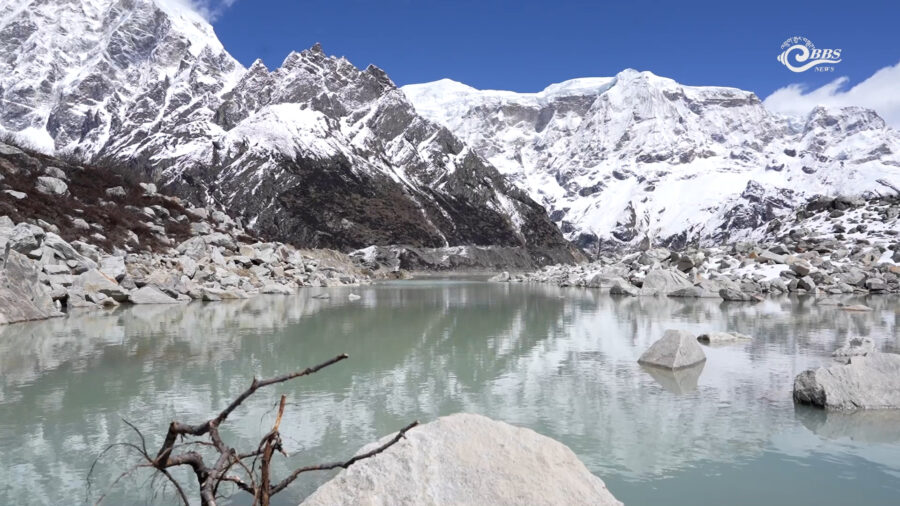
 The National Centre for Hydrology and Meteorology (NCHM) is exploring ways to scale up the pilot siphon system at Thorthormi to reduce the risk of a glacial lake outburst flood (GLOF). Successfully tested in October, the system can drain around three million litres of water a day. However, the centre says the current setup will have little impact on the lake’s water level unless it is expanded.
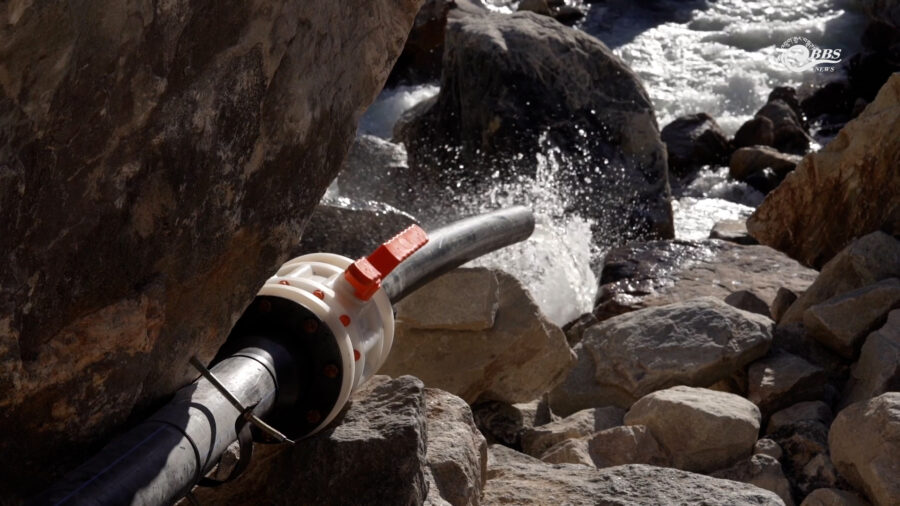 In September last year, the centre began testing natural siphon technology at Thorthormi. The pilot test took almost a year to succeed.
Sangay Tenzin, Project Engineer at the Hydrology and Water Resources Division of NCHM, said the natural siphon works on both gravity and atmospheric pressure, using the pull from the outlet. He said that, as per the design, a rising lean from the apex, the highest point of the siphon, goes in around 22 metres up to the water.
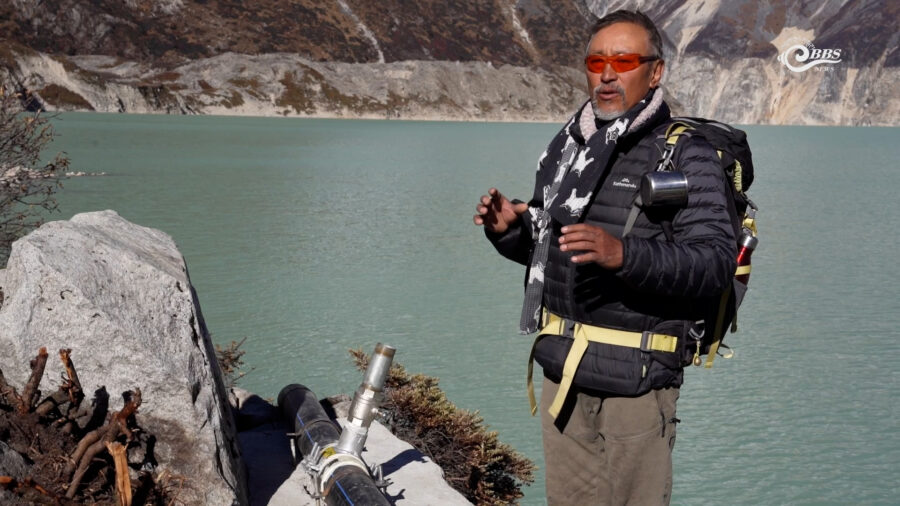
“From the water level, around 12 metres goes down, and the vertical height is around 4.5 or 4.7 metres. Once the construction is complete, we prime the siphon, which means we fill it with water and seal it. Then we have a falling lean of around 275 metres from this point to the outlet, ”he said.
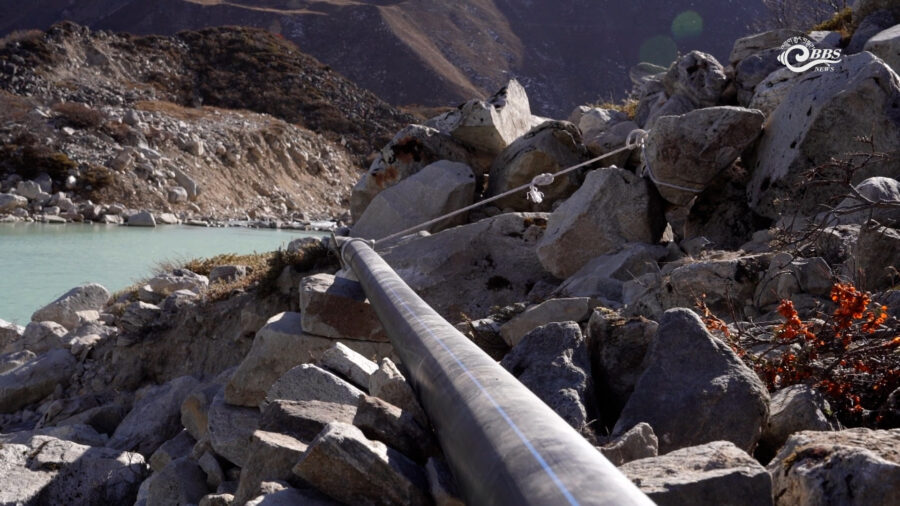 Since the outlet is located well below the lake, water flows down through the pipes using gravity and atmospheric pressure. The system can release around 33 to 35 litres of water every second.
Sangay Tenzin said, “With this, it will drain around three million litres of water a day. But having said that, it will have no impact on lowering the lake, since it is a test siphon. Only if we upscale it can we lower the lake.”
He added that scaling up siphoning will not be easy. The site does not have any machinery and work has to be carried out manually. The centre has to consider pipe sizes and the practical challenges of installing a larger system.
Despite the challenges, NCHM is exploring how the pilot project can be expanded and whether the system can be used on a larger scale to release more water.
The siphon is being tested as an alternative way to release water from the lake and reduce pressure on the natural moraine barrier. Bhutan previously lowered Thorthormi’s water level through manual excavation.
Karma Toeb, Chief/Specialist at the Cryosphere Services Division of NCHM, said he has been involved in the mitigation of glacial lakes in the past, including Rapstreng Lake from 1996 to 1998 and Thorthormi Lake from 2008 to 2012. He said the methods adopted then were purely manual, labour-intensive and resource-intensive.
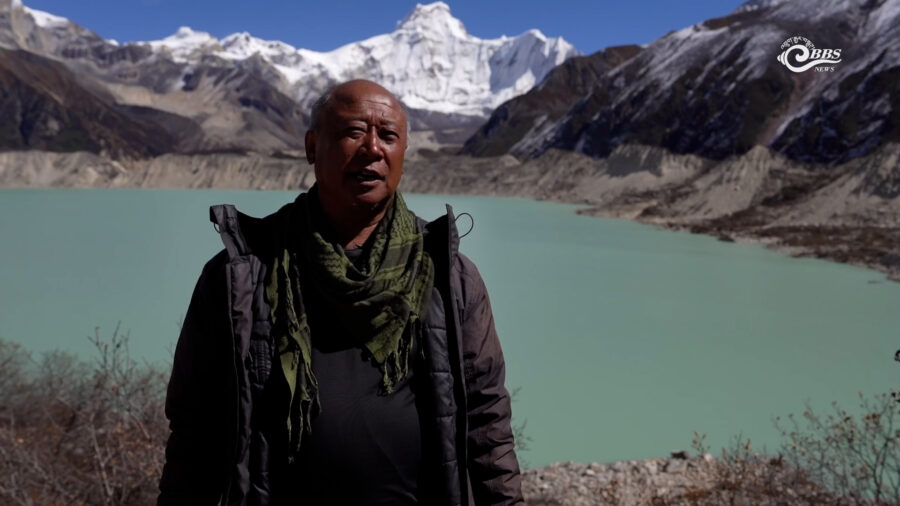
“In the traditional mitigation during that time, we brought in more than 300 people to the site and started digging up the outlet channel. Now, times have changed. I think it is high time to look forward and adopt new technologies. So a siphon came to mind. Why? Because this technology has been implemented in countries like Peru very successfully,” he said.
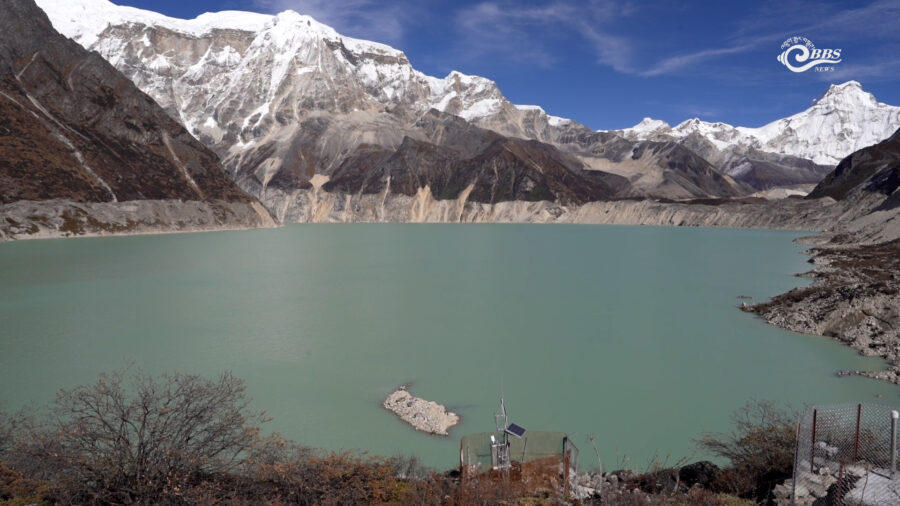 Thorthormi is identified as one of the 17 potentially dangerous lakes in the country. With glaciers receding faster, the risk of a glacial lake outburst flood looms larger than ever.
At the moraine barrier between Rapstreng Lake and Thorthormi Lake, Thorthormi appears as almost one fully formed lake. In the past, two subsidiary lakes were connected to the main lake. Subsidiary Lake-II was washed away in 2019 when a minor GLOF occurred.
The centre says the incident was a reminder of how quickly conditions at the lake can change.
According to an NCHM assessment, the 2019 breach lowered the main lake’s water level by about 80 centimetres over four days, releasing an estimated 2.73 million cubic metres of water. A similar incident occurred in October 2023, when the main lake partially breached again, lowering the lake level by 46 centimetres.
The assessment also warned that further icefalls or avalanches into the lake could generate large waves and potentially affect the weakened moraine dam.
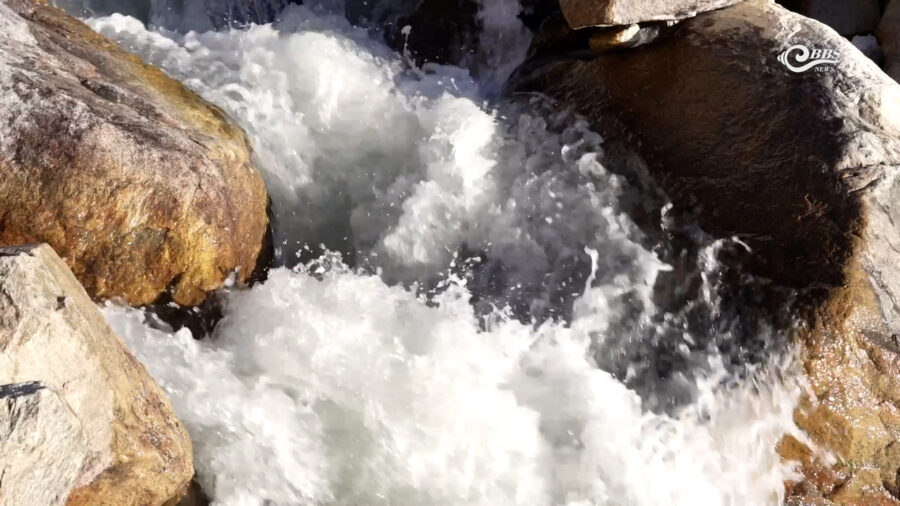 As Thorthormi continues to expand at an alarming rate, the siphoning pilot could prove a crucial line of defence to lower the lake’s water level and protect communities downstream from a potential disaster.
However, reducing the lake’s water level is only one part of managing the GLOF risk. Continued monitoring of the lake, early warning systems, and preparedness among communities downstream remain equally important.
Devika Pradhan, Lunana
Edited by Sangay Chezom