
 Years of follow-up discussions and deliberations have yet to result in a decision on whether building heights in Yenlag Throms or satellite towns should be increased from three to as many as five storeys. While the Ministry of Infrastructure and Transport is opting for a planning-based approach that could take up to two years, members of the National Assembly are calling for clearer answers and immediate action.
The need to increase building heights in satellite towns was raised in previous parliamentary sessions to improve housing opportunities, support local livelihoods and address growing development needs.
Today, the majority of members once again called for an increase.
Kinzang Wangchuk, MP for Dramedtse-Ngatshang, Monggar, said Section 8 of the Bhutan Building Regulations 2023 limits building heights to three storeys in areas without a Local Area Plan. He said the restriction has limited development in some suitable areas and contributed to uneven growth across towns in the country.
He said revisions to the Bhutan Building Regulations 2023 had been recommended to address the issue.
Sonam Dorji, MP for Drukjegang-Tseza, Dagana, said limited land availability restricts people’s ability to expand their homes. He called for a uniform increase in building heights from three to five storeys across all 20 districts.
He said the proposal was not to allow buildings of 10 or 15 storeys, but to provide more room for development while addressing the shortage of land.
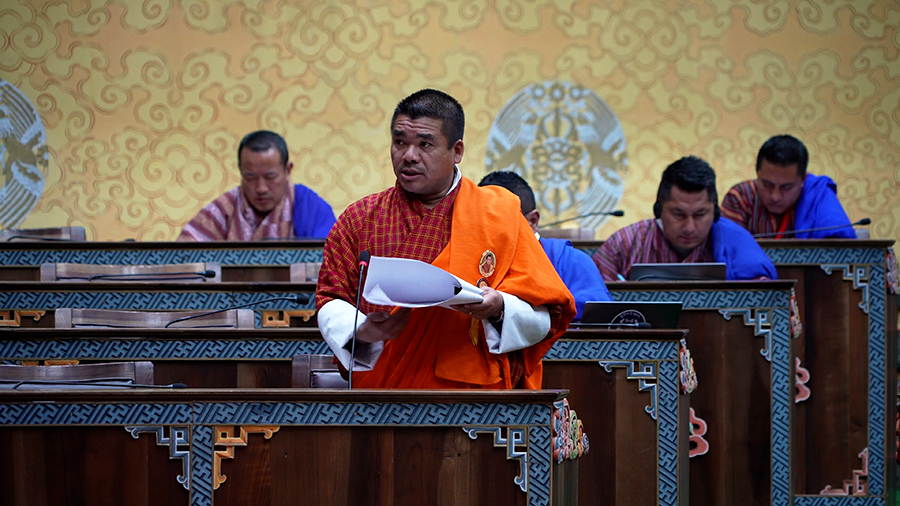
Presenting the Action Taken Report, Chandra Bahadhur Gurung, Minister for Infrastructure and Transport, said the Ministry prioritised a holistic and comprehensive review through the preparation of Local Area Plans.
On increasing the allowable building heights in Yenlag Throms, the minister said the issue would be comprehensively assessed as part of the respective Local Area Plan preparation and Development Control Regulation formulation process.
He said the regulations would incorporate development control tools such as Floor Area Ratio, form-based codes, or a combination of building height and coverage controls. The Ministry would also prioritise optimising available developable land through plot consolidation and the provision of development rights for larger plots to promote comprehensive development.
The Ministry has identified 10 satellite towns that do not have an approved plan to guide their development. It plans to initiate the work within 24 months. However, the minister cited boundary discrepancies as one of the major challenges.
He said a month-long training on the preparation of Local Area Plans was conducted for Urban Planners and Architects of the RoIDs in July 2026. They were subsequently deployed to the sites for data collection.
While the Ministry undertakes the Local Area Plan preparation, the House has directed it to provide a detailed update on the actions taken against each of the eight recommendations made during the Fifth Session at the next parliamentary session.
Sonam Yuden & Tashi Dekar
Edited by Sonam Wangdi