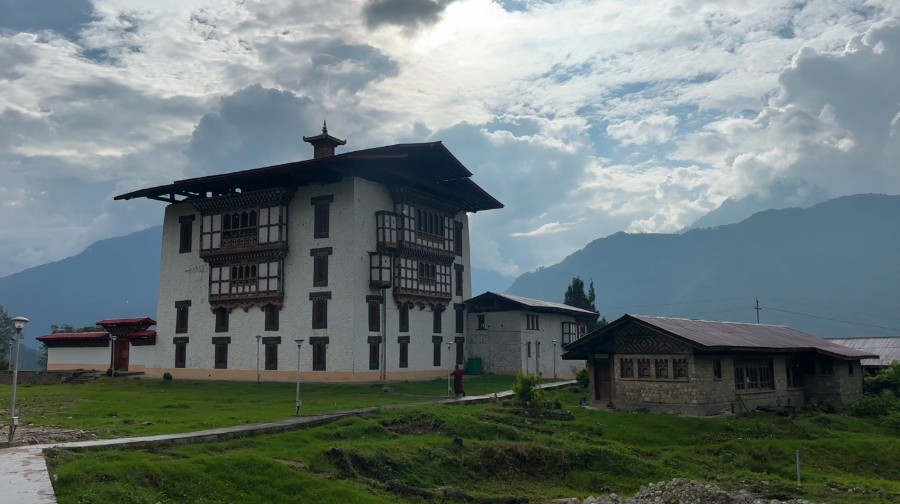
 Sacred cliffside monasteries, timeless festivals, awe-inspiring landscapes. Eastern Bhutan has always rewarded those willing to make the journey. And in Lhuentse, visitors have another stop to consider: the Jigme Namgyal Museum. The museum, erstwhile Dungkar Ngatshang, was once the seat of Desi Jigme Namgyal.
The Jigme Namgyal Museum sits in Kurtoed gewog, some 45 kilometres north of Lhuentse town. Wearing a fresh coat of paint, the 18th-century manor looks reborn. The four-storied structure has undergone a major facelift.
Inside, the building unfolds its story floor by floor.
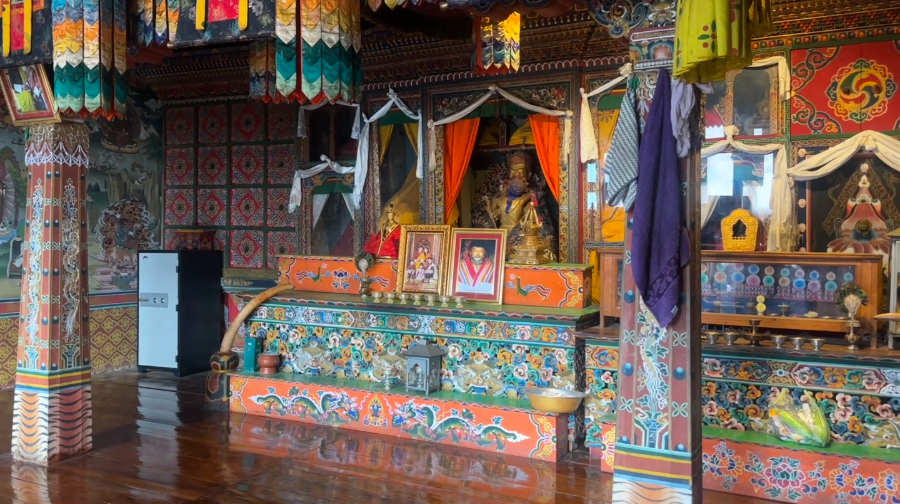 On the top floor sits three lhakhangs; the main is the Guru Tshokey Dorji shrine, just as it always has, and adjacent to it is Kanjur Lhakhang, where sacred texts are kept. This same floor holds a private chamber – the bedroom and the bed of Desi Jigme Namgyal. A floor below is Pema Lingpa Lhakhang.
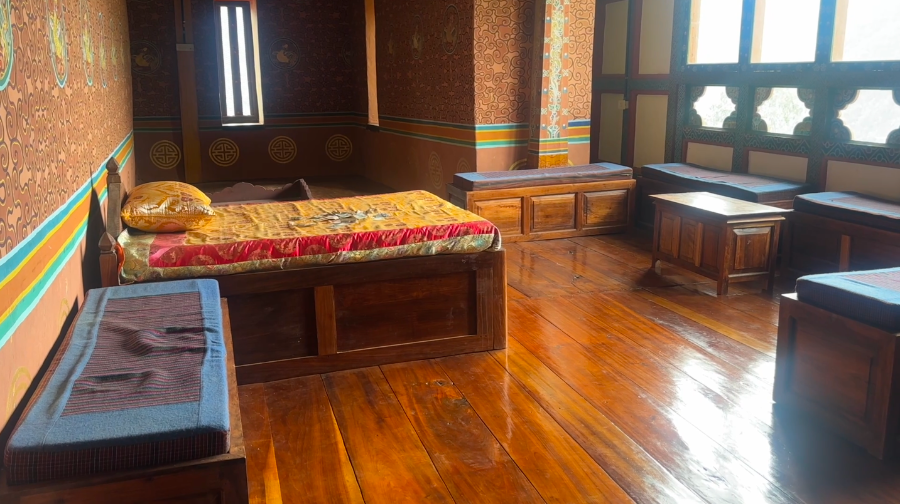 Beneath it lies the newly established Jigme Namgyal Heritage Gallery. Here, century-old artefacts bring the Desi’s world back to life. There are sacred relics, royal edicts, thangkas, traditional tools, ancient weapons, and personal belongings, each with its own story to tell.
For now, the ground floor remains empty.
“The museum has been open to the public since June last year, and it is my fourth month as the caretaker. So far, we have received international visitors a couple of times. Likewise, we see more than 20 local visitors here monthly,” said Kezang Jigme, caretaker of the museum.
Dungkar Nagtshang was once home to Dungkar Choeje, and later to Trongsa Penlop Jigme Namgyal, father of the Wangchuk Dynasty. A heritage centre here was first proposed in 2013. His Majesty The King granted Royal Approval for the project in August 2014, and works began in 2016.
Since 2010, the Lhuentse Rabdhey has looked after the estate, keeping alive the rituals initiated in Jigme Namgyal’s time.
For now, visitors arrive in modest numbers. But officials hope the ongoing upgrade of the Gangola-Lhuentse Road will bring more people to the museum, where the journey into eastern Bhutan leads to a glimpse of the nation’s living history.
Namgyal Wangchuk, Lhuentse
Edited by Sonam Wangdi