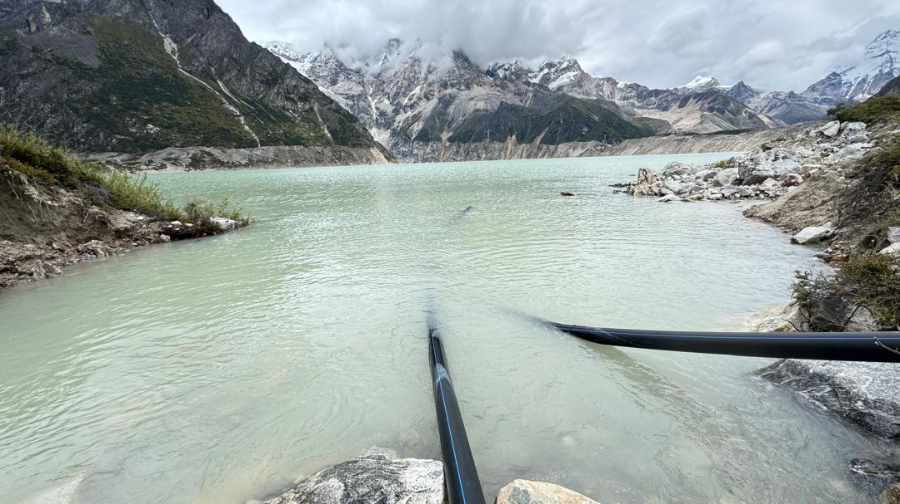
 A team from the National Centre for Hydrology and Meteorology, NCHM, is in Lunana, preparing for the second phase of piloting a siphon system at Thorthormi Lake. The system uses a pipe to draw water from the lake and carry it downhill, using gravity to gradually lower the lake’s level. It is considered relatively cost effective and easier to construct compared to other conventional glacial lake lowering techniques.
This time, the NCHM team will test the siphon system from the lake’s natural outlet. Last year, they had conducted a pilot test at another site. Although the team successfully constructed a siphon system there, they could not initiate water flow. Several factors affected the process, including the large difference in elevation between the lake’s water level and the siphon point.
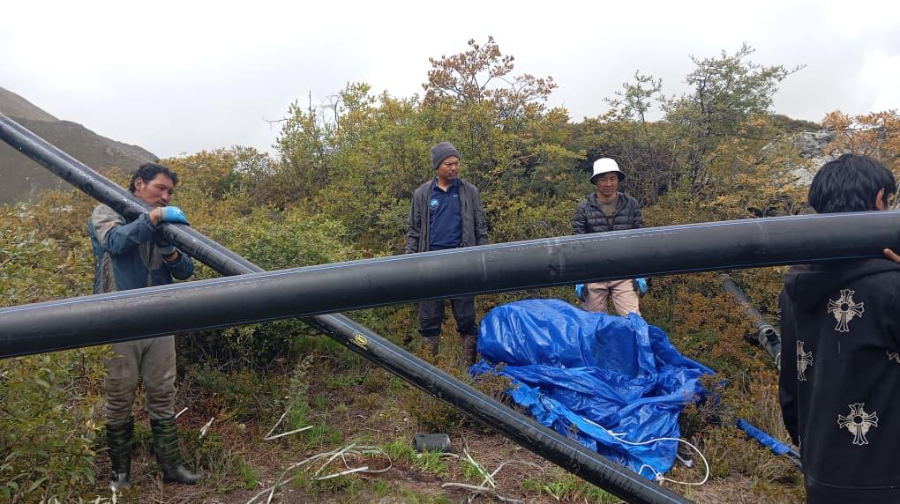 Currently, the team at the site are moving the material from the earlier siphon location to the new one, which is closer to the top of the lake’s natural barrier. According to the project engineer, shifting materials and constructing the system is expected to take at least two weeks before they can attempt to initiate the water flow.
As glaciers continue to recede, Thorthormi, at 4,500 meters above sea level, is rapidly growing into a fully formed glacial lake. NCHM officials say the changes have been particularly rapid in recent years.
Currently, among the 17 potentially dangerous glacial lakes in the country, Thorthormi poses the highest risk of Glacial Lake Outburst Flood. As such, a lot of hopes are pinned on the second siphoning test. If successful, Bhutan will become the first country in the region to effectively mitigate GLOF threats using siphoning.
Devika Pradhan
Edited by Sonam Wangdi