
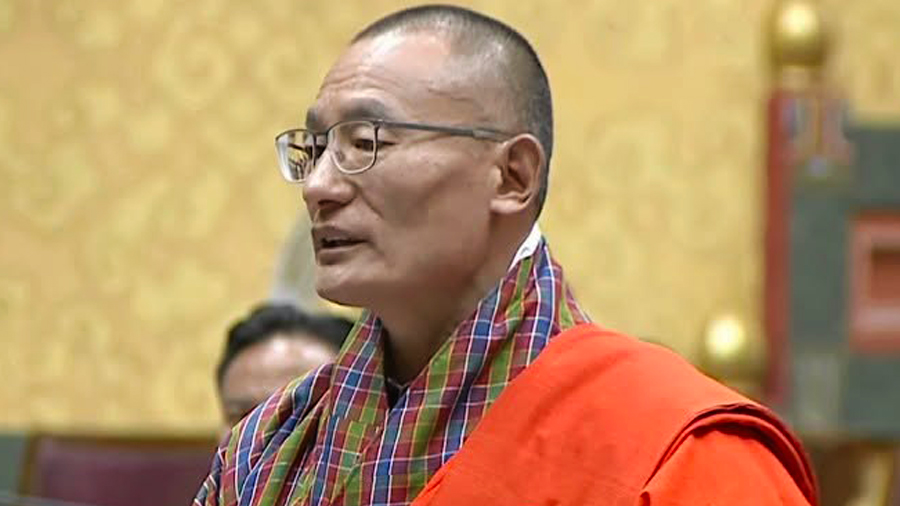
 Members of Parliament have questioned the government on its plans to address unemployment, particularly among young people and Bhutanese returning from overseas. Responding in the National Assembly today, Prime Minister Tshering Tobgay said the government is focusing on skills development, job creation and foreign investment.
Members of Parliament questioned the government on how it plans to support Bhutanese returning from Australia and the Middle East, particularly those with professional qualifications and limited employment opportunities at home.
Damche Tenzin, Thrimshing Kangpar MP, said there is no official report on how many Bhutanese have returned from Australia and the Middle East. “Some say that around 400 have returned from Australia and 1,000 from the Middle East. The Prime Minister may have the latest figures. Could he clarify how many Bhutanese have returned so far, how many more are expected to return, and what plans the government has to support their livelihoods?” he said.
Shompangkha MP Dr Tek Bahadur Rai said many Bhutanese working in Australia have professional qualifications, particularly in the health sector. “If they return to Bhutan, what employment opportunities will be available to them? There are currently limited vacancies in government hospitals. Does the government have any plans to encourage private healthcare centres to create more employment opportunities for these returning professionals?” he said.
The Prime Minister said 740 Bhutanese have registered under the National Reintegration Programme, of whom 629 have returned. So far, 34 have received skills training, nearly 40 have completed entrepreneurship courses, and another 60 have secured jobs.
The Reintegration Programme helps returning Bhutanese citizens with public and private sector job placements, demand-driven vocational training, and entrepreneurship bootcamps with pre-seed funding.
The Prime Minister said attracting foreign investment is one of the government’s strategies to expand the economy and create jobs. “So far, we have approved 152 projects under foreign direct investment. Of these, 83 have started operations and created 5,930 jobs. Another 3,315 jobs are expected as the remaining projects become operational,” he said.
But the Prime Minister said unemployment cannot be addressed by creating jobs alone. He pointed to a mismatch between available jobs and the skills and preferences of jobseekers.
The Prime Minister said many young people continue to prefer highly paid office work and overseas employment, while some vacancies in Bhutan remain difficult to fill. The new pay revision, commanded by His Majesty The King, is expected to make domestic employment more attractive.
However, the question remains whether the government’s ongoing initiatives can provide suitable jobs for the thousands of young people seeking employment and Bhutanese returning home.
Karma Wangdi & Namgay Wangdi
Edited by Sangay Chezom