
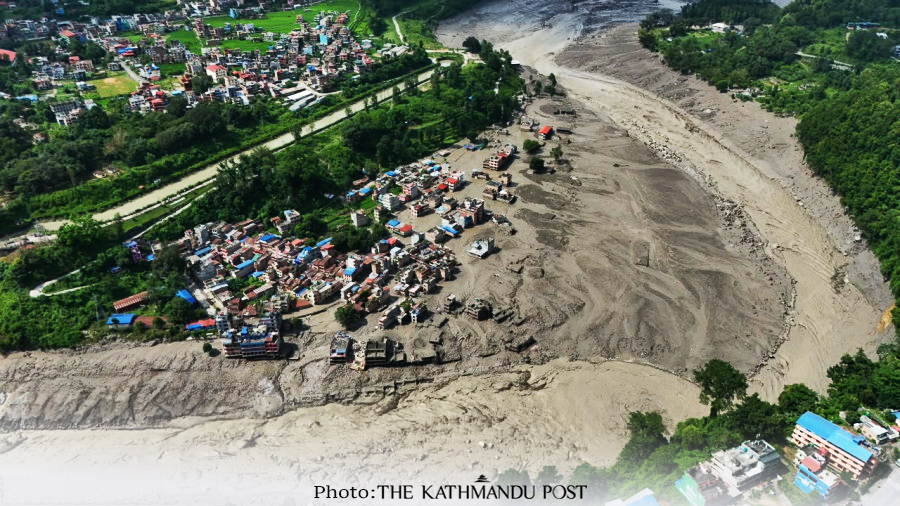
 Bhutanese pilgrims currently in Nepal are safe following the devastating flash floods in northern Nepal yesterday. International media report that the disaster has killed hundreds of people and left more than a thousand missing. Rescue teams in Nepal and China are continuing their search for survivors.
The list of missing foreign nationals in Rasuwa does not include any Bhutanese.
BBS spoke to a Bhutanese travel agent who is currently in Tibet. They said they are safe and currently in Samye, in central Tibet, about a two-day journey from the affected area.
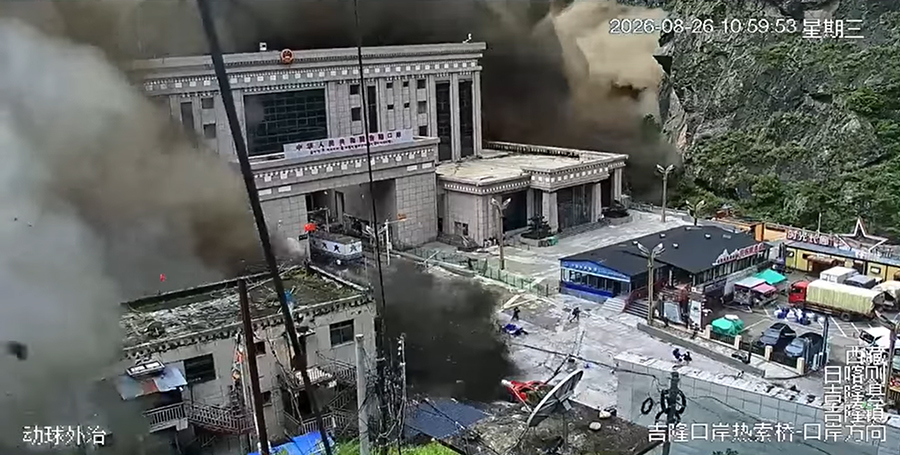
Bhutanese pilgrims travelling to Tibet usually enter through the Gyirong land port in China, which was affected by the flood.
Bhutanese travel agents say the pilgrims currently in Nepal are safe and staying in Kathmandu. The Ministry of Foreign Affairs has also confirmed that it has not received any reports of Bhutanese casualties.
The disaster began in the Himalayas near the Nepal-China border, in northern Nepal. International media report that a huge mass of ice and rock collapsed from a mountainside and crashed into the Lhende Khola, a tributary of the Bhote Koshi River.
The collapse sent huge amounts of ice, rock and sediment into the river, blocking its flow. Water then built up behind the blockage before suddenly surging downstream.
According to International Media, the force of the collapse also caused strong ground shaking. It was initially reported as an earthquake, but the US Geological Survey later linked the seismic signal to the massive landslide rather than a conventional earthquake.
The surge carried mud, rocks and debris through the narrow mountain valleys, causing widespread destruction in Rasuwa district along the Nepal-China border. The floodwaters then continued downstream into Nuwakot and other areas.
The disaster also affected Gyirong County in Tibet, on the Chinese side of the border.
Experts describe this type of debris flow as being like liquid concrete. It can move extremely fast, carrying rocks and other heavy material, leaving people very little time to escape.
Experts say the Himalayas are particularly vulnerable to such disasters because landslides can block narrow rivers. Water can build up behind the blockage and then surge downstream with enormous force.
This also raises concerns for Bhutan. The country has more than 1,600 glacial and subsidiary lakes. The National Centre for Hydrology and Meteorology has identified 17 as potentially dangerous.
The country is therefore also vulnerable to sudden floods triggered by landslides, glacial lake outbursts and other hazards.
To reduce the risk to lives and property, the National Centre for Hydrology and Meteorology has installed flood Early-Warning Stations.
These systems are designed to give communities warning of rising water levels and help them move to safety before floods reach downstream areas.
Deki Lhazom
Edited by Sangay Chezom