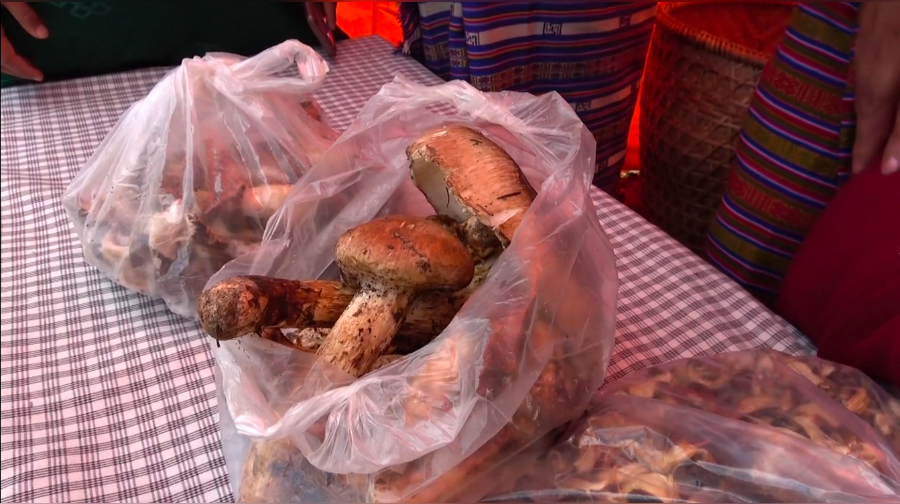
 Matsutake production in Ura in Bumthang is declining, and farmers say changes in the forest habitat are making it harder to find the prized wild mushroom. The decline was evident at this year’s Ura Mushroom Festival, where farmers struggled to bring enough matsutake to meet demand.
For years, people in Ura Gewog have relied on the forest for matsutake mushrooms, locally known as Sangay Shamu. However, farmers say the mushroom is becoming harder to find, particularly in areas where large trees are dying.
“We feel that matsutake production is declining year by year. We are also facing challenges in sustaining the mushroom groups in the gewog because we cannot control outsiders from collecting the mushrooms,” said Pema Norbu, a farmer,
Another farmer, Tshetrim Dema said that the villagers used to sell around 20 kilograms in two days. “Now, even the whole village can harvest only around three to four kilograms in a day. We have noticed that big trees in the forest are drying up every year. When the trees dry up, mushrooms no longer grow in those areas.”
Unlike cultivated mushrooms, Matsutake cannot simply be planted and produced through conventional farming.
The wild mushroom grows naturally in association with trees in the forest, which means its production depends on the health of the forests.
To protect these habitats, the Gewog Administration and Phrumsengla National Park, are working with the community to promote sustainable harvesting and mushroom conservation.
Ura Gup Chimi Tobgay said that matsutake mushrooms are found only in Ura Gewog in Bumthan. “To address this, the gewog administration and Phrumsengla National Park have provided training to the community on sustainable harvesting and mushroom preservation.”
For farmers, however, responsible harvesting is only part of the solution. They say preserving the trees and mushroom habitats will be critical if they are to restore matsutake production.
“Trees are also dying in the mushroom-growing areas, so the mushrooms do not grow as well there. We also could not sell as much matsutake during the festival as we did last year,” said Sonam Tenzin, also a farmer in Ura Gewog.
The decline in production was visible at this year’s Ura Mushroom Festival, which concluded yesterday.
Farmers had fewer mushrooms to display and sell. For a community that has long depended on matsutake as a source of income, the shortage is becoming increasingly difficult to ignore.
The festival, first held in 2008, was established to promote mushrooms, encourage sustainable harvesting and showcase Ura’s culture and local products.
Even at the Matsutake Festival in Thimphu, farmers in Genye Gewog were unable to collect enough mushrooms to meet the demand from exporters.
The matsutake season generally runs from July to September, but for the people of Ura, the future of the harvest may depend on what happens in the forest throughout the year.
Thinley Dorji, Bumthang
Edited by Sangay Chezom