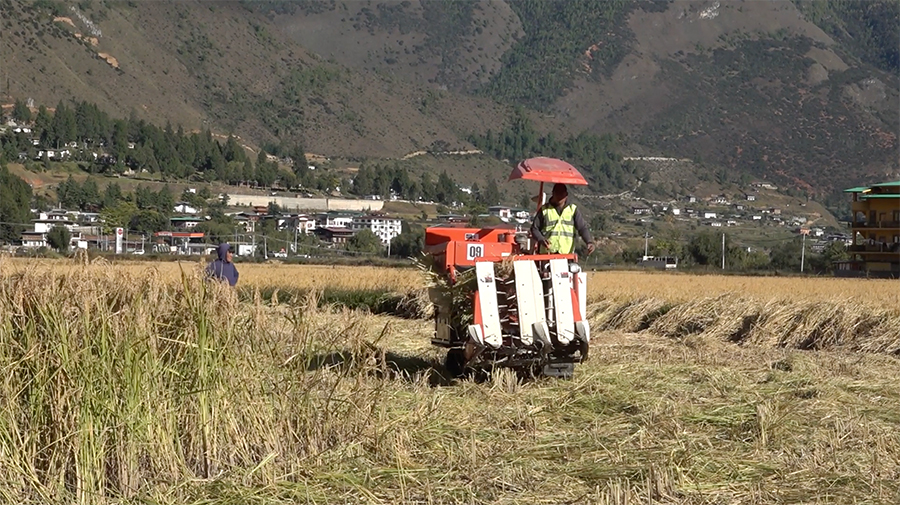
 As paddy harvesting begins in Paro, the harvest becomes a race against time. With fewer combine harvesters than needed, delays affect the harvest and rice quality.
Paro has only 31 combine harvesters, half the number needed to complete paddy harvesting within a month. The Farm Machinery Corporation Limited (FMCL) aims to harvest at least 1,700 acres by November 20 to reduce the risk of crop damage and spoilage caused by over-mature paddy and colder weather.
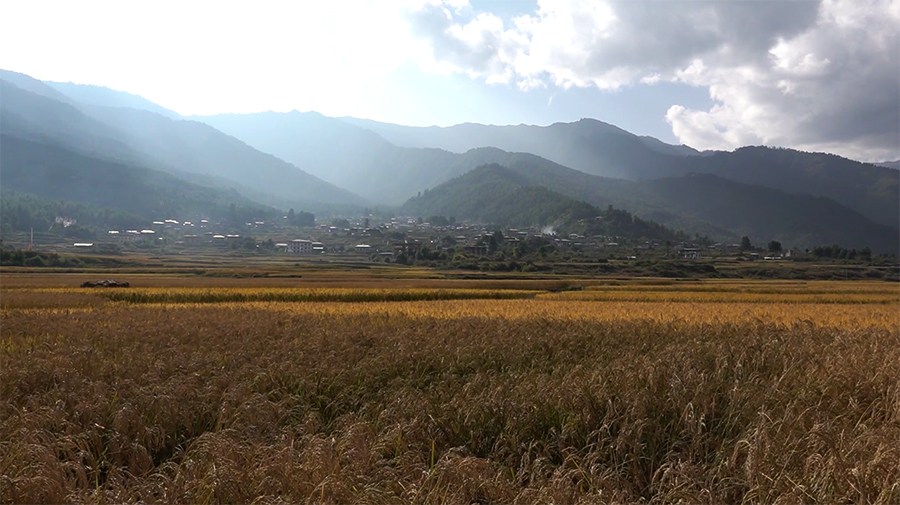 The district has 2,353 acres of paddy land across eight gewogs. FMCL estimates that 62 combine harvesters would be needed to complete harvesting within a month.
For farmers, combine harvesters reduce both labour and costs. Harvesting one acre by hand requires around 20 workers and costs between Nu 24,000 and 30,000 a day. A combine harvester charges about Nu 8,000 per acre and cuts, threshes and separates the grain in one operation.
Lhadon, a farmer from Wangchang Gewog, says the machines have made harvesting easier and less expensive.
“Harvesting by hand takes three steps, but a machine can do it in one. We have to cut the paddy, pile it up and then thresh it. The machine makes the work easier and reduces our expenses. If we hire workers, we have to pay about Nu 1,200 per person. So, the machines are a great benefit to us,” she says.
However, the limited number of machines means farmers may have to wait for their turn. Breakdowns can further delay harvesting, particularly when spare parts are difficult to obtain.
Samten Dorji, a farmer from Shaba Gewog, says his area has only one machine this year.
“This year, we have only one machine. When it works, it works very well. But when it breaks down, getting spare parts is difficult. We could harvest by hand, but that would take much longer and cost more. The machines are a great benefit to us. We just do not have enough of them,” he says.
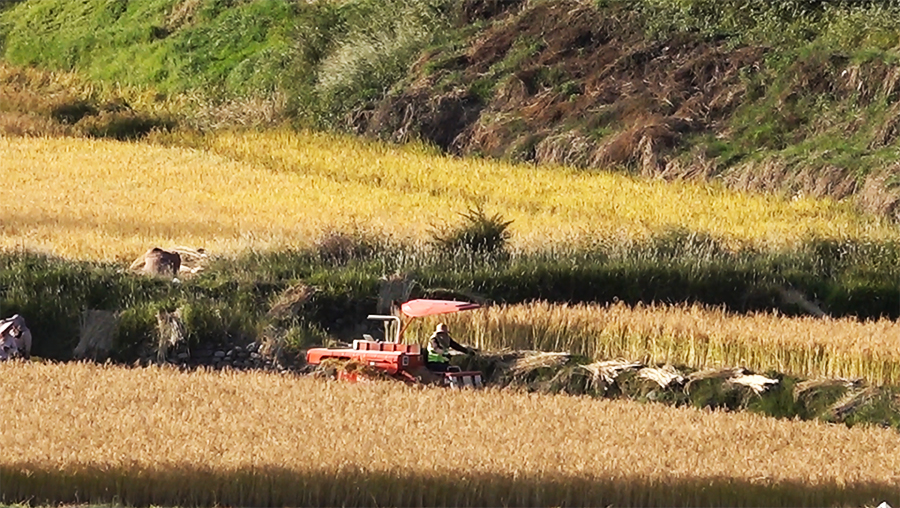 The terrain also affects how efficiently the machines can be used. FMCL says the gewogs used a lucky-dip system to decide which areas would receive machines first. However, some machines were assigned to steep and terraced fields, where breakdowns can be more frequent.
FMCL says deploying machines according to field conditions could improve coverage and efficiency. Farmers in higher areas are concerned that delays could expose their crops to frost and affect rice quality.
Tsencho Norbu, a farmer from Wangchang Gewog, says machine allocation should consider the needs of farmers in different areas.
“For example, if those of us in the lower areas get the machine first, it may be almost impossible to get it to the upper areas in time. When harvesting is delayed, frost can set in. By the time we dehusk the paddy, the quality of the rice may also have deteriorated. It would be better if each chiwog is given at least two machines,” he says.
FMCL says budget constraints prevent it from providing more machines at present. Its immediate priority is to minimise downtime and keep the existing machines operational.
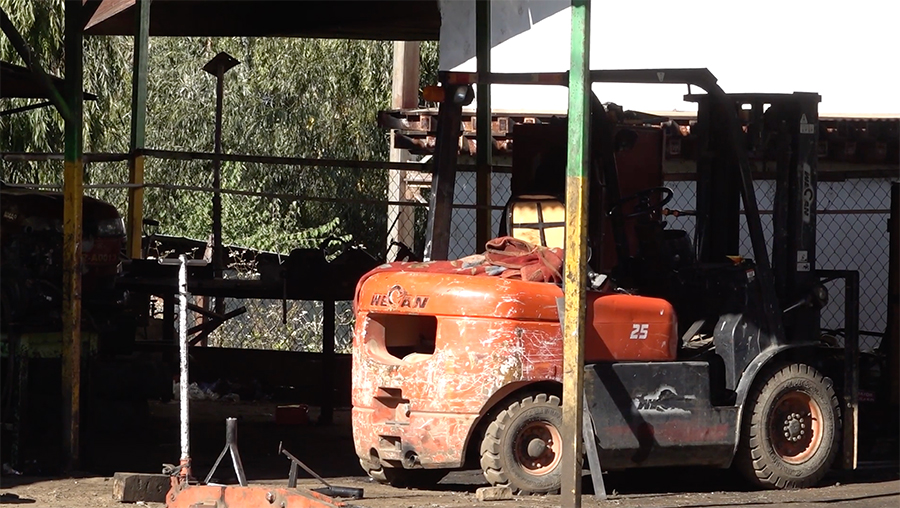 In Paro, four technicians, supported by six other workers, handle repairs. Drivers and coordinators also help identify where machines are needed.
Sonam Wangchuk, Hiring Coordinator of FMCL in Paro, says the focus is on reducing delays caused by breakdowns.
“We do not have the capacity to provide more machines at the moment. But when a machine breaks down, we try to minimise the downtime. We have four technicians who repair the machines, supported by six other workers. We also have drivers and coordinators who are constantly checking where help is needed,” he says.
FMCL aims to complete harvesting by November 20. With demand exceeding the available supply, keeping the machines running and ensuring timely access remain key challenges for farmers.
 Karma Samten Wangda
Edited by Sonam Pem