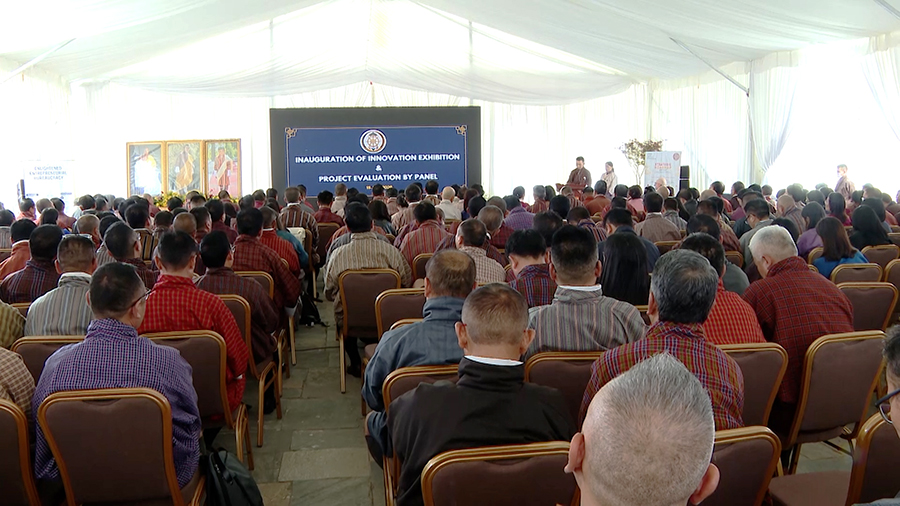
 As Bhutan targets to build a more efficient and citizen-focused public service, innovation is taking centre stage. Civil servants from across the country have gathered in Thimphu to showcase home-grown solutions aimed at improving service delivery, enhancing efficiency and addressing everyday challenges. From digital technologies to institutional reforms, the innovations are on display at the first Civil Service Innovation Forum.
Around 50 innovation initiatives from ministries, districts, agencies and institutions are on display during the two-day Civil Service Innovation Forum.
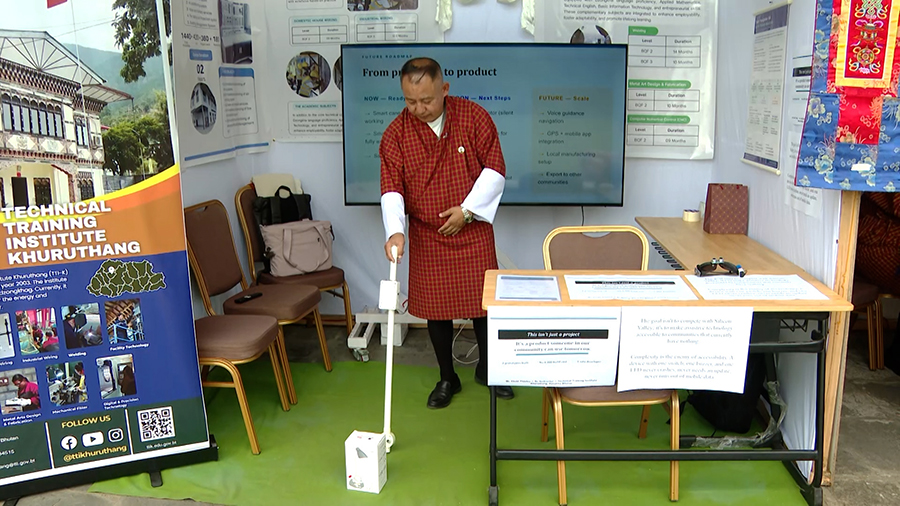 One of the innovations attracting attention is the Smart Navigation Aid for the visually impaired. Developed by instructors and trainees of the Technical Training Institute of Khuruthang, the device uses ultrasonic sensors to detect obstacles before users come into contact with them. A buzzer then alerts the user, helping them navigate more safely and independently.
Choki Thinley, a senior instructor at the Institute, said, “At present, they do not have an early warning system to detect obstacles, which can sometimes lead to accidents. This smart stick helps overcome that challenge by detecting obstacles in advance and providing early warnings to the user.”
Another innovation showcased at the forum focuses on improving the management of Bhutan’s mineral resources.
Developed by the Department of Geology and Mines, the project uses technologies such as advanced digital mapping, highly accurate satellite tracking, and drones.
Officials say the initiative will help improve transparency, support scientific reserve estimation, strengthen environmental protection and ensure the fair allocation of mineral resources.
“In the current context, we are trying to use the technology to estimate the reserve and also operate the mines and service collection in the most feasible, socially and environmentally friendly manner. To do this, we have a couple of things. Firstly, we start with the professional estimation and judgement. Unlike in the past, we use technologies like geophysical tools to estimate the geological reserve,” said Nima Yoezar, Offgt Chief, Mineral Policy and Cadastre Division, Department of Geology and Mines.
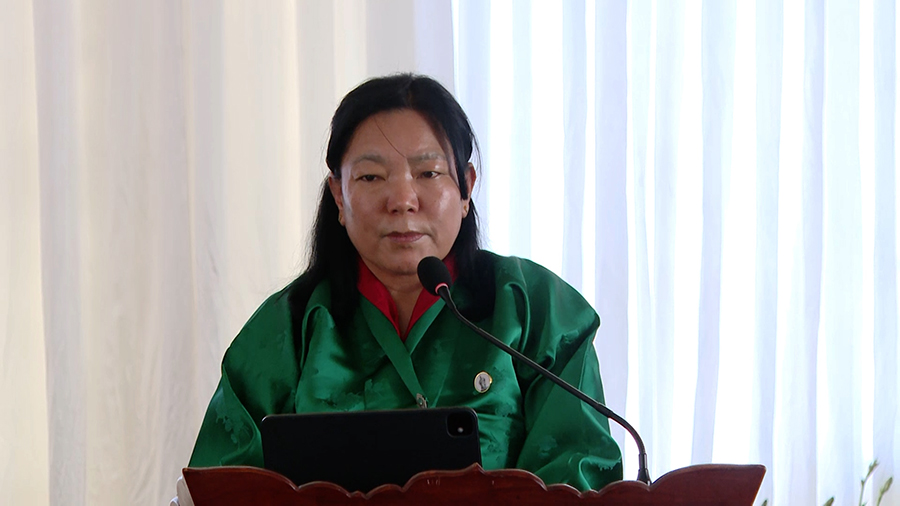 Speaking at the opening ceremony, the Royal Civil Service Commission Chairperson said innovation in the public sector goes beyond technology.
She said innovation also means simplifying processes, reducing red tape, embracing digital transformation and artificial intelligence, and placing citizens at the centre of service delivery.
Officials added that the forum serves as a platform for civil servants to share ideas, learn from one another and replicate successful innovations across agencies.
“If they can showcase, not only does it benefit themselves, but also it would have other agencies visit the booths, and then they can transfer those best practises and implement them in their agencies, so that is one objective. We are also inviting private agencies and corporate representatives from corporate sectors, so that they can see what services that are relevant to them are being offered in the civil services,” said Jigmi Norbu, HR Officer, Leadership and Talent Division, RCSC.
The Civil Service Innovation Forum will conclude tomorrow with more exhibitions, discussions and project presentations.
Namgay Wangdi