 As global leaders discussed climate action and resilience at the Global Environment Facility Assembly, Thimphu in Bhutan is already confronting the growing impact of climate change at home. As climate risks intensify, the city is upgrading its drainage system to withstand extreme weather and support urban growth over the next 25 years.
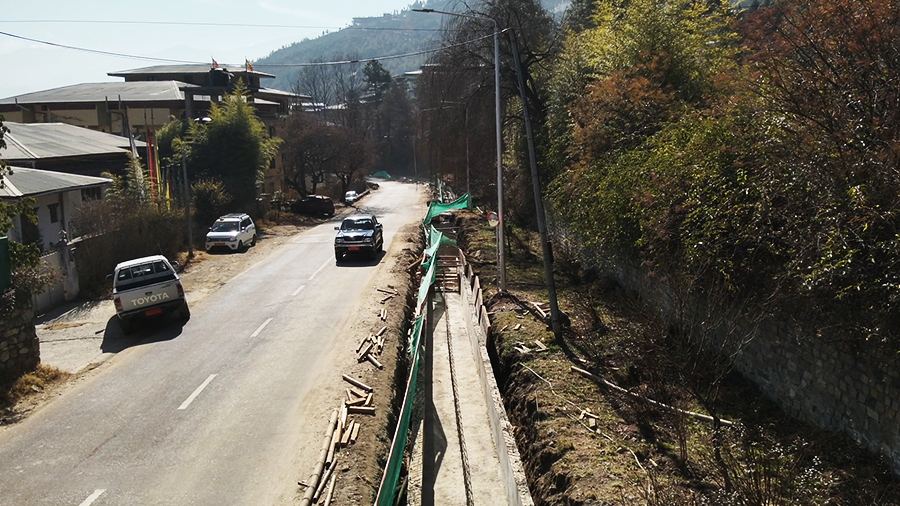
From high above, the sheer scale of Thimphu’s drainage system overhaul becomes clear.
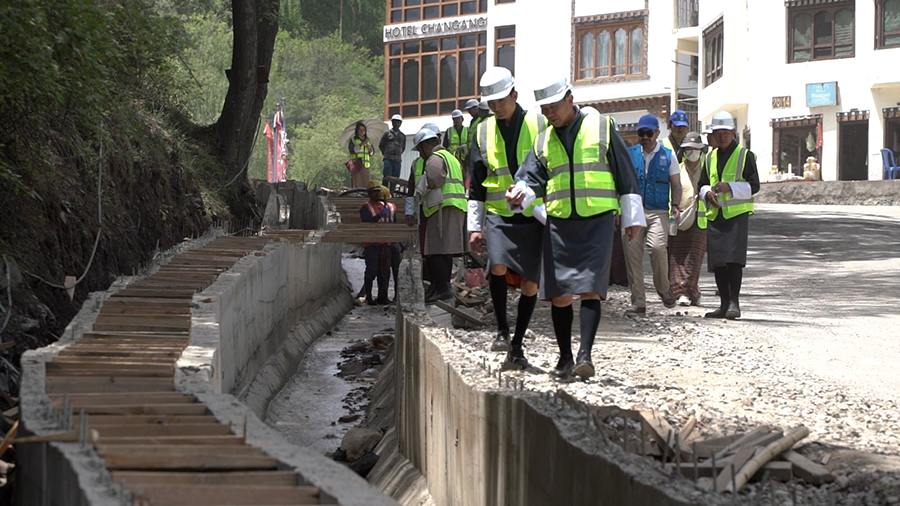
In the current phase, deep trenches are being dug from Sersang School in Motithang through the core city area to the Kaja Throm.
It is aimed at addressing a growing problem. Heavy rainfall often causes water to overflow onto roads, overwhelming the old drainage system.
To ensure resilience, the new drainage systems are designed using a data-driven approach. It tracks how water flows and looks at years of past weather to see what is coming next. It is also in alignment with the Thimphu Structure Plan 2023-2047 to accommodate long-term population projections and urban expansion.
The new storm water drainage system is part of the “Enhancing Climate Resilience of Urban Landscapes and Communities in Thimphu-Paro region” project, a six-year initiative of the government and UNDP. Global Environment Facility is funding USD 20 M while the government is co-financing USD 62 M.
“So, what we are doing in this project is we are incorporating nature-based solutions and sustainable urban infrastructure along with the drain, meaning like we have our strong drain, along with it we have underground ducts which will completely separate the utility lines, which are one of the main reasons for the blockages, especially during the rainy season. And then, we are coming up with nature-based techniques such as bio-soils, we have cascading ponds which will naturally filter the drain, and then we have retention ponds which will act as flood-resilient technique,” said Kezang Dorji, Urban Planner, Thimphu Thromde.
“As per the statistics, one in every four Bhutanese are living in these two cities. The pressure in the nature us much higher in these two cities, so if we manage to address the challenges of climate change and the urbanisation and the pressure on the nature in these two urban centres, that would be a major step for making sure that Bhutan’s major urban centres are actually climate resilient,” said Mohammad Younus, Resident Representative, UNDP Bhutan.
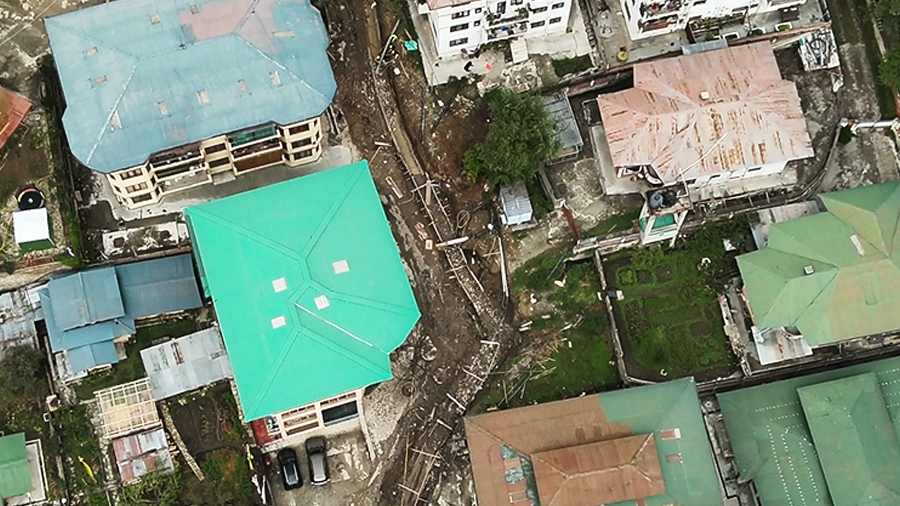 While the long-term goal of the project is a safer and what officials describe as a flood-proof city, it is often under public scrutiny for the inconvenience it is causing. However, officials say the disruptions are temporary and necessary for the city’s long-term resilience.
This is how the drainage system will look once completed. It will be a disability-friendly footpath.
“So, you probably saw today also the walkways, how that is going to be built with standard quality and also taking the needs of people with disabilities, the visually impaired people. So, they are all part of the project,” said Mohammad Younus, Resident Representative, UNDP Bhutan.
Works began in November last year and are scheduled to be completed by the end of this month.
While global discussions continue, Thimphu is already taking steps to build a stronger, climate-resilient city. Yet, with severe weather risks growing, questions are being raised about whether these steps are enough, and how much more needs to be done before some major storms hit.
Phub Gyem
This story is produced as part of a reporting fellowship to the Eighth GEF Assembly supported by Internews’ Earth Journalism Network.