
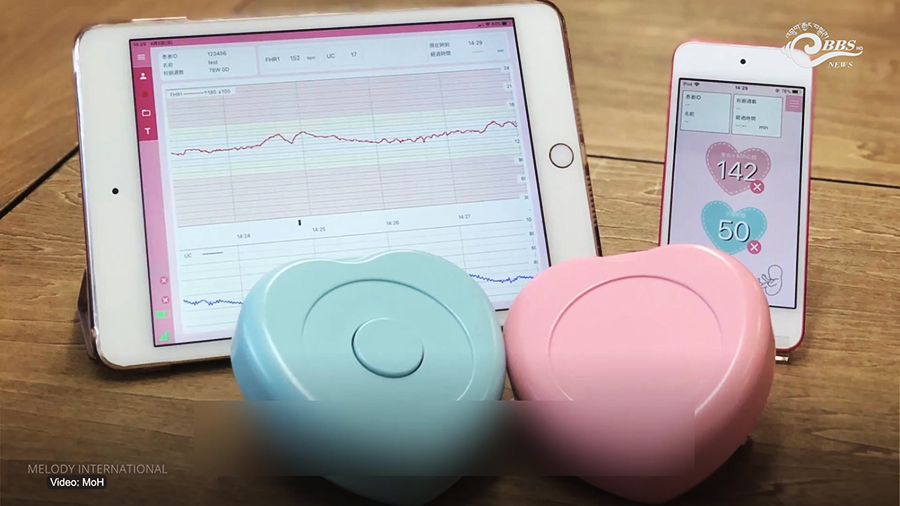
 Half of the pregnant women in the country now have access to the smart, wireless pregnancy monitoring service called Intelligent Cardiotocography or iCTG. These portable devices allow rural health clinics to instantly share an unborn baby’s heart rate data with specialists, making it much faster and easier to spot high-risk pregnancies. This is according to an impact study report of the device conducted by the project implementers.
The iCTG device is used in fetal monitoring and connects health workers to specialists over the internet. Introduced in 2020, over 80 devices were deployed in over 70 health facilities at strategic locations across the country.
Two small, wireless discs are placed on the pregnant woman’s abdomen to track the baby’s heartbeat contractions.
Within seconds, that data is sent to a smartphone and uploaded to the cloud.
From miles away, a specialist monitors the live data in real-time and quickly advises health workers if the baby is showing signs of distress.
JICA Bhutan Office’s Chief Representative Yoichiro Kimata said, “We capacitated the facility officers and nurses on how to utilise those devices. Through this capacity-building initiative, we contributed to the reduction of the neonatal mortality rate through early detection of abnormal heart rates.”
“This has not just helped in detecting abnormal fetal heart rates but also reduced the travel cost and time loss of the mothers who did not actually go to the hospitals to access specialist consultation,” said Kinley Dorjee, a senior researcher with Health Informatics and Research Division, MoH.
The use of this technology across all facilities increased from over 4600 sessions in 2023 to over 5300 sessions in 2024.
Death from birth asphyxia, or a lack of oxygen have plummeted from twenty in 2020 down to just three in 2025. However, experts caution that it will take further evaluation to ascertain if the reduction is due to the use of this technology.
The technology works, but only if staff know how to use it.
Across the country, only over 20 per cent of the health workers received formal iCTG training, leaving health workers unprepared and less confident to make the most of it.
Kinley Dorjee said, “The other one is the lack of internet services. It was further impeded by the lack of health workers’ knowledge to interpret the results correctly because this is not actually taught to Health Assistants in remote PHCs. It’s not there in their curriculum.”
 Looking ahead, officials plan to build Artificial Intelligence into the device to help health workers read the data.
Kelzang Chhophyel