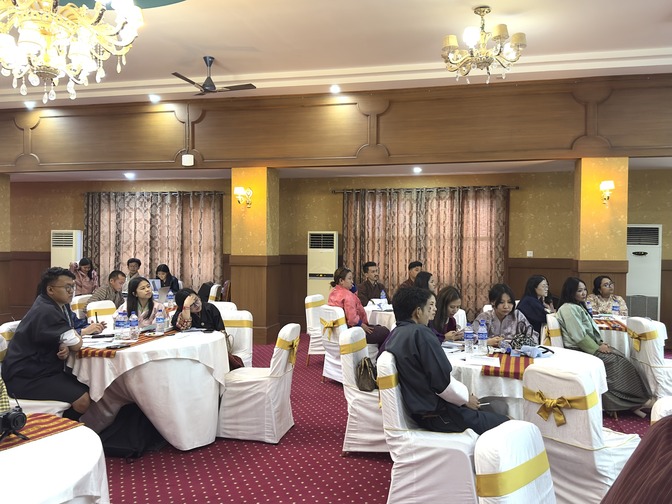
 A single word in a headline can shape how an entire community is seen. For journalists reporting on sensitive issues, choosing the right language is increasingly becoming as important as reporting the facts themselves. That conversation took centre stage in Phuentshogling this week, where journalists from across the country gathered for a three-day training on sensitive and inclusive reporting practices.
With rapidly changing language, terminology, and the weight words carry when reporting on vulnerable communities, reporters must remain abreast. According to the participants, today, the risk is that certain words or phrases can unintentionally reinforce stereotypes or cause harm to the very communities being reported on.
“With some groups, we have to be careful about the terminology we use. Some words, if we are not careful, can hurt them. This training helped us understand that. We also have to be careful when dealing with marginalised groups. The training taught us all of this,” said Sangay Rabten, Senior Reporter, Business Bhutan.
The pressure is felt even more among young media professionals who are entering newsrooms at a time when the rules of responsible reporting are still being written.
“This kind of training is very important for us, and the three-day training benefited us a lot. With changing times, newsroom staff keep changing, and there are many young journalists. So this training will help a lot,” said KP Sharma, Reporter, Kuensel.
The training focused on reporting related to women, children, persons with disabilities and LGBTQI+ communities.
Facilitators from different fields led discussions on ethical storytelling, respectful language, and the responsibility the media carries in shaping public attitudes.
The Bhutan Media Foundation organised the training with support from Helvetas Bhutan and the European Union.
“The media play very important roles in shaping public opinions, creating narratives and fostering an informed society. So that’s why we felt that it is important to raise awareness, situations and rights of marginalised communities. It also raises awareness in terms of their challenges and rights, most importantly, it promotes ethical and responsible journalism in Bhutan,” said Riku Dhan Subba, Executive Director, BMF.
More than 30 participants, including journalists from various media houses, freelancers, and youth representatives, attended the workshop.
For them, the takeaway from Phuntshogling has been clear – it is no longer about how fast a story is told, but how responsibly with accuracy, dignity, and care.
Passang Dorji/Kinley Dem
Edited by Sonam Wangdi