 What was once hours of back-breaking work in Drupkhang village in Trashigang has now become faster and more efficient with the introduction of nettle yarn processing machines. For years, women there relied on age-old methods to extract nettle fiber for weaving.
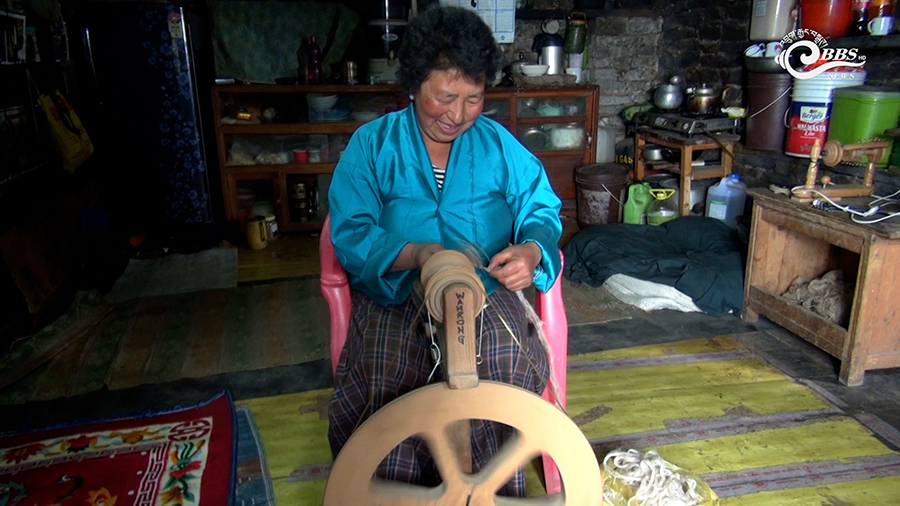 A women’s group in Drupkhang under Lumang Gewog began reviving nettle weaving over a decade ago. Today, the group has 17 members working to sustain the tradition.
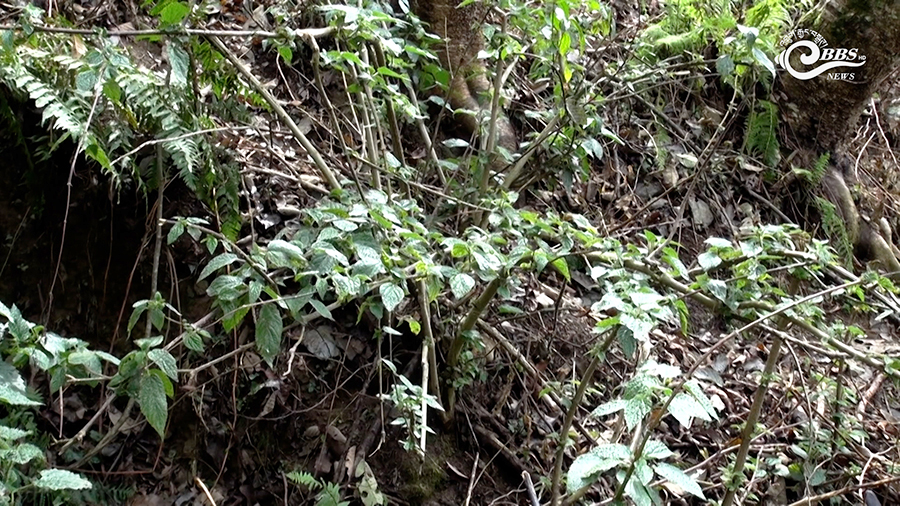 Nettle plants are harvested in mid of the year to ensure better quality. The outer layer is peeled, and the bark is dried before processing begins.
Until recently, extracting fiber was a labor-intensive and tiring process. The bark had to be beaten repeatedly and washed several times to soften it.
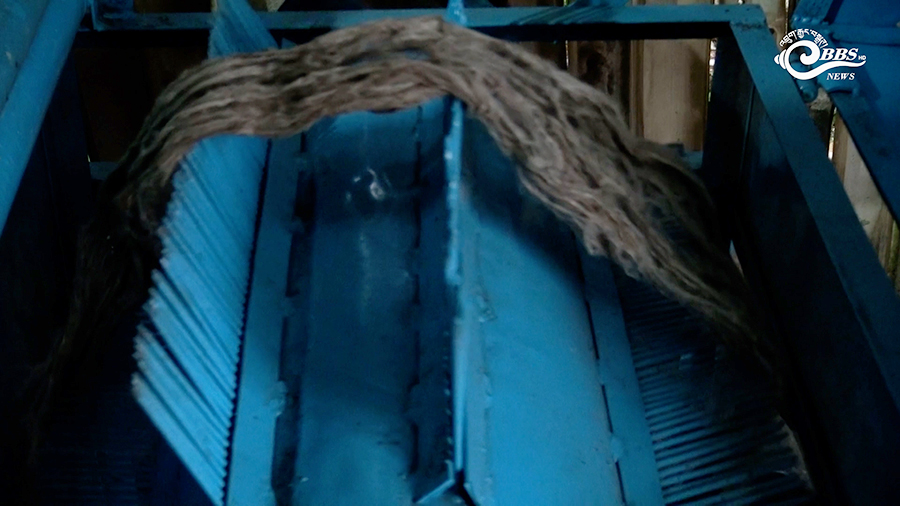
Last year, the Tarayana Foundation with support from Bhutan for Life, setup a nettle yarn processing machines in their village.
The machines now beat and soften the bark, remove impurities, and separate the fibers, making extraction easier. One of the machines further helps produce uniform, high-quality yarn.
With the machines, the workload has reduced significantly, while efficiency and product quality have improved.
Sonam Choden, a member said, “Earlier, we used to place the nettle bark between a flat stone and a wooden plank. We used to continuously beat it and wash it five to six times until it becomes soft. Now, we no longer have to do that, as we have machines. The machines have benefited us a lot, as we don’t have to manually beat the bark. Now, even our friends have started weaving, ultimately generating income.”
Another member Karma Choden said, “Earlier, we had to do everything manually, separating fiber and then used a spindle to make yarn. Now, the spinning machine does both the separation and spinning in one go. Before, without machines, we could not maintain proper yarn size. Now, the quality has improved significantly, and with experience in handling the machines, the yarn quality will improve hereafter.”
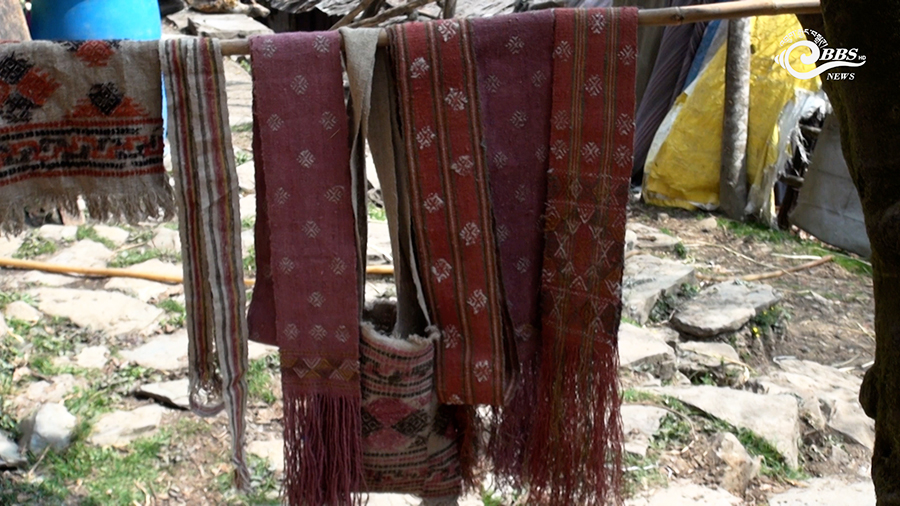 They weave a variety of products, mostly Rachu, bags, and table cloths, earning around Nu 30,000 annually.
The Tarayana Foundation is also supporting efforts to grow nettle plants on private land.
For the women group, the blend of tradition and technology is not only preserving their craft but also improving their livelihoods.
Sonam Darjay, Trashigang