
 Bhutan’s civil service is seeing an improvement in retaining its civil servants with the latest figure showing attrition rate dropping to six per cent this fiscal year, down from 16 per cent in 2023. The figure has also surpassed the 13th Five-Year-Plan end-target of eight per cent.
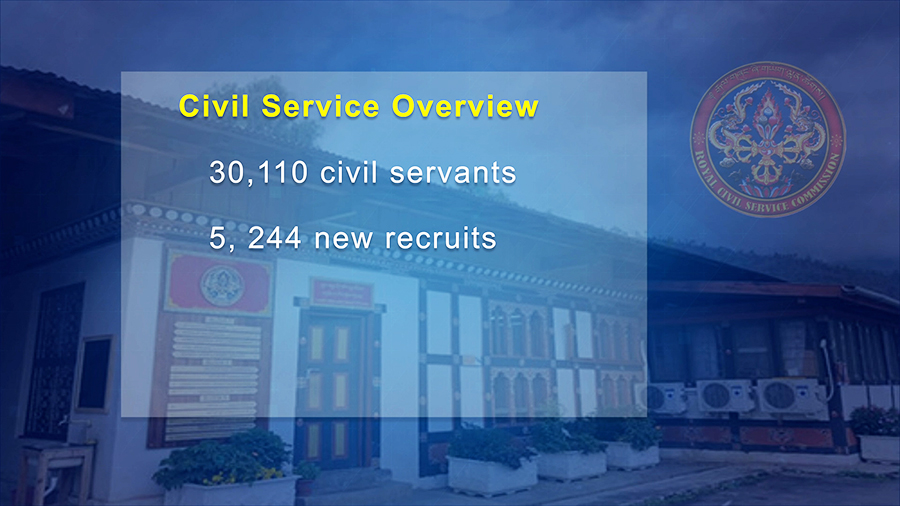
Currently, there are more than 30 thousand civil servants in the country.
 During the Royal Civil Service Commission’s Mid Term Review of the 13th Five-Year-Plan, the commission shared it has been seeing an active workforce management since 2024, with more than 5,200 new recruits.
It remains largely decentralised, with almost 60 per cent of civil servants serving in local governments, supporting service delivery at the grassroots level, while around 40 per cent are based in central agencies.
In the education landscape, there are currently more than 8,200 teachers for nearly 145,000 students, which remains within the education ministry’s standards.
Similarly, there are almost 630 doctors, with a doctor-patient ratio of 1:1250, which is close to the WHO standard of one doctor for every 1,000 people.
The commission also shared that nearly 800 civil servants availed Extraordinary Leave, EOL, since 2024. Out of this, 256 have resigned and 445 are still on EOL. Additionally, more than 700 civil servants are on Long Term Training.
To retain civil servants, the commission recommends implementing option for civil servants to withdraw lump sum Provident Fund after 23 years of service without resignation, timely transfers, and incentives, among others.
With the global benchmark at five per cent, the Royal Civil Service Commission says the country is approaching a stable range.
Furthermore, the Prime Minister suggested Human Resource Officers look into improving the EOL system, including replacing those on EOL and encouraging civil servants taking EOL to work extra years.
Deki Lhazom/Tashi Dekar
Edited by Phub Gyem