
 What we eat could shape the future of the planet. In Thimphu, yesterday, International Earth Day was marked with a plant-based cooking competition, highlighting the link between diet, health, and environment.
The sound of sizzling vegetables, the earthy scent of clay pots, and the intense focus of eight contestants racing against time filled the cooking arena with energy.
 Each contestant had one hour to prepare two dishes selected through a lucky draw. From beans datshi and mushroom datshi to hogay and broccoli fry, they cooked under pressure but with a clear purpose. The aim was to promote food choices that are better for the planet.
According to the Food and Agriculture Organization, global food systems account for more than one third of greenhouse gas emissions.
A 2021 study also found that 57 percent of food related emissions come from animal based foods, compared to 29 percent from plant based foods.
Tashi Phuntshomo, one of the participants said, “I have understood today that eating more vegetables and less meat is good for health. Usually I make more vegetable dishes at home. Today, the competition requires us to make plant-based dishes in Bhutanese style.”
Another participant Sonam Choden said, “It has been 12 years since I stopped eating meat. People say that without eating meat you cannot stay healthy, but I have never experienced that.”
Likewise, Dolma Yangzom said “I feel truly happy to have participated in this year’s International Earth Day as I got to learn a lot. Before, I wasn’t aware that consuming meat had such an impact on the environment, but now I know.”
Under the theme “Nourishing the Planet: Plant-Based Cooking for a Sustainable Future,” the Karzay Foundation is promoting karzey and encouraging people to abstain from meat and other animal based products.
Through the initiative, the foundation aims to cultivate compassion for all sentient beings while promoting more sustainable food choices.
Kinley Kuenzang, Officiating Executive Director of Karzay Foundation said, “Let’s take the example of a cow. When cows are raised, they produce a lot of methane gas, which has a strong impact on climate change. Additionally, when the industry expand, forests are cleared, which further affects the environment.”
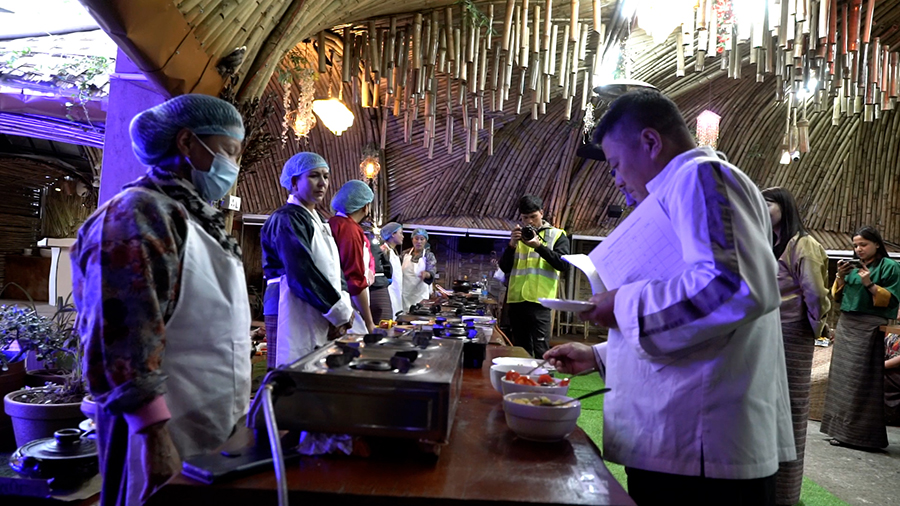 As judges tasted each dish and participants waited in anticipation, one message stood out, this was never just about the competition. It was about rethinking everyday choices.
Kinley Bidha