
 The Ministry of Industry, Commerce and Employment is finding it unrealistic to bring down the country’s youth unemployment to the earlier promised rate of 5.8 per cent. During its Mid-Term Review, the ministry proposed revising the youth unemployment rate target and bringing it down to over 10 per cent by 2029. The ministry says this rate is more achievable in the current economic circumstances and labour market realities.
The adjustment proposal comes against the backdrop of persistently high youth unemployment.
According to the National Statistics Bureau, the country’s youth unemployment rate stands at 16.5 per cent as of the first quarter of this year. The International Labour Organisation defines youth unemployment as individuals aged 15 to 24 who are not in employment despite being available for work and actively seeking employment.
During its midterm review, the ministry cautioned that expecting a rapid decline in youth unemployment would not be realistic under current conditions.
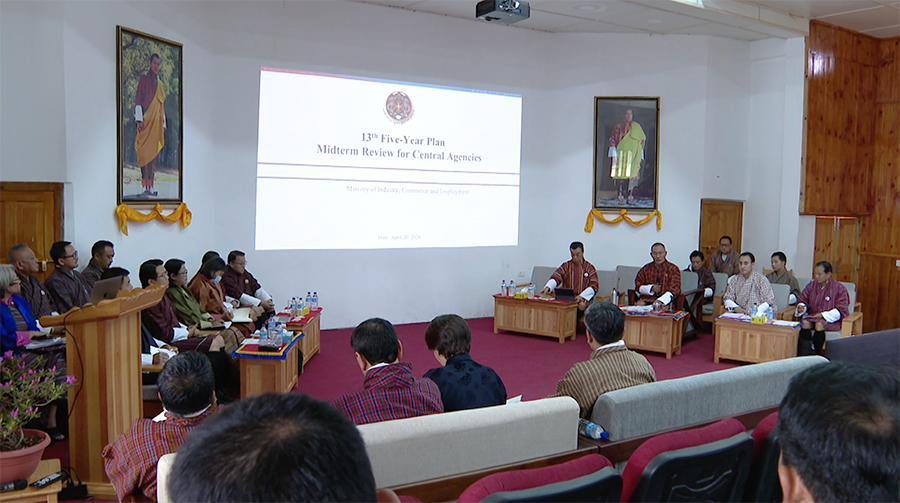 The Prime Minister said that any revision of targets should be accompanied by a clear definition of unemployment.
The Prime Minister said Bhutan should go beyond unemployment statistics to directly engage job-seeking youth, understand their aspirations, and better match or train them for available work opportunities.
“Instead of revising the target, because the target is not being achieved, let’s go behind the numbers to see why the targets are not being achieved. And to begin with, start with the definition of unemployment. What is your definition of unemployment? What is NSB’s definition of unemployment? What should our collective definition of unemployment be? Now, if there are jobs and people are not interested in working, have already decided that they are not going to work, live off their parents’ money, or they are going to go to Australia, they are not looking for work, they cannot be classified as unemployed.”
According to the ministry, deep-rooted structural challenges such as skills gaps, job-skills mismatches, limited work experience among job seekers, and an underdeveloped private sector cannot be resolved quickly and require long-term reforms in education, industry development, and the broader labour market.
Samten Dolkar
Edited by Phub Gyem