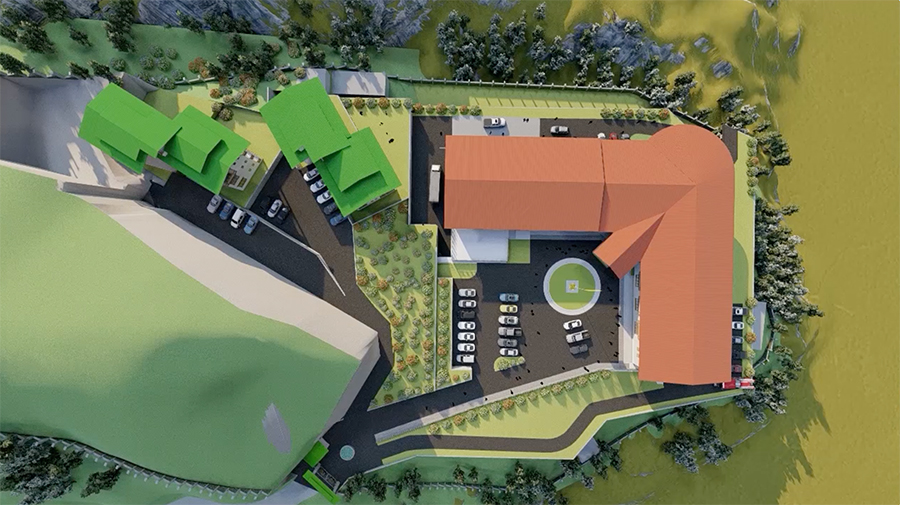
 Communities across the country will soon benefit from faster and more reliable weather warnings. A new National Weather and Flood Warning Centre will be constructed at Yusipang in Thimphu, under the National Centre for Hydrology and Meteorology. The project officially began with a groundbreaking ceremony today.
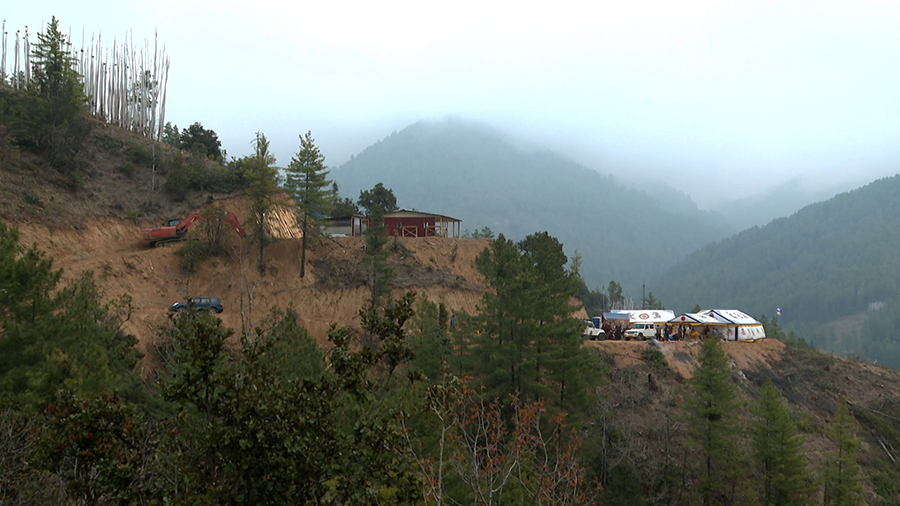 Located about 2,800 meters above sea level, away from the city, the centre is expected to improve satellite connectivity.
This strategic location will enable more efficient early warning systems, supported by advanced scientific infrastructure.
“This will serve as a proper line of sight for our satellite. Currently, we do have one satellite down there at the centre, but it is within the town area, so it is very hard for us to get the proper line of sight. Also, the current structure has very limited spaces, and right now we are operating from two buildings, which is very time-consuming,” said Thinley Phuntsho, Project Lead, NCHM.
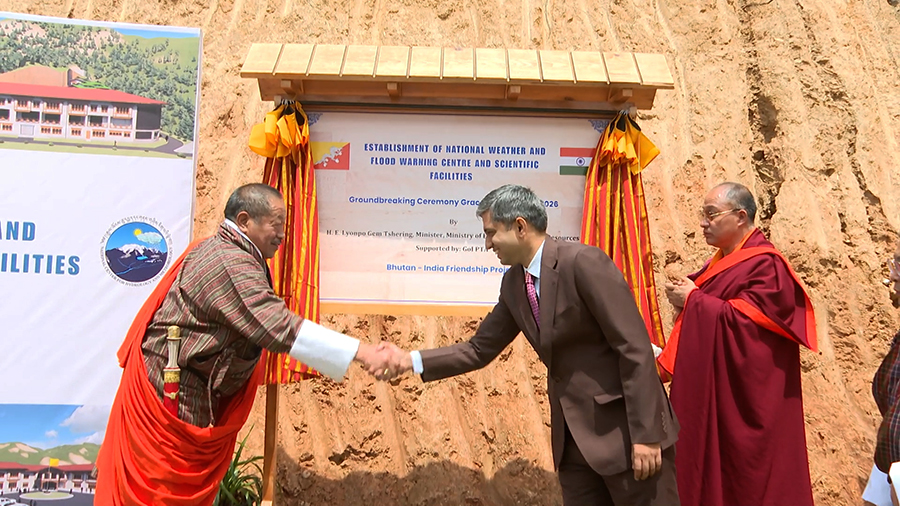 Funded by the government of India, the construction will cost nearly Nu 328 M and is expected to be completed by 2029.
The centre will function as the national command hub for real-time weather forecasting and hazard monitoring.
“This means that the communities will receive more timely warnings, farmers will be able to plan better, infrastructure will become more secure, and emergency services will respond with greater precision,” said Aniket Mandavgane, Deputy Chief of Mission, India.
Officials at the NCHM said the infrastructure will address current forecasting gaps and improve the country’s ability to respond to emergencies.
“This is not only for Bhutan. There is an opportunity where we can provide information downstream, which means investment in Bhutan is not only for investment in Bhutan but also for the downstream countries,” said Karma Dupchu, Director General, NCHM.
In addition, the centre will include a dedicated education and learning facility to encourage young people to take an interest in weather, climate, and cryosphere sciences.
The centre will also facilitate data sharing with neighbouring regions, including Assam and West Bengal, and eventually contribute to global systems such as the World Meteorological Organisation.
As climate risks continue to grow, the new centre is expected to play a key role in strengthening early warning systems and helping communities stay informed, prepared, and safe.
Devika Pradhan
Edited by Sonam Pem