
Three years. Three Spring Festivals. Same stall. Dawa Tenzin from Bji gewog of Haa knows what a good day looks like. This year, every day looked like one.
From a steady and manageable flow of customers in the past, the third edition of the Haa Spring Festival has been a rush of customers that never quite ceased.
“The festival is growing with every edition,” he says, pausing briefly between customers.
“Unlike in the past, this year, there are stalls selling and showcasing handwoven products. They also brought in more native breeds of domestic animals for exhibition.”
Each spring, as rhododendrons flush red across the hillsides, Haa, Bhutan’s westernmost district, hosts the Spring Festival. Otherwise quiet town, it comes alive.
Through the years, the festival has quietly grown from a modest local event to one buzzing with people and activities. This time, the vendors felt the shift before the organisers could confirm it in numbers.
“When we went for lunch on the first day, the stalls had already run out of food,” says Tenzin Jamba, the Chairperson of Haa Dzongkhag Tshogdu.
“The vendors told us they had prepared food based on previous editions of the festival. But the number of visitors was far beyond what they expected,” he adds.
The district’s records show that each stall earned an average of Nu 65,000 over the three days.
“Compared to previous years, we received a far greater number of visitors this time. It seems that people were genuinely excited about what Haa has to offer, and wanted to come and experience it for themselves,” syas Gembo Tshering from Sangbay gewog.
The district had worked deliberately toward these numbers through social media campaign and formal invitations to ministries and agencies.
“We recorded around 10,000 people from within Haa. We also received over 100 international visitors and more than 250 domestic tourists. So, we feel the festival is growing,” says Karma Gyeltshen, Haa’s planning officer.
But such festivals are not only about footfall and economic returns. Beneath the colour and the crowd, something quieter and more enduring is at work. It is keeping a culture alive.
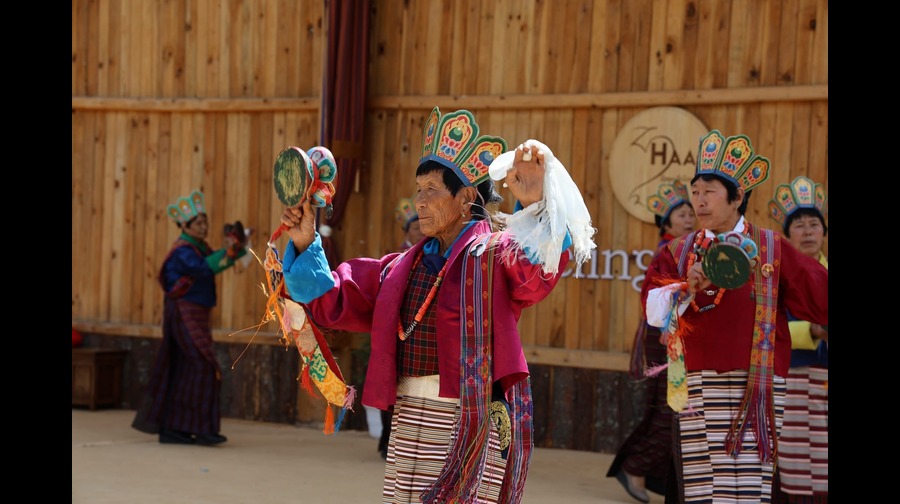
For the first time, a theatrical retelling the life of Ap Chundue, the guardian deity of Haa, was staged publicly. Traditional performances, including Shanga, an offering ritual, Chundue Gongzhey, a musical tribute to Ap Chundue, and Lolay, a tradition welcoming a new year, filled the ground with movement and meaning.
The festival also celebrated diversity and harmony through cultural dances the Rai and Sherpa communities of Haa presented.
“When we showcase our age-old traditions publicly through festivals like this, it goes a long way in promoting them. The performances here serve as living examples for the younger generation, an opportunity for them to witness and connect with their cultural roots,” says Gembo Tshering.
“Children these days don’t get to experience horse or yak rides. This is the opportunity for them to understand and expeirence what their forefathers did,” adds Dawa Tenzin.
By Thursday evening, the crowds had thinned and the valley returned to its usual stillness.
Back at his stall, Dawa Tenzin is busy packing up. It is noticeably a lot lesser than what he brought. The momentum this season is reason enough for him to return next year. Perhaps, with more stock, ready not just to keep pace with the festival, but to grow with it.
Sonam Wangdi