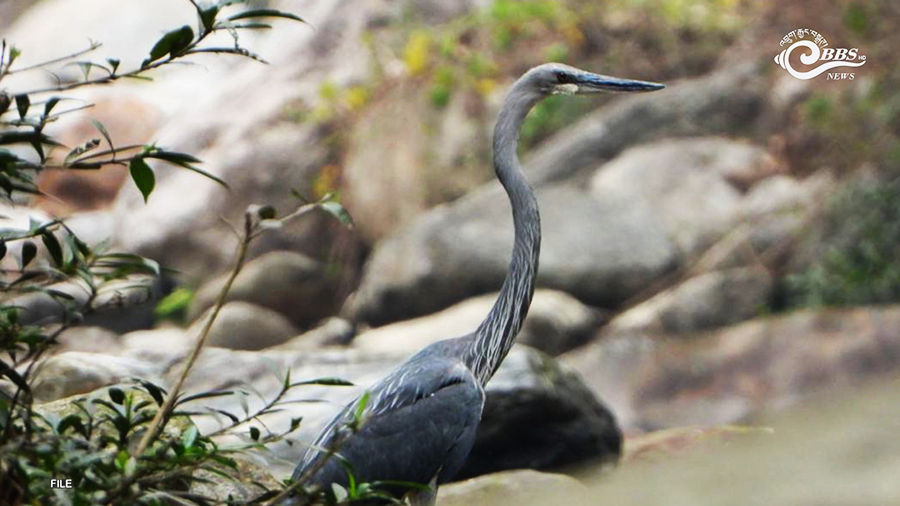
 It is small, yet a big achievement. We are talking about this particular species that needs our help more than ever to survive. Its number increased by two this year. Bhutan now has 31 of them. Yes, we are looking at the White-bellied heron.
The rise in the number of this bird in the wild may seem minimal. But everything comes into perspective when the estimated global population is just around sixty. That means half of them are in Bhutan.
It is one of the rarest birds on the planet
“We have five individuals that we have raised currently in the conservation breeding centre, and 26 that are in the wild. So it’s mainly because of the threat mitigation that we have done, and also the support that we have received,” said Tshering Tobgay, a research officer with RSPN.
Its extremely small population, along with climate change and habitat loss, is reducing successful breeding and survival.
The wild population is mostly found in Punatsangchhu and Mangdechhu basins, in quiet forested areas. While the increase in numbers offers hope, conservationists warn that the White-bellied Heron is still at serious risk of extinction.
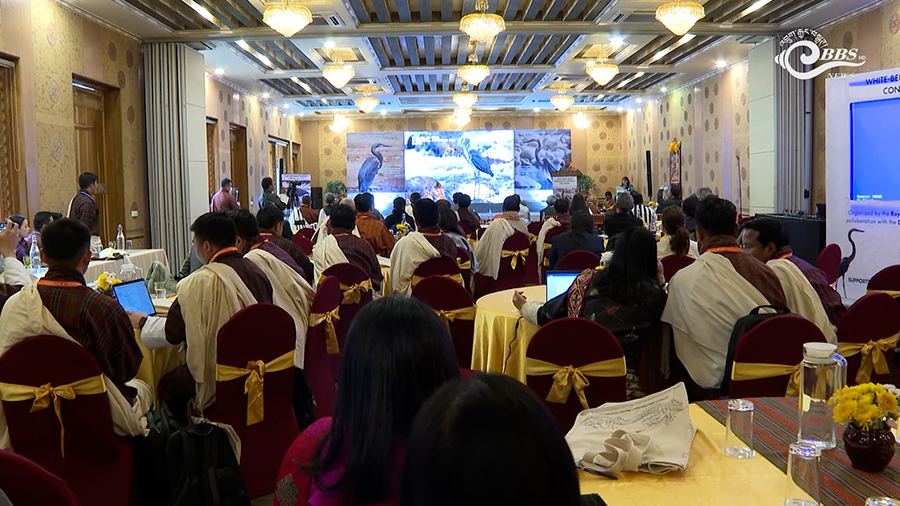 This is where international experts and researchers play a crucial role, as they come together for the second White-bellied Heron Conference in Thimphu. Their focus remains steadfast: to protect the species.
Tshering Tobgay said, “We always have some mitigation activities. For instance, for transmission lines, we are installing the fly diverters to avoid the collision of the birds with electric lines and in terms of the mitigation of other activities, we always consult with the government, consult with the stakeholders.”
Hope now depends on continued conservation efforts and stronger protection of river habitats.
It is never too late; before this species existed only existed in books and on the internet.
Singye Dema
Edited by Tandin Phuntsho