
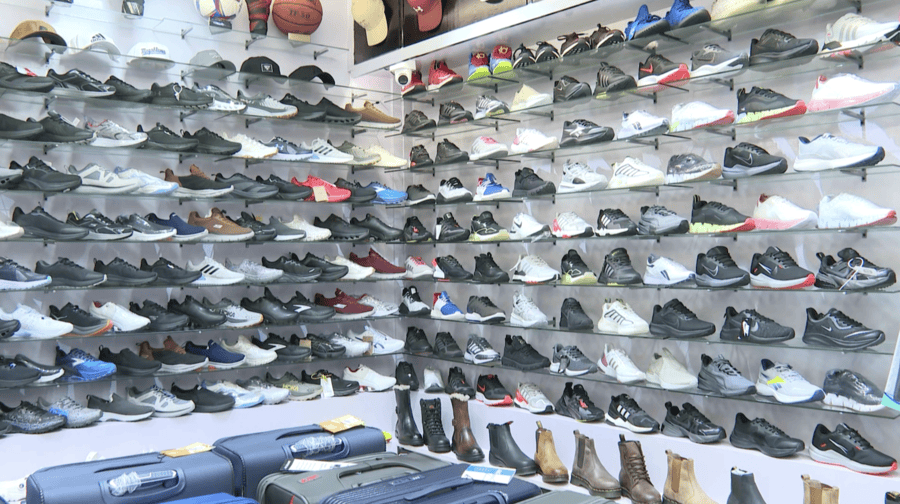
From cosmetics to clothing and mobile accessories, the promise of a cheap deal is hard to resist. But that bargain may come with hidden risks. A new report by the Competition and Consumer Affairs Authority revealed that Bhutan’s markets are increasingly flooded with substandard and counterfeit goods, raising concerns about consumer safety, fair trade, and the long-term impact on the economy.
According to the report, the average monthly income stands at around Nu 25,100. But with most of it spent on essentials like food and rent, only about Nu 4,000 is left for other expenses.
As a result, many consumers are forced to choose the cheapest options available, fueling demand for low-quality products.
These include items that fail to meet safety standards, or those that imitate well-known brands to attract buyers.
BBS spoke to a few customers in Thimphu about their experiences.
Dorji Tshedrup, a resident said, “If we go by income, those who earn higher incomes can afford quality products, but those of us with lower incomes have to choose cheaper options. Although quality products last longer, we can only buy what fits within our budget.”
Chungdi Lhamo who is also a resident said, “From my experience, sellers often claim that their products are original and authentic. But after using them on our face, we sometimes get rashes and pimples. It is very difficult to identify whether cosmetics are genuine. Some buyers can tell the difference between original and fake products, but for most people, even fake ones look real.”
Bhutan’s heavy reliance on imports adds to the challenge. Goods entering through regional supply chains often vary in quality, making it difficult for authorities to inspect every product, especially those coming through informal channels or temporary trade fairs.
The report also highlights an “information gap” between sellers and buyers. Vendors often know more about a product’s true quality, making it easier to mislead customers through attractive packaging and branding.
However, the Competition and Consumer Affairs Authority clarifies that buying cheaper goods is not illegal if consumers make informed choices.
The concern arises when businesses misrepresent fake products as genuine or sell items that could harm public health.
Beyond individual risk, the impact extends to the wider economy. The spread of counterfeit and substandard goods creates unfair competition, making it difficult for legitimate businesses to survive.
The report states that enforcement remains a challenge, as action is often complaint-driven, meaning authorities rely on consumers to report issues before intervening. The authority urges consumers to report suspicious products to the office.
To address this, the authority is recommending stronger coordination among agencies, the introduction of mandatory product standards, and clearer labeling systems.
Ultimately, while affordability remains important, ensuring that products are safe and genuine is essential to protect consumers, and the future of country’s marketplace.
Kinley Bidha