 Wildlife crime, once driven mainly by small-scale poaching, is increasingly becoming an organised and transnational activity worldwide. To help Bhutan prepare for emerging threats, the Department of Forest and Park Services and WWF Bhutan are bringing together members of the judiciary and experts to discuss how wildlife crime cases can be handled more effectively. The discussions aim to address threats and close gaps in wildlife-related law enforcement.
According to WWF, of the 172,600 species assessed by the International Union for Conservation of Nature, 28 per cent are at risk of extinction due to overexploitation and illegal wildlife trade.
In the past, wildlife crimes were largely associated with poaching. However, experts say the trend is shifting towards organised and transnational networks.
They also warn that online platforms are increasingly being used to facilitate illegal wildlife trade.
Despite these regional challenges, experts say Bhutan records fewer cross-border illegal wildlife trading cases than neighbouring regions.
They attribute this partly to the country’s limited entry points and the presence of only one international airport.
However, officials caution that complacency could allow such crimes to expand if coordination between law enforcement agencies and the judiciary is not strengthened.
“Today’s workshop aims to raise awareness about emerging issues and challenges related to poaching, wildlife crime, and illegal wildlife trade. Together with the Department of Forest and Park Services, we have developed several strategies, activities, and projects. This workshop also seeks feedback from our honourable judges,” said Chimi Wangchuk, Project Manager, World Wide Fund for Nature.
“At import points, customs officials frequently conduct random checks. Based on intelligence inputs, they monitor cases involving exotic species and occasionally intercept them,” said M. Maranko, Former Assistant Director, Wildlife Crime Control Bureau, India.
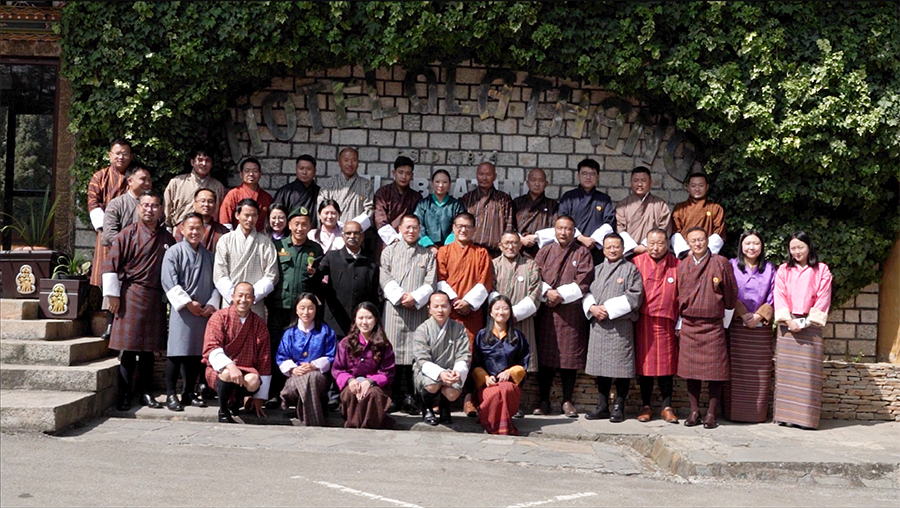 Participants reviewed the strategies developed by forest authorities and sought feedback from members of the judiciary on handling wildlife crime cases at a workshop in Paro today.
Over the next two days, they will further discuss legal challenges, enforcement gaps, and ways to strengthen Bhutan’s response to illegal wildlife trading.
Karna Wangdi & Karma Samten Wangda, Paro
Edited by Sangay Chezom