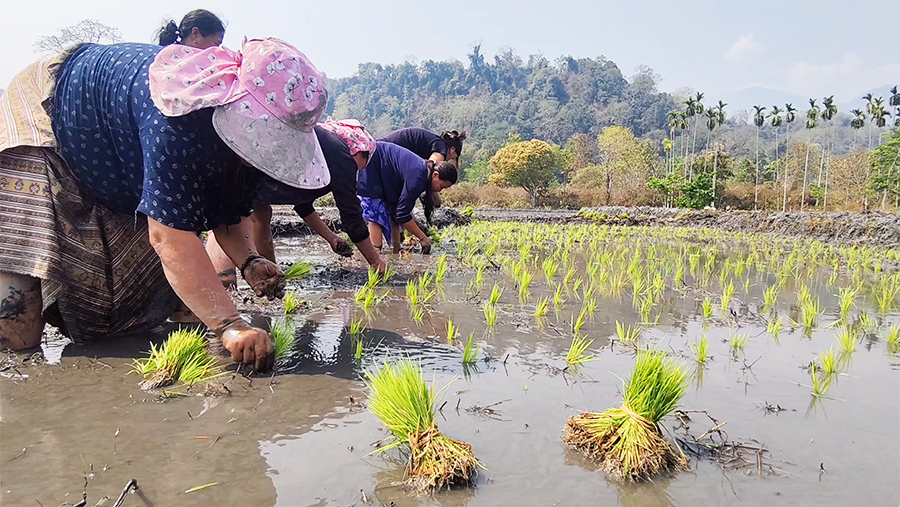
 After a seven-year gap, Khamaedthang farmers of Phuentshogthang Gewog in Samdrup Jongkhar have resumed spring paddy cultivation, allowing them to grow rice twice a year and move closer to rice self-sufficiency.
Things are looking up for farmers of Khamaedthang. They are now making the most of these fertile fields.
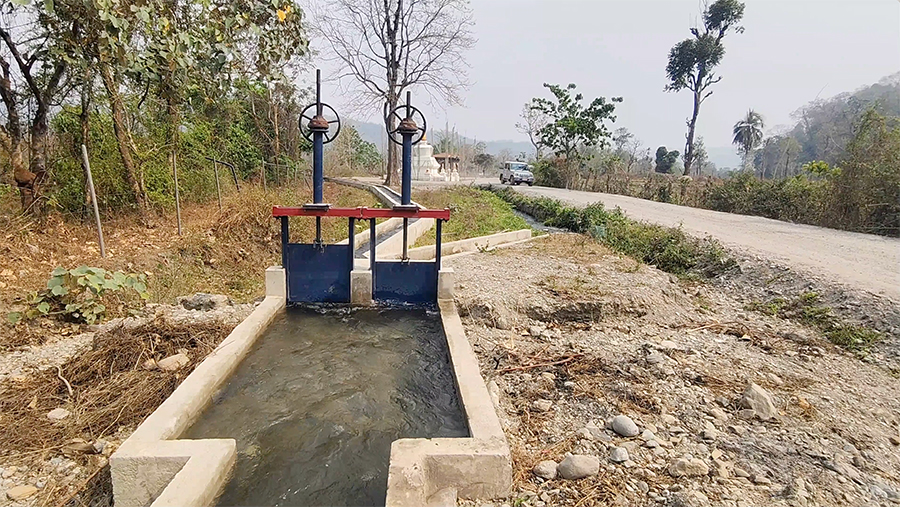 The smart irrigation channel constructed last year ensures a reliable water supply, making it possible for them to cultivate spring paddy, which was impossible in the past in the absence of a reliable irrigation water.
Paddy transplantation is underway in the village. If all goes well, harvest is expected by May and will continue until June, before they begin summer paddy transplantation in July.
“If we have enough water, we can cultivate paddy twice a year. Before, water was always a problem. Cultivating paddy twice will benefit us. Even if we won’t be able to sell the harvest, we will become self-sufficient in rice,” said Sherab Dorji, Farmer, Khamaedthang, Phuentshogthang Gewog, Samdrup Jongkhar.
“We were unable to cultivate paddy last year because the irrigation channel was under construction. We had to buy rice. Now, we are cultivating spring paddy and if it grows well, we plan to continue it next year too,” said Keshab Bhandari, Farmer, Khamaedthang, Phuentshogthang Gewog, Samdrup Jongkhar.
“If we can cultivate paddy twice a year, we won’t have to buy rice. That’s why growing spring paddy is so important for us,” said Pema Lhamo, Farmer, Khamaedthang, Phuentshogthang Gewog, Samdrup Jongkhar.
According to the chiwog Tshogpa, 70 households in Khamaedthang are planning to cultivate paddy on about 50 acres fields this spring.
While the prospects are promising, cultivating spring paddy comes with its own share of challenges and requires lot of hard work.
“If it grows well, I plan to continue cultivating spring paddy next year as well. I’m doing it for the first time, so I am not sure how it will turn out,” said Phurba Dorji, Farmer, Khamaedthang, Phuentshogthang Gewog, Samdrup Jongkhar.
“I plan to cultivate spring paddy every year, but it’s challenging because we have to work on summer paddy transplantation immediately after the spring harvest,” said Sherab Dorji, Farmer, Khamaedthang, Phuentshogthang Gewog, Samdrup Jongkhar.
“It will be difficult because the harvest season coincides with the onset of the rainy season, and we also have to cultivate summer paddy right after harvesting the spring crop,” said Keshab Bhandari, Farmer, Khamaedthang, Phuentshogthang Gewog, Samdrup Jongkhar.
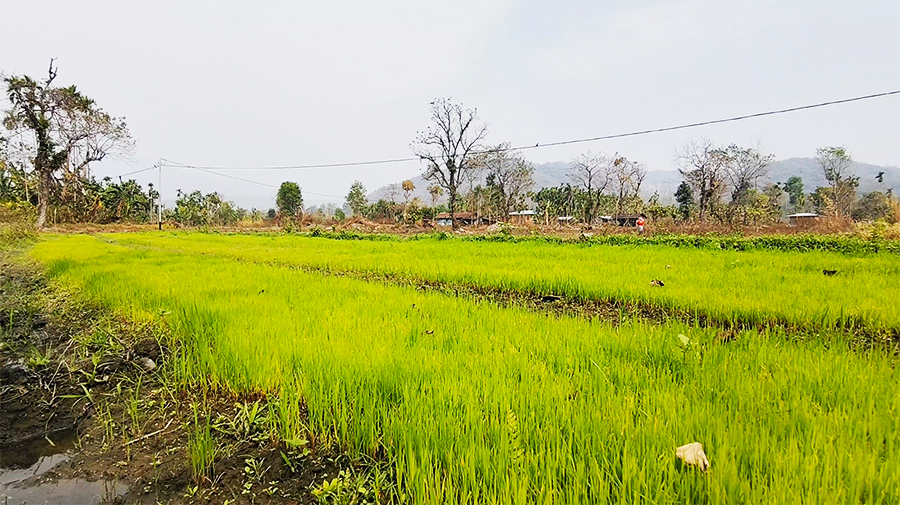 Despite the challenges, farmers here remain hopeful that spring paddy cultivation will bring a good harvest and encourage them to continue the practice in the years ahead.
Kinley Wangchuk, Samdrup Jongkhar
Edited by Phub Gyem