
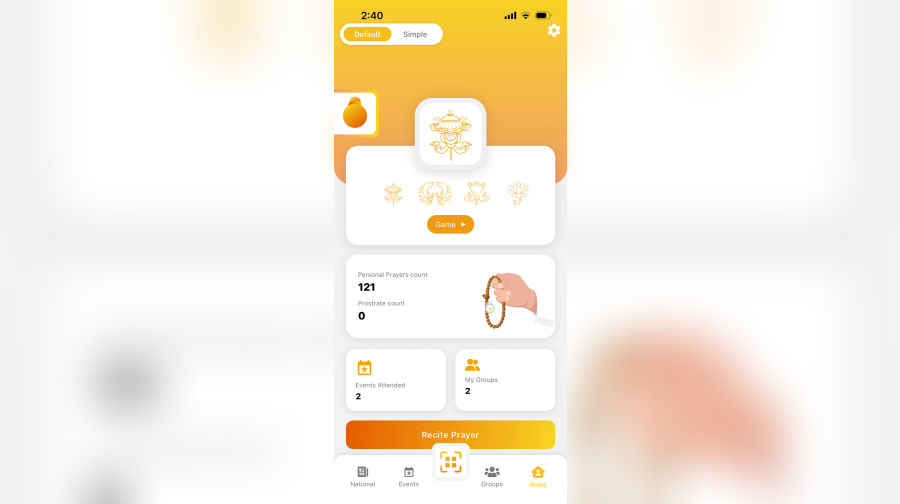
 Bhutan’s centuries-old spiritual traditions are entering the digital age with no more counting mantras and prostrations using pebbles, sticks or scribbles on walls. A new mobile application, the Guru App, is transforming how people pray, track prostrations and take part in national spiritual events. It is allowing users to carry a digital rosary in their pocket and connect with collective offerings across the country, all through their phones.
Launched in November last year, the Guru App blends state-of-the-art technology with Bhutan’s sacred traditions, allowing users to recite the Vajra Guru Mantra while automatically counting their prayers and offerings.
The app is designed not only for experienced practitioners but also for younger users and beginners seeking an easier way to engage in daily spiritual practice. It is developed by Green E-Integrated Private Limited, based in Thimphu TechPark.
“Guru App is a special companion to those who are already practising, but also those who are new to the practice. In this modern world, we have a lot of tradition which people do at home or in a small community. This Guru App brings it to the world. You can bring the community together and contribute to global peace,” said Casper Bodewitz, the CEO of Green E-Integrated Pvt. Ltd.
At the heart of the app is a digital rosary, where users tap each bead on their screen, just as they would on a physical rosary. Every tap is automatically counted and stored.
A voice-recognition feature can also detect Vajra Guru Mantra chanting and record recitations automatically, without the need for any type of rosary.
The app further allows users to keep count of prostrations, replacing traditional methods such as pebbles, tally marks or handwritten notes.
It also features a gamified spiritual journey through the eight manifestations of Guru Rinpoche. It uses interactive storytelling and guidance to help users, especially young people, to understand their meaning and historical significance while staying engaged in daily practice.
Beyond individual practice, the platform enables users to join national and local spiritual events, receive notifications of upcoming religious activities, and contribute their prayers collectively through the app. Users can also form or join private recitation groups, much like social media communities, to work towards shared spiritual goals.
Another key innovation is the Near-Field Communication or NFC Chem, a digital version of traditional rosary counters.
Casper Bodewitz said,“One of the innovative things we have done is creating a tag with which you can keep track of your count. It is a digital form of chhushay. When you have completed one round of the rosary, you can tap it to your phone once, and your count goes directly to your Guru App account.”
For settings where mobile phones cannot be used, an edge device allows practitioners to tap their NFC Chem after completing each rosary round, with the data syncing securely to their app account later, making it especially useful during large religious gatherings.
With Dzongkha and English languages available, the app has already crossed more than five thousand users. Developers say the goal is not to replace traditional practices, but to enhance them by making mantra recitation easier, more engaging and accessible across generations.
Namgay Dema
Edited by Kipchu