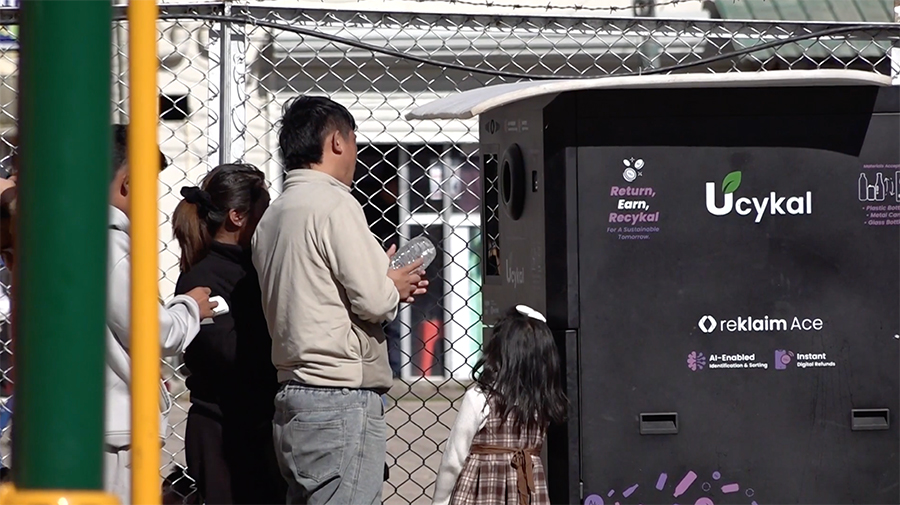
 In just three weeks since its installation, Paro’s reverse vending machine paid more than 55,000 ngultrum to the public. It has collected over 35,000 recyclable items. But beyond the numbers, the machine is quietly reshaping daily life in Paro, from cleaner streets to new habits, and for some, new hope.
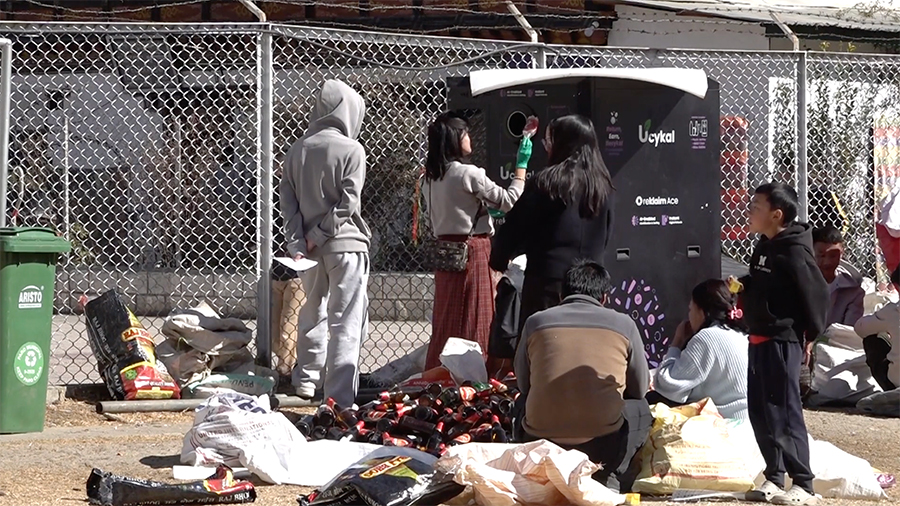 Every day, one by one, people feed bottles and cans into the machine. These small actions, repeated thousands of times, are adding up to a big change.
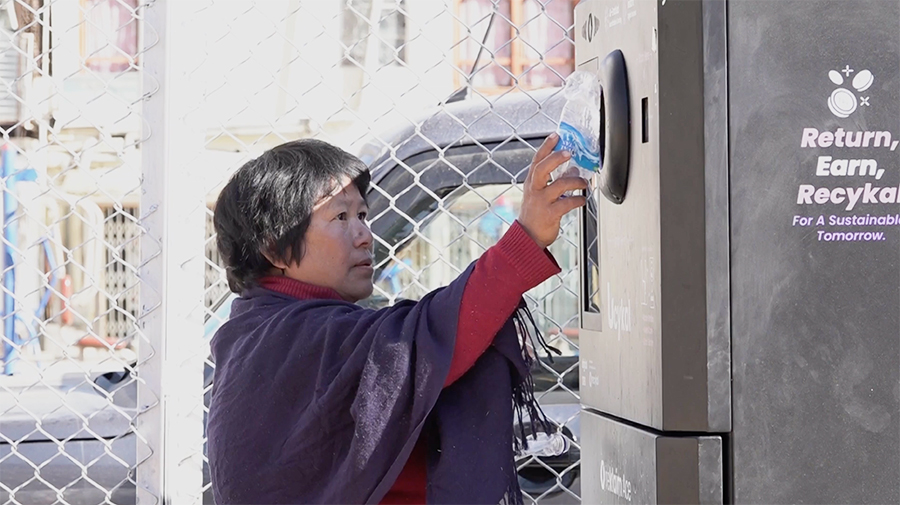 Fifty-year-old Lhadon collects bottles from around town and nearby areas in the afternoons and brings them to the reverse vending machine the following day. She is now on her seventh day.
As others take turns depositing their waste, she labels her bottles and prepares them for deposit.
For Lhadon, the reverse vending machine offers more than environmental benefits. With little work to do on most days, it keeps her occupied while also providing some cash.
Lhadon said, “I live with my children, but I didn’t want to be a financial burden. When I heard about this machine, I started collecting bottles. Even if I could save just one ngultrum, I felt it was something I could do for myself.”
She made around Nu 4,000 so far. She plans to use the money to go on pilgrimages to sacred sites across the country.
“I am planning to go on pilgrimage to sacred places around the country. Parents cannot always ask their children for help because they also have their own responsibilities to attend to. I thought if I collect bottles, maybe I can save enough to visit a few temples,” added Lhadon.
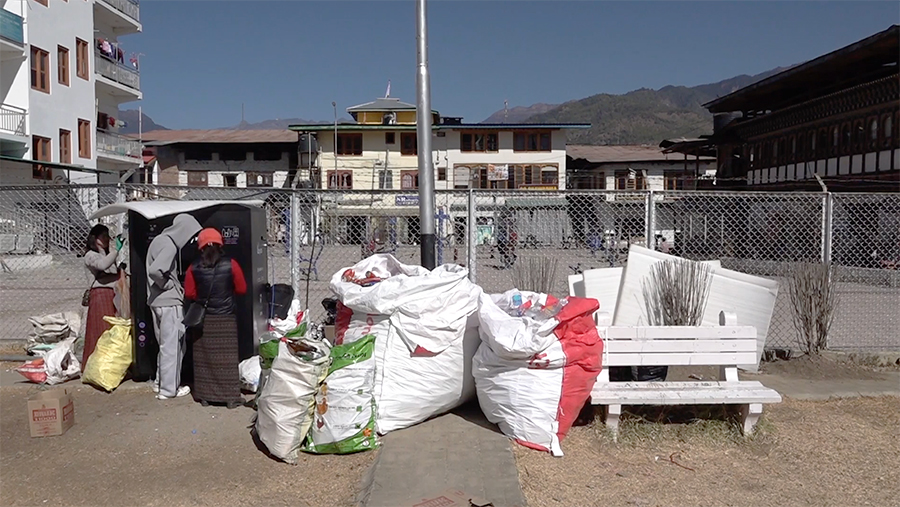 With more people like Lhadon visiting the machine, thousands of bottles and cans are now diverted from the streets and landfills of Paro each day.
In December alone, Ucykal, the company managing the reverse vending machine, recorded incentives worth almost Nu 18,000 distributed for almost 12,000 items like PET bottles, glass bottles and cans.
January has already seen more than Nu 37,000 paid for around 23,000 items.
On an average day, the machine now receives about 2,000 PET bottles and glass containers, and nearly 1,500 cans. This translates to 3,500 pieces of waste daily that would otherwise find their way into the environment or the landfill.
Jamtsho, the site supervisor of Ucykal said, “On the lowest days, we receive between 50 and 70 people. When the crowd is larger, we limit each person’s deposit to about Nu 100 to 150 worth of materials so everyone gets a fair chance. On quieter days, we allow people to deposit more. Weekends are especially busy.”
This means that Paro’s current efforts are stopping more than 100,000 plastic bottles and cans from being thrown away every month.
The collected materials are carefully sorted, stored, and then transported for proper recycling.
Jamtsho said, “We collect the materials here, move them to our storage site, and then send them to India for proper recycling.”
Beyond the numbers, the initiative is fostering cleaner streets, new habits, and people finding small but meaningful ways to support themselves.
Karma Samten Wangda, Paro
Edited by Sangay Chezom