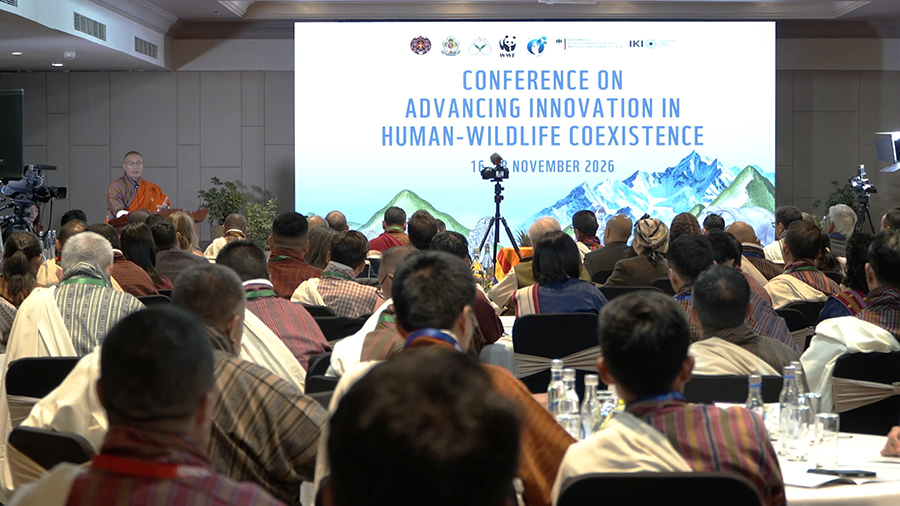
 For communities living close to forests, protecting wildlife can sometimes come at the cost of their own livelihoods. Crop losses, livestock predation and threats to human safety continue to fuel human-wildlife conflict in Bhutan. Finding ways to protect both wildlife and the people living alongside them is the focus of a regional conference underway in Thimphu.
According to the World Wildlife Fund (WWF), fragmented efforts and limited resources remain major challenges in addressing human-wildlife conflict.
Tandin, Programme Specialist for Forests and Biodiversity at WWF-Bhutan, says interventions are often implemented separately by different agencies, resulting in inadequate coordination and limited impact on the ground.
“In terms of our interventions, they are mostly fragmented and implemented by different agencies, rather than being coordinated. I think the lack of adequate coordination is also leading to conflict not being mitigated adequately on the ground,” says Tandin.
Nilanga Jayasinghe, Director of Asia Wildlife at WWF, US, says bringing together different stakeholders is important for effective and long-term conflict management.
“Different groups, different stakeholders that have some role to play in managing the conflicts should be coming together because the shared responsibility piece is really important if you really want to see some long-term impact in conflict management,” says Nilanga.
In Bhutan, measures such as electric fencing, livestock protection and national crop and livestock schemes are already in place, according to the Department of Forests and Park Services.
However, Choney Zangmo, Deputy Chief Forestry Officer of the Nature Conservation Division at the Department of Forests and Park Services, says these measures cannot address conflicts involving all wildlife species.
“Now if I talk about whether these measures have totally eradicated, then I would be saying it incorrectly and giving incorrect information. There are certain challenges because the measure that works for a certain species is not feasible for other species,” says Choney.
For communities, the impact of human-wildlife conflict remains a major concern, particularly for those dependent on farming and livestock.
Pema Lhamo, Nubi Gup of Trongsa, says crop destruction and livestock predation continue to affect rural livelihoods.
“Most people depend on farming and livestock for their livelihoods. They work hard throughout the season, but just when the crops are ready for harvest, wild animals come and destroy them. Livestock predation, especially by tigers, is another major concern,” says Pema Lhamo.
WWF-Bhutan says adequate compensation and long-term financial support are essential to ensure conservation does not become a burden for communities living alongside wildlife.
“For them to feel that conservation is not a burden, they need to be incentivised; they need to be compensated adequately,” says Tandin.
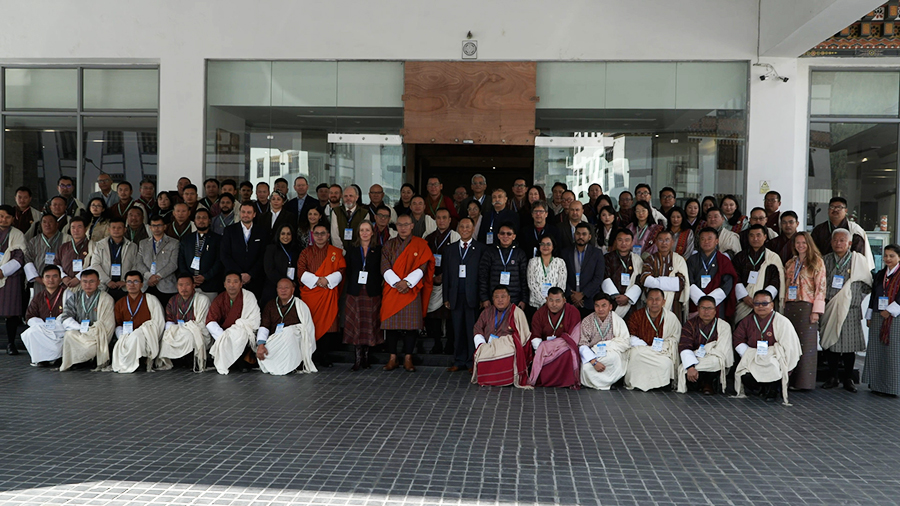 The conference will conclude tomorrow with discussions on practical and innovative solutions and stronger regional cooperation.
Sherub Dadron Palzom
Edited by Passang