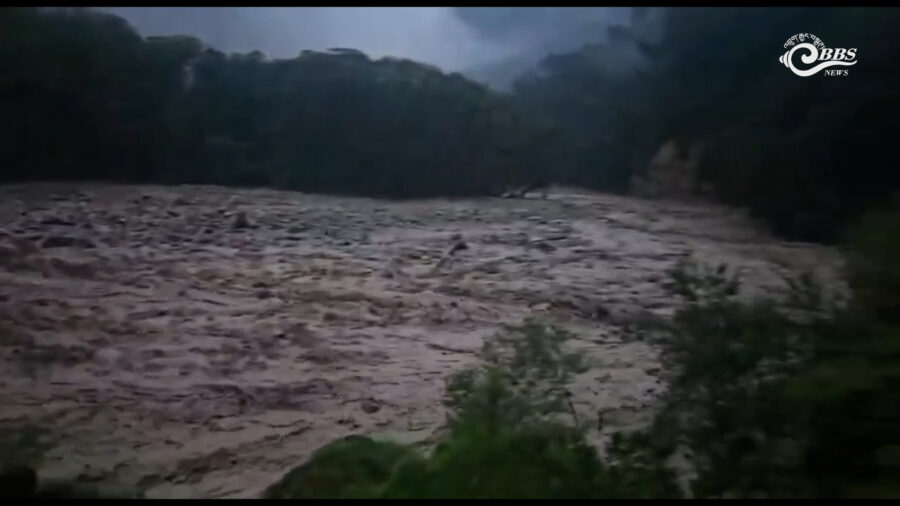
 Thursday’s Glacial Lake Outburst Flood (GLOF) from Shintaphu Lake in Gasa suggests that an outburst from the upper lake may have triggered the flood, according to an analysis of available satellite data.
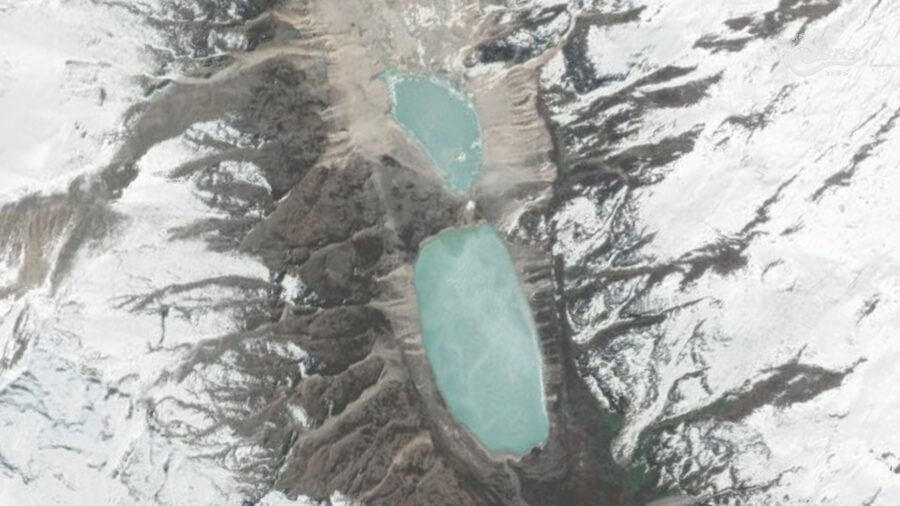 Shintaphu consists of two separate lakes: an upper lake and a lower lake. According to the National Centre for Hydrology and Meteorology (NCHM), the lower lake holds more water than the upper lake. Together, the two lakes could hold enough water to fill approximately 3,200 Olympic-size swimming pools.
The flood released nearly enough water to fill 2,000 Olympic-size swimming pools, accounting for about 60 per cent of the lakes’ combined water volume.

Sonam Wangchuk (PhD), Cryosphere Specialist at ICIMOD, said the lower lake, which is larger in area, had lost around 80 per cent of its volume following the outburst.
The smaller upper lake also saw a reduction in its water volume by about 10 per cent.
However, Sonam Wangchuk said a substantial volume of water remains in the upper lake, and it is still unclear whether it poses a further threat.
He said another outburst from the remaining water could trigger cascading floods, as an artificial lake has formed at Taktsi Makhang. However, he said the information needs to be verified through a field assessment.
 Karma Dupchu, Director General of NCHM, said the centre is waiting for helicopter availability to deploy a team for a post-flood assessment.
He said NCHM has already conducted remote sensing and satellite image analysis, but the findings need to be verified on the ground. The team will be deployed as soon as possible.
 Until a team reaches the site for physical verification, the exact trigger of the upper lake’s outburst remains unknown.
Meanwhile, communities living along the banks of the Mochhu are being urged to remain vigilant and take extra precautions. Shintaphu is among Bhutan’s 17 potentially dangerous glacial lakes.
Devika Pradhan
Edited by Tandin Phuntsho