
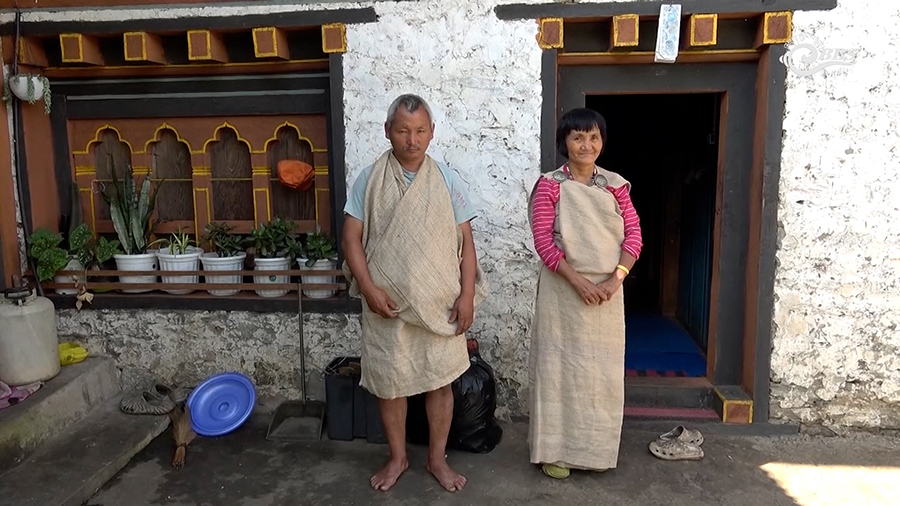
 What happens to a community’s cultural identity when a tradition survives only in memory? For the Monpa community in Trongsa, the question is a real one. Kulungma Osa, their traditional dress, is at risk of fading away as fewer young people show interest in wearing it. The community is now stepping up efforts to preserve the tradition and pass it on to the next generation.
The Monpas are believed to be among the earliest inhabitants of Bhutan, with a distinct language and cultural identity. Kulungma Osa, a dress made from nettle fibre, is an important part of that heritage. Once part of everyday life, it is now worn by only a few people, mostly during cultural performances and special occasions.
The name comes from the Monpa dialect. “Kulungma” is the nettle plant and “Osa” is the dress.
“They have been wearing the dress, which was made of nettle fibre. In our Monpa dialect, it wasn’t called gho. As we call Kulungma for nettle plant, and Osa for the dress, so we called it Kulungma Osa,” said Norbu, Community Service Lam of Jangbi Chiwog in Langthil Gewog.
For the older generation, the dress is a reminder of their ancestors. Younger community members are beginning to rediscover it.
“We are hoping to wear and keep our tradition alive. If we wear this attire during the celebrations, we think we can preserve our culture. But we can see only a few youths showing interest in wearing this dress today,” said Singye Wangmo, a resident of Jangbi.
Some younger residents have never worn the dress. Tawpo, a resident of Wangling, said it was worn in his father’s time and that he knew of it only through his parents’ stories. “As this dress was worn by our ancestors, so we are also showing interest in using this dress to keep our tradition alive,” he said.
Interest in the tradition has grown over the years. Locals now showcase it to visitors who come to learn about the Monpas’ culture, and that exposure has helped young people learn about their own heritage.
“We never knew about the dress when we were children. But as we got older, we saw different programmes being held in our village, and tourists visiting. That is how we knew there were different traditions and cultures in our village,” said Tshering Dolkar, a resident of Wangling.
Limited access is a challenge, however.
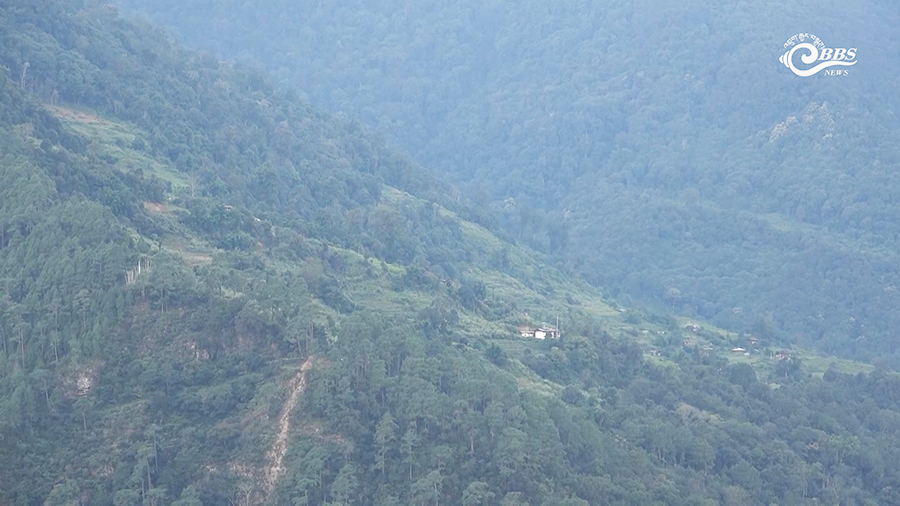 Residents say better road connectivity could bring more visitors and more opportunities to showcase their culture.
“The guests who are planning to visit in summer face difficulties, and they cannot visit our village. So, if the government improves the quality of our road, we can showcase our unique Monpa culture to the visitors,” said Ugyen Lhamo, a resident of Jangbi.
The Langthil Gewog Administration says it has improved the road with a gravel surface, but the difficult terrain still makes travel hard. It has submitted a proposal to the government to blacktop the road.
“We have laid GSB along the Jangbi farm road. Even then, due to the landscape in some places, it is very difficult to travel in both summer and winter. So, we have included blacktopping in our plan and submitted it to the government. But we are not sure whether it will get approved or not. If it gets approved, we are going to blacktop the road,” said Langthil Gup Rinzin Wangchuk.
The Gup added that a proposed farm road connecting Phumzur village to Nubi could also bring more visitors to Jangbi in the future.
Jangbi Chiwog began its efforts to revive the traditional dress in 2008, when the community was invited to perform its traditional dance at the inauguration of the Royal Heritage Museum in Trongsa.
For the 60 households in Jangbi, preserving the dress is a way to ensure that future generations continue to recognise their unique identity and take pride in it.
Thinley Dorji, Trongsa
Edited by Phub Gyem