 If tradition is kept exactly as it was, it may remain unchanged, but does it remain alive? For Bhutanese artist Yeshi Pelden, the answer lies not in preserving art exactly as it was, but in allowing it to evolve. His solo exhibition, Perseverance, explores how inherited artistic knowledge can be reimagined through contemporary expression, while remaining rooted in Bhutanese tradition.
For generations, Bhutan’s traditional art has been passed down through discipline, practice and patience.
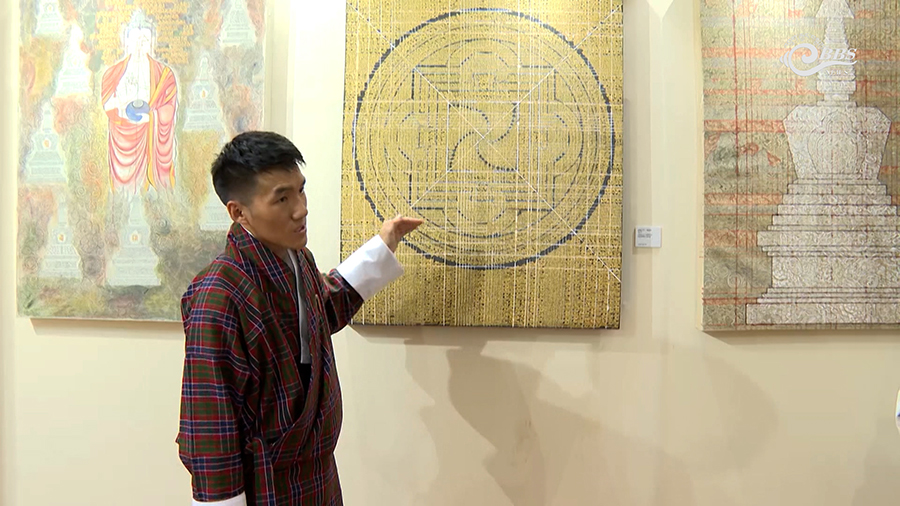 For Yeshi Pelden, that journey began during a winter vacation, while helping his uncle, a painter.
That experience sparked a passion that eventually led him to the National Institute for Zorig Chusum in 2009.
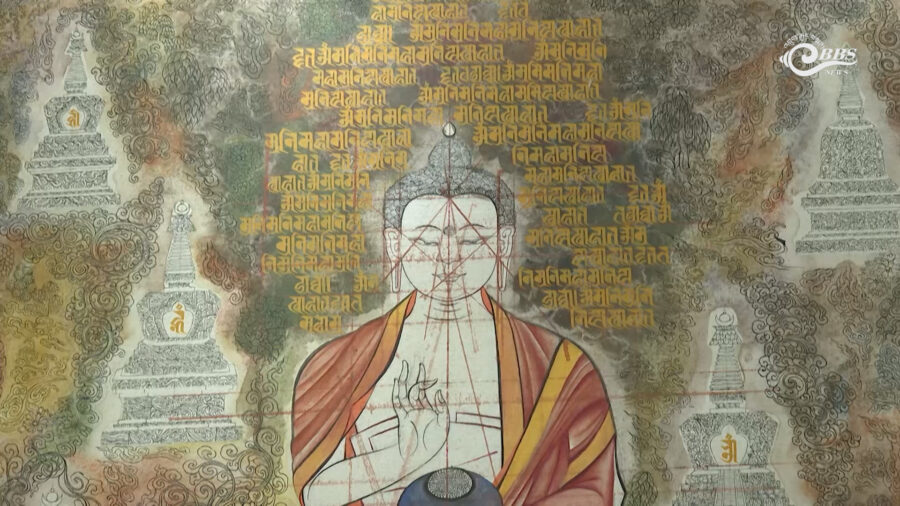 Today, Yeshi is not only an artist but also a painting instructor at the institute. His latest works, however, move beyond simply reproducing traditional forms. His practice draws from Thangka painting, its symbolism and spiritual foundations.
But these elements are repeated, fragmented and recomposed through a contemporary visual language.
For Yeshi, recreating traditional art does not necessarily mean copying.
“Traditional art has its own discipline and principles, but carrying it forward also gives us room to express it in our own voice. All the works I’ve brought here are my own reinterpretations of traditional art. I’ve seen that this kind of expression attracts a lot of interest, especially from foreigners, because it freshly presents our tradition,” said Yeshi.
For Yeshi, keeping tradition alive means engaging with it, experimenting with it, and allowing every generation to add its own voice.
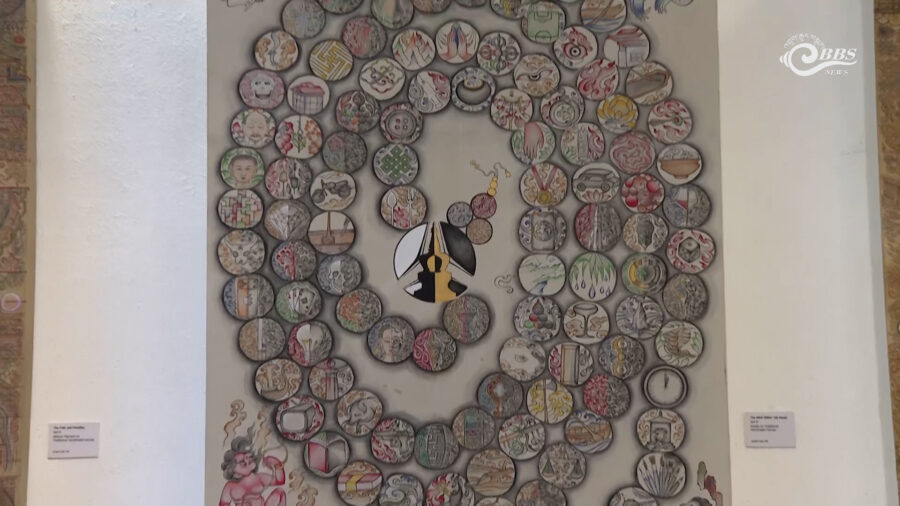 His works bring together the discipline of the past and the freedom of the present. In doing so, they suggest that change and tradition do not necessarily have to stand on opposite sides.
“People often try to separate traditional and contemporary art, but I don’t think we really need to. Traditional art has its own discipline and principles, but contemporary art is more about how we express those elements in our own way. I think bringing traditional elements into contemporary expression can make the art more relatable and create an opportunity to introduce our art to people outside Bhutan.”
For Yeshi, preserving what we inherit does not mean keeping it unchanged. It means carrying it forward, allowing tradition to evolve so that it continues to live, resonate and remain meaningful to the present generation.
Sangay Chozom