
More than a month after its launch, the part-time employment system is beginning to turn registrations into real jobs. More than 1,100 job seekers and over 40 employers have registered for the system, with students among the first to gain work experience and earn an income. While the system is showing promise, it is also exposing challenges that officials say must be addressed.

20-year-old Tandin Wangmo had never worked before. Today, the Gyalpozhing College of Information Technology student spends her breaks at Impact Hub Thimphu through the part-time employment system.
“So, it’s been a month since I joined Impact Hub Thimphu as an intern, and through this internship I have learned, gained experience and also earned some pocket money during my breaks. I was able to apply what I have learned in my classroom in a real work environment, and the team of Impact Hub have been very supportive in every step of mine.”
She is one of many young people using the platform to gain workplace experience while studying.
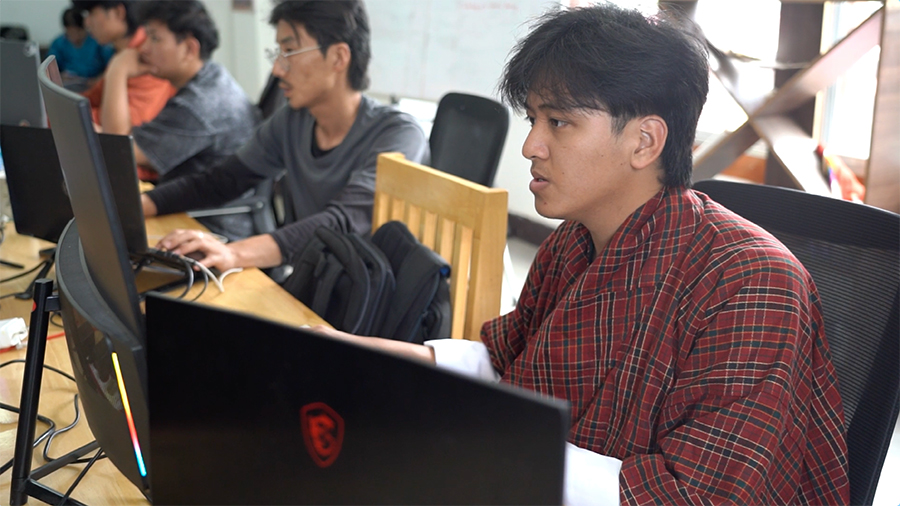
Twenty-three-year-old Tshering Wangchuk, also a student of GCIT, says the opportunity has also helped him sharpen his skills employers look for.
“I was able to experience and work along with different types of co-workers. Especially in the case of website development, I had to work with multiple clients. At the same time, I had to manage a lot of work on my own. That includes managing my team.”
The benefits extend beyond job seekers. For businesses like Impact Hub Thimphu, part-time workers ease staff shortages.
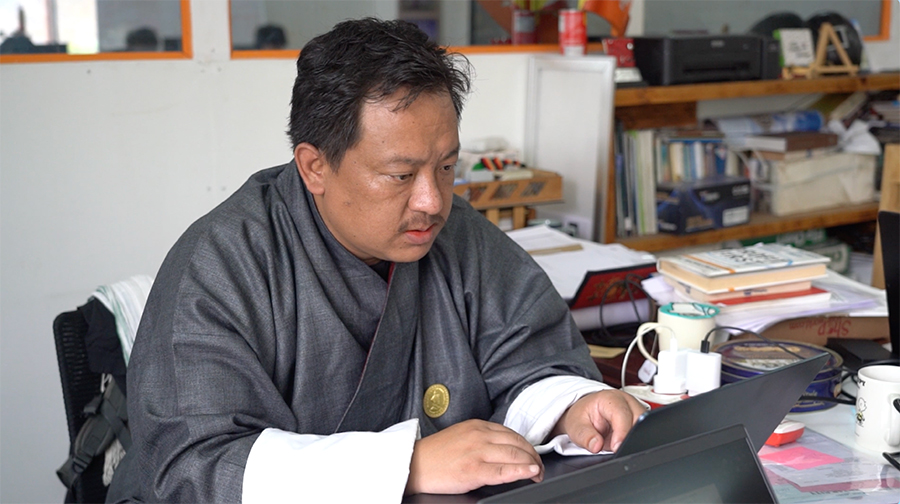
“In small and Medium Enterprises, we have a lot of demand, workloads and business activity. We need a lot of workforce. We thought that when the government started the system, it was an opportunity, so we were looking forward to joining the system. Looking at the projects, it makes the work of regular work easier. With SME comes cost, so it eases the cost too through such a system,” said Yeshi Samdrup, Co-Founder, Impact Hub Thimphu.
Early registration figures indicate strong interest, particularly among young people, with around 55 to 60 per cent of registrants falling within the late teens to 20s age group.
This is followed by individuals in their thirties, who account for 20 to 25 per cent of total registrations.
Registrants aged 40 and above make up approximately 10 per cent of those registered under the part-time employment system.
Initial registration data also show that 44 per cent of registered job seekers are
recent school leavers and diploma holders with foundational skills such as data entry, customer service, and Microsoft Office proficiency.
Another 38 per cent are unemployed graduates, mainly bachelor’s degree holders, along with a small number of unemployed master’s degree holders.
Around 9 per cent of registrants are students currently pursuing academic programmes.
A smaller segment, accounting for between one and five per cent, comprises individuals who are already employed but are seeking part-time work.
But despite the encouraging start, the platform is facing early challenges, particularly in workplace arrangements, employer and employee expectations, and adapting to the new employment model.

“In the current vacancies posted by the employers, few vacancies are away from the Thimphu core area. So basically, job seekers are reluctant. Most of the registered part-time workers are those who are already employed in private and corporate sectors and students. So basically, they are looking for part-time after 5 PM. So, at the same time, employers are also looking for part-time workers between 9 AM to 5 PM. There is a mismatch of timing,’’ said Tashi Tenzin, Senior Programme Officer, Department of Employment and Entrepreneurship.
He added that most young people registered on the platform are interested in white-collar jobs, while there is less interest in blue-collar work.
Meanwhile, during a stakeholder consultation earlier this month, employees said the minimum wage rate was low and needed to be revised.
Moving forward, the Department of Employment and Entrepreneurship and the Department of Labour will continue to monitor and work closely with stakeholders to address emerging issues and further strengthen the system.
Sonam Yuden
Edited by Sonam Pem