In the southern reaches of Monggar district, a quiet crisis is unfolding, not of roads or harvest, but of words. Gongduk, a language older than any written record of it, is falling silent. Registered population shrinking and empty households on the rise, they fear that when the older generation goes, the language will go with them.
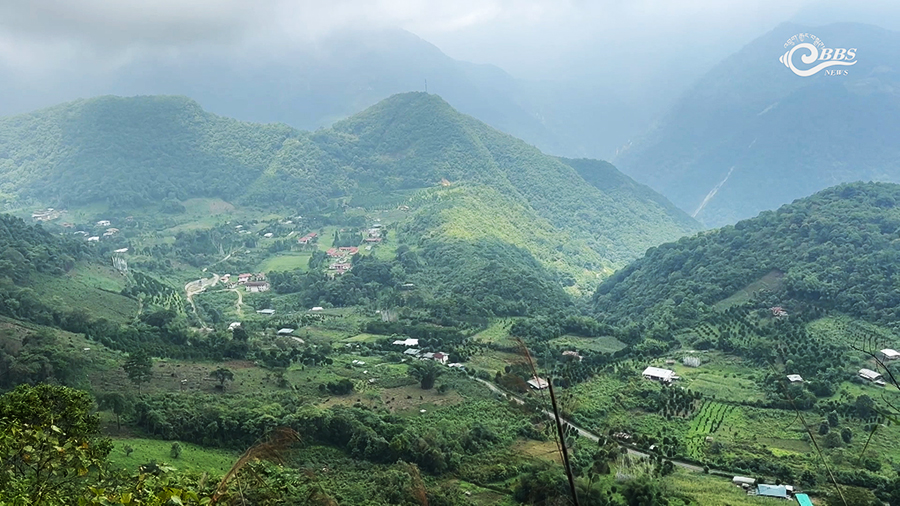 In the quiet valley of Dagsa, the heart of Gongdu Gewog, echoes of a fading tongue linger in silence. Once the very means of communication, Gongduk is being crowded out by Tshangla, Khengkha, and increasingly, English and Hindi. Among the younger generation, this shift is fuelled by the persistent influence of YouTube and other social media platforms, where these languages dominate.
The steady exodus of the Gongduk-speaking community is hollowing out the community as well. As families scatter to towns for work, education, and convenience, the villages that sustain the language are emptying.
The gewog’s registered population fell from over 1,200 in 2017 to just over a 1,000 in 2024, and the largest age group now is 65 and above. Sixty gungtongs or empty households were also recorded in the gewog in 2024.
Our children do not live here, and we mostly communicate in Dzongkha and Tsangla. Besides, only a few young people are interested in learning the dialect,” said Kencho Dorji, a resident of Dagsa, Gongdu Gewog, Monggar.
“Now, our mother tongue is disappearing with our generation. The younger generation is no longer interested in learning it. I always tell my children that if they do not try to learn the dialect, by their children’s time, it will be extinct. I remind them that it is our identity,” said Kezang Wangdi, Resident, Dagsa, Gongdu Gewog, Monggar.
“It is disheartening to see our dialect decline. I tell our youngsters that it is their responsibility to preserve and promote Gongdue-kha,” said Phurba Lhamo, Resident, Dagsa, Gongdu Gewog, Monggar.
What the outside world knows about this language would barely fill a shelf. Gongduk is spoken in just six remote villages of Bala, Dagsa, Pangthang, Damkhar, Pam, and Yangbari in the gewog. Linguists formally documented it in 1991, and it remains poorly studied. The dialect is unique with complex grammar and vocabulary different from what is spoken in the neighbouring villages, which are Tsangla and Khengkha.
“Currently, the Centre for Bhutan and GNH Studies has secured the government’s approval to research on the Gongduk, which is underway. They aim to develop grammar for the native dialect. We are supporting them in every possible way because the initiative is important to preserve the dialect,” said Tshewang Tobgyal, Gongdu Gup, Monggar.
Meanwhile, seven-year-old Sangay Tenzin stumbles over the words, but he speaks them. In his hesitant voice lies a fragile hope that the younger generation of Gongdu might still choose to carry its mother tongue forward. After all, a grammar book can only preserve a language on paper. But children like Sangay can keep it alive.
Namgay Wangchuk, Monggar
Edited by Sonam Wangdi