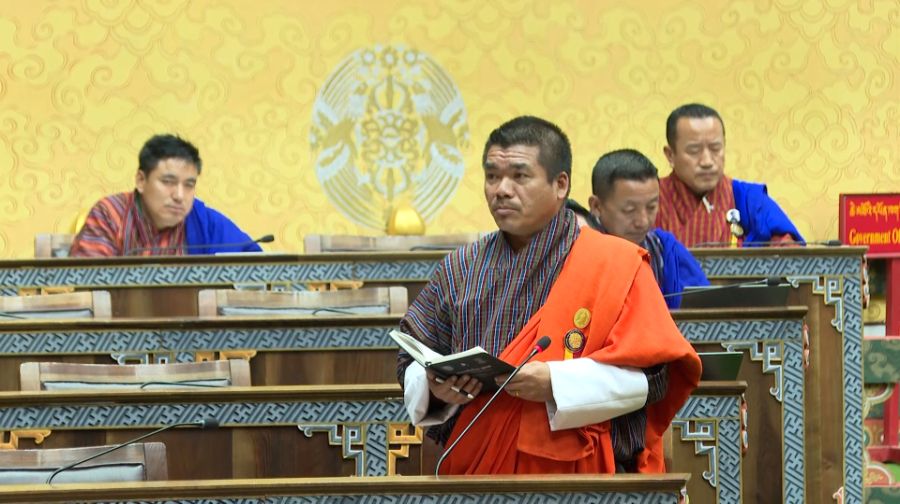
 The Thimphu Structure Plan 2023–2047 requires developers to conduct detailed geotechnical assessments before undertaking construction in medium and high-risk hazard zones. According to the National Assembly member from Khamdang-Ramjar, the requirement places an additional financial burden on ordinary citizens building homes with their lifetime savings. However, the Minister for Infrastructure and Transport said geotechnical assessments are essential to ensure public safety and must be carried out wherever required.
During the National Assembly’s question hour on Friday, the Khamdang-Ramjar MP raised concerns about mandatory geotechnical testing for residential plots in Thimphu. He asked why homeowners must pay nearly 150,000 Ngultrum for geotechnical assessments, even for plots that appear flat and stable and have already been approved under existing planning frameworks.
Khamdang-Ramjar MP Namgay Dorji said, “First, it is already very expensive to buy land in Thimphu. On top of that, charging Nu 150,000 for a geotechnical testing certificate is a burden. So how was this requirement studied, and how is it going to benefit the people?”
In response, Infrastructure and Transport Minister Chandra Bdr Gurung said the requirement is part of the Thimphu Structure Plan 2023–2047 and the Thimphu City-wide Design Code, which were implemented since 2024. He said the measures aim to promote safer and more resilient urban development in Bhutan’s earthquake-prone environment.
The minister said plots that appear stable on the surface may still have hidden risks. These include weak soil, uncontrolled fill material, groundwater issues and settlement risks that are not visible during routine inspections or earlier planning studies.
“There is a perception that the testing process takes six to seven months. But after discussing the matter with the ministry, we found that many people are confused because the rule is new. Some consultants have taken on too much work, causing delays. In reality, the process should be completed within a week.”
The minister said that earlier planning frameworks generally prohibited construction in high-risk areas. Under the new structure plan, however, some developments may be allowed if site-specific geotechnical investigations show that the risks can be managed through proper mitigation measures.
Acknowledging that the additional cost can be significant for homeowners, he said the government is willing to explore ways to balance public safety with affordability.
Samten Dolkar
Edited by Sangay Chezom