To strengthen investment and partnerships in Bhutan’s agrifood sector, several Memoranda of Understanding were signed between Bhutanese and international companies. They were signed through the second edition of Bhutan Agrifood Trade and Investment Forum, BATIF 2.0 which concluded yesterday. The agreements cover ventures related to aquaculture, wellness products, agarwood, and feed production.
Of the five Memoranda of Understanding, one was signed between Dheyma Harvest in Bhutan and Malaysia’s DAdvance Agarwood Solutions.
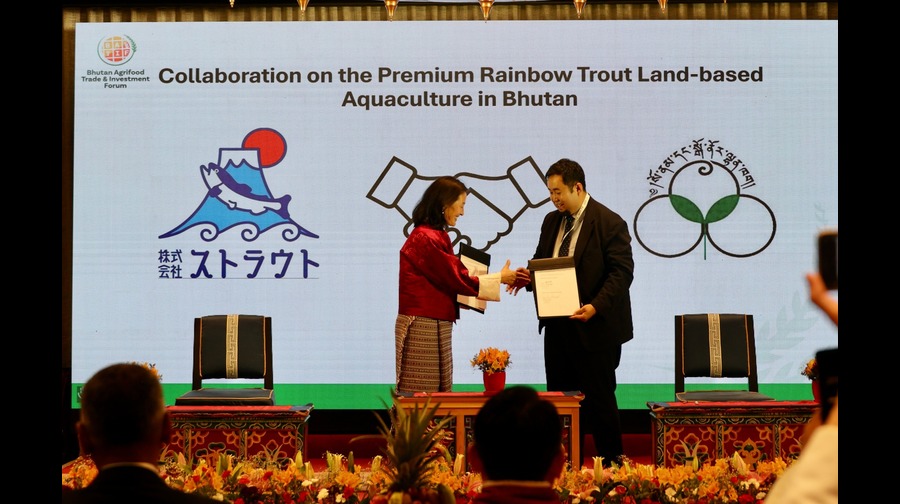
Similarly, Japan-based Strout Inc. signed an agreement with the agriculture and livestock ministry to explore premium rainbow trout in Bhutan.
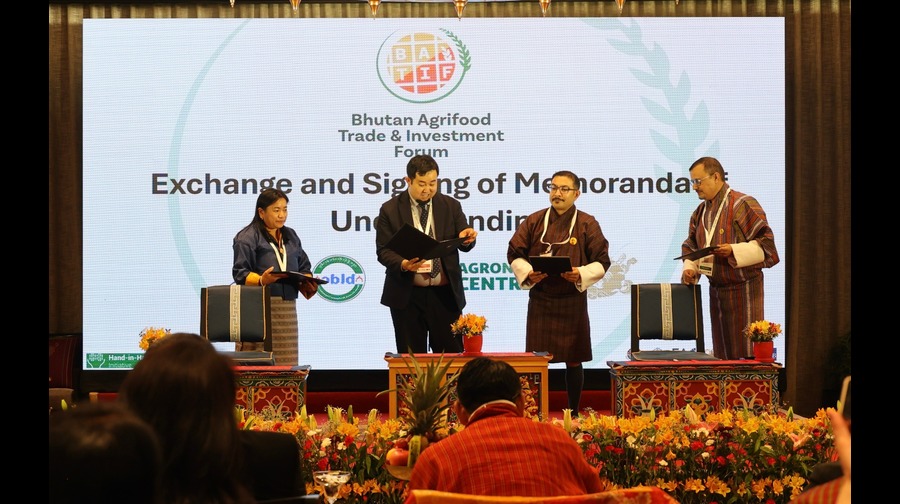
In another agreement involving the same company, Bhutan Livestock Development Corporation Limited, Agronest Centre, and Crawfish Himalayan Limited will collaborate to develop high-value rainbow trout production.
Kaoru Hirabayashi, Founder/CEO of Strout Inc. said, “Bhutan has abundant natural resources. We can use that and export rainbow trout in large quantity. We hope to produce around a thousand tons and export it under a Bhutanese brand, while working with rural communities to help strengthen the local economy.”
Meanwhile, Italy-based Detox Guru will work with Bio Bhutan to support the supply of medicinal herbs, spices, and essential oils for wellness formulas and products.
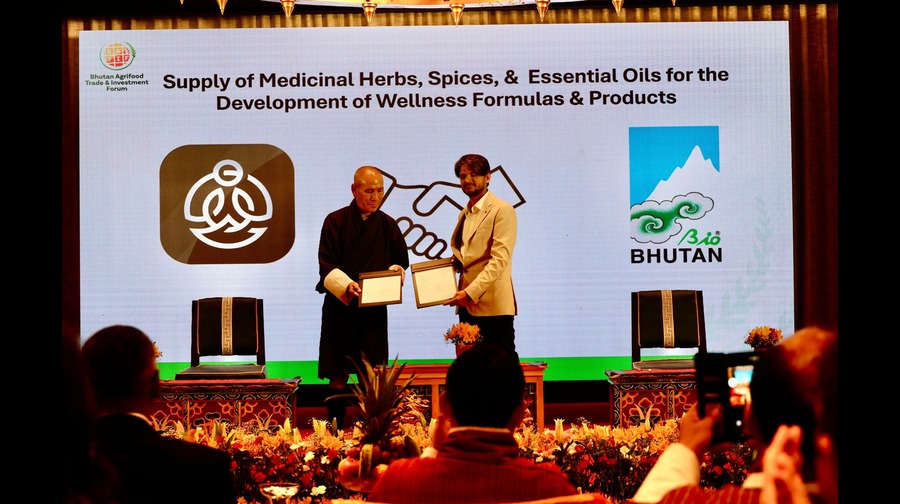
Co-Founder/CEO of Bio Bhutan, Ugyen, said, “Everyone says Bhutanese products have great potential. But to fully harness that potential, we need to collaborate with international companies that have the expertise, experience and market reach.”
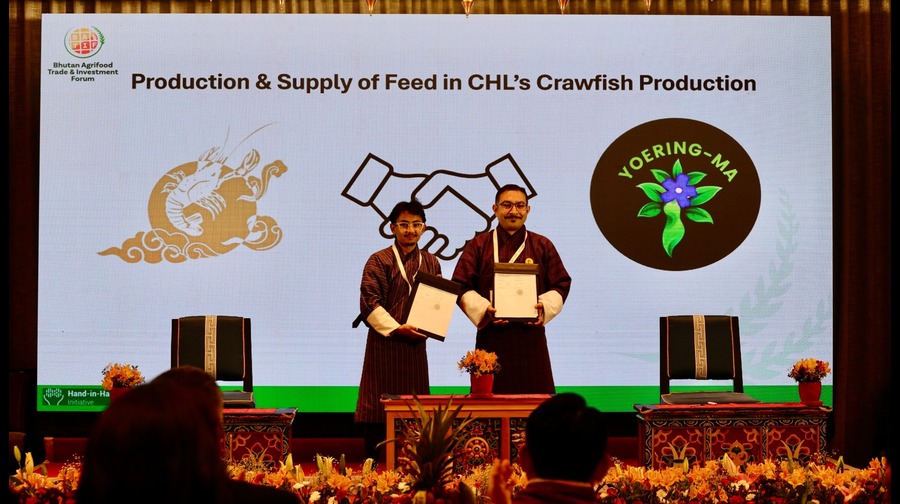
Likewise, an agreement was signed between Crawfish Himalayan Limited and Yoering-Ma for the production and supply of feed used in crawfish farming.
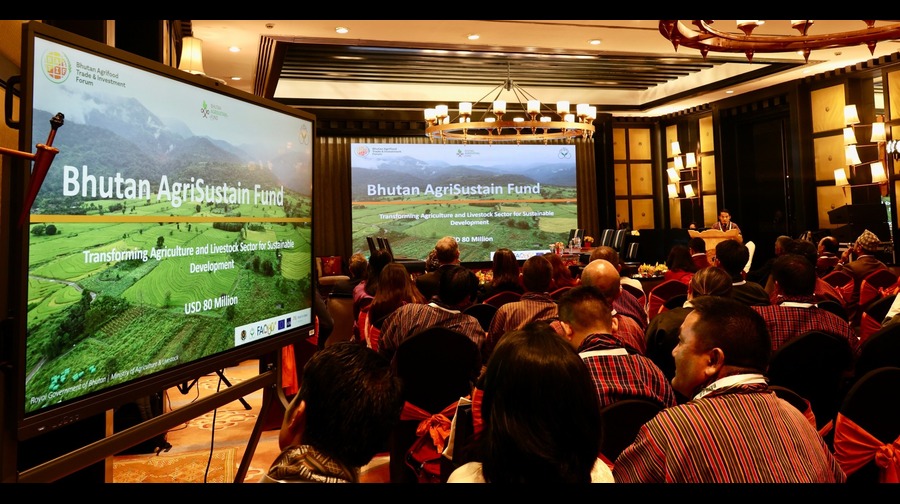
Moreover, Asian Development Bank committed two million US dollars as technical assistance toward the Bhutan AgriSustain Fund.
According to agriculture and livestock ministry, these partnerships reflect growing international confidence in Bhutan’s sustainable agrifood economy.
BATIF 2.0 brought together government agencies, private sector representatives, and international investors to promote investment opportunities in Bhutan’s agrifood sector.
Deki Lhazom