
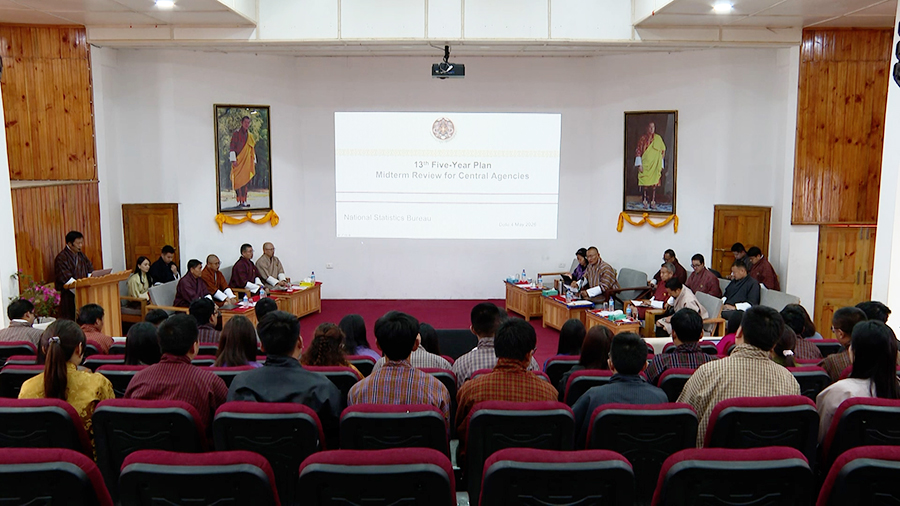
 Concerns are mounting over the duplication and lack of data sharing among agencies. According to the National Statistics Bureau, NSB, the issue has contributed to Bhutan’s low performance in the World Bank’s Statistical Performance Indicator, SPI. The SPI is a global measure that assesses how well a country’s statistical system works, including the quality, availability, and reliability of data. A low score on the SPI indicates significant gaps in a country’s ability to generate and use high-quality data, which hinders governance and development.
In the World Bank’s latest SPI report, Bhutan scored 57.97 out of 100, far below the global median SPI score of around 70, and the second lowest among the SAARC countries. This undermines the reliability of any statistical data produced in the country.
The SPI provides an open-source framework for assessing the performance of statistical systems in five key areas, including data use, data services, data products, data sources, and data infrastructure. 186 countries are assessed annually.
A low SPI score can weaken policy making, making it difficult for leaders to identify where to allocate resources.
NSB says the low score is mainly due to weaknesses in administrative data, limited data sharing, and institutional gaps, especially in coordination among agencies.
During its mid-term review today, NSB shared their target to increase the SPI score to 60 by the end of the 13th Five-Year Plan.
To achieve this, NSB recommended strengthening administrative data across ministries and agencies. So far, the bureau has assessed the quality of administrative data from nine agencies, looking at standards, categorisation, and definitions in line with international practices.
NSB also recommended improving Bhutan’s data ecosystem by creating a platform for better data sharing among agencies.
To support this, NSB has signed trilateral Memoranda of Understanding with GovTech and relevant agencies. This is expected to improve the use, generation, and production of administrative data.
Reliable data is crucial for a country to make informed decisions and effective policies.
Singye Dema