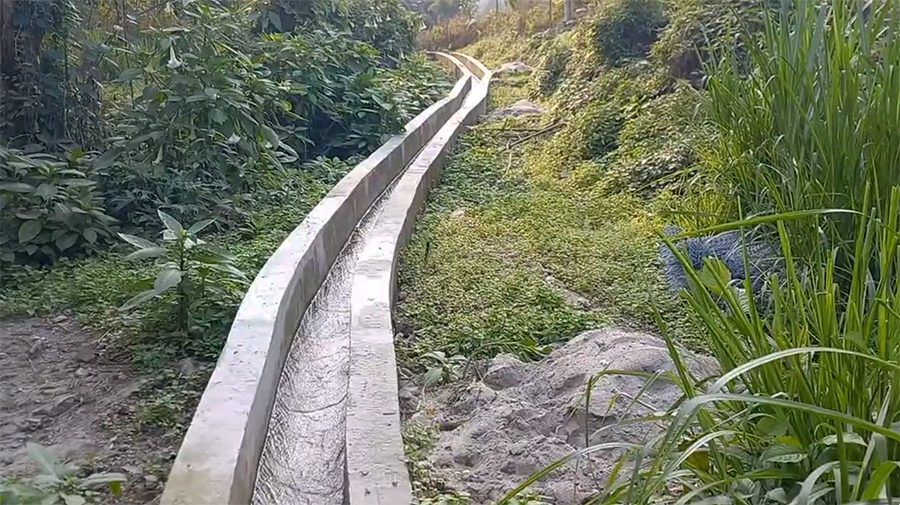
 Villagers of Wangphu in Samdrup Jongkhar are looking forward to a successful paddy cultivation season with a newly constructed concrete irrigation channel ensuring a reliable water supply. Villagers hope the channel will ease years of water shortage and improve crop yields.
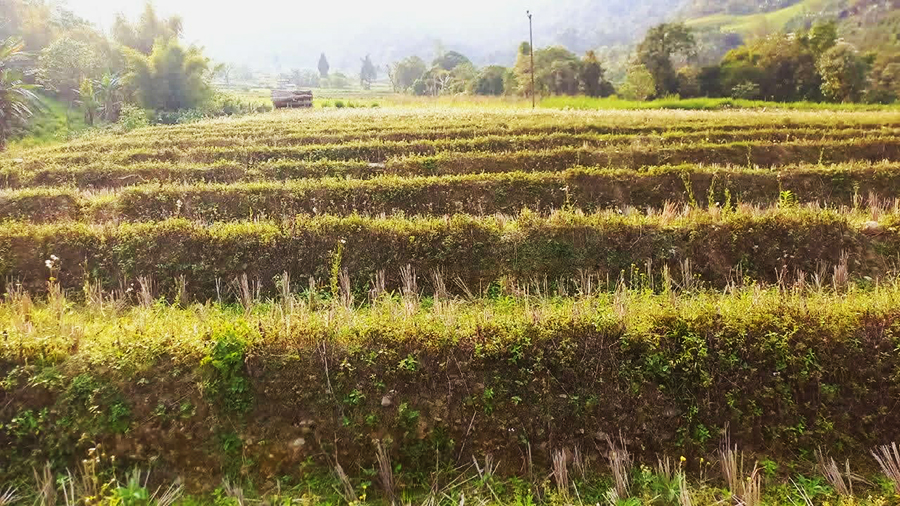 For years, farmers in the village struggled with water shortages during the cultivation season. Without a proper irrigation system, much of the water was lost before reaching the fields, forcing some farmers to leave their land uncultivated.
Currently, around 30 households cultivate paddy on about 20 acres of land, while nearly 10 acres remain fallow due to insufficient water.
Villagers say the new irrigation channel has improved their confidence in farming and could help revive unused fields. With a steady supply of water, they expect better harvests and less maintenance compared to the old traditional channel.
“Earlier, the irrigation channel was like this, but now with the concrete channel, it has improved a lot,” said Sonam Jamtsho, a resident of Martshala Gewog.
Another resident Dawa Zangmo said, “Before, we struggled a lot without proper irrigation. We wanted to work, but there wasn’t enough water. Now, with the new irrigation channel, things have improved, and we are very grateful.”
“To cultivate paddy, we need water. Without it, it’s very difficult. We are grateful for this irrigation channel and hope for more projects like this in the future,” said Rinchen Wangdi, also a resident.
The Martshala Gewog Administration constructed the nearly one-kilometre concrete irrigation channel at a cost of about Nu 700,000.
According to the chiwog tshogpa, the initiative is part of efforts to strengthen rural livelihoods and improve food security in the gewog.
As Bhutan continues to import a large share of its rice, small initiatives like this are expected to help increase local production and reduce reliance on imports.
Kinley Wangchuk, Samdrup Jongkhar