
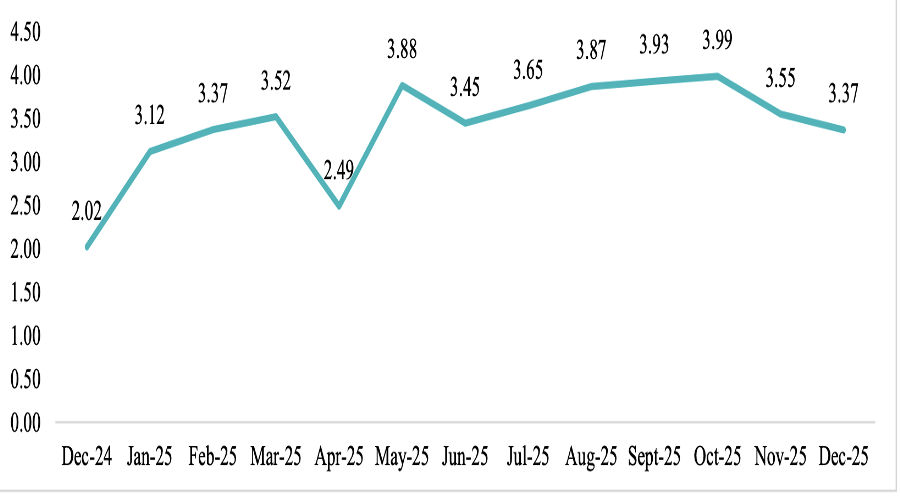
 Prices in the country continued to rise last December, according to the National Statistics Bureau’s monthly consumer price index report. The year-on-year inflation rate stood at 3.37 per cent in December last year. This means people paid three per cent more for the same goods and services compared to December 2024.
Clothing and footwear were the biggest contributors to the overall increase in prices. Prices in this category rose by a little over five per cent, nearly doubling from 2.65 per cent in 2024.
Not all prices went up. Food and non-alcoholic beverages became cheaper, with prices decreasing by 4.35 per cent over the year.
However, alcoholic beverages and betel nuts increased at 4.5 per cent.
Meanwhile, prices increased across all non-food categories. Expenses related to health, transport, restaurants and hotels recorded an increase in prices between December 2024 and December 2025.
The Consumer Price Index tracks changes in the prices of goods and services that households commonly buy.
The Consumer Price Index also shows how inflation affects purchasing power. In December last year, the purchasing power of Ngultrum stood at Nu 53.5. This means that what cost Nu 53.5 in December 2012 cost Nu 100 in December last year.
This indicates a 3.26 per cent drop in the purchasing power of Ngultrum due to price increases in the economy. This means money today buys less than it did a year ago.
Deki Lhazom
Edited by Sonam Pem