 In a world where many traditions are slowly disappearing, some communities in Bhutan still hold tightly to their local culture. Age-old festivals quietly thrive across the country, preserving the rich cultural roots. In parts of Dagana, people continue to celebrate Londha, a traditional village festival that has been passed down for generations. Londha is observed as a gesture of gratitude to their local deities for peace, safety, and good harvests.
The three-day Londha festival for Tachey and Thasa villages in Laja Gewog was held recently. The festival begins at a private house locally known as Tachey Chhubi Chhim, where villagers welcome their local deities, including Gangtse and Tshomen, among others.
Women singers known as Zhems from the community recite prayers and perform traditional songs, while archers come out of the house carrying bows, arrows and a flag.
Together, they move in a procession to the festival ground, believed to be joined by the deities from the mountains and nearby areas. Along the way, they pray for a smooth and successful festival.
The rituals were once conducted inside the house. However, for over two decades, they have taken place in an open area nearby because the house is old and unsafe.
The festival is funded by the villagers themselves. They believe that failing to organise Londha brings misfortune.
“We cannot forgo the festival under any circumstances. Even if we are not in a position to contribute from our own pocket, we must seek support from others for the festival,” said Khandu, Resident, Thasa, Laja Gewog, Dagana.
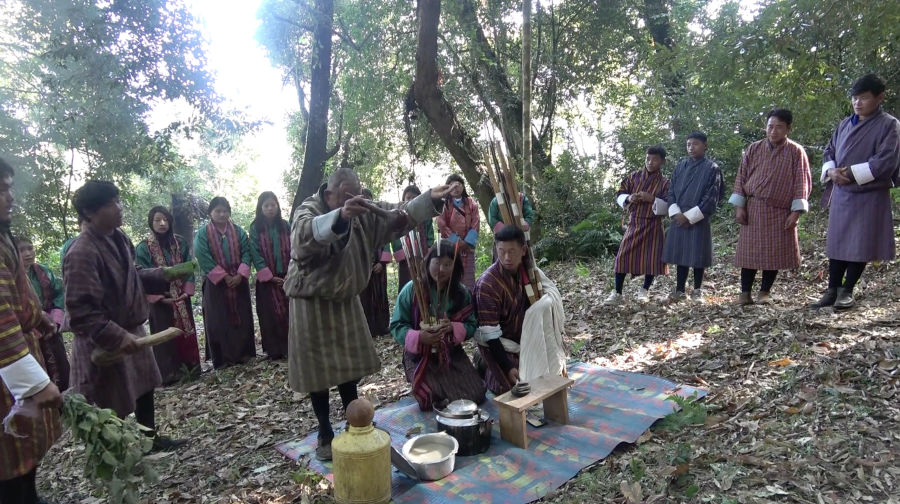
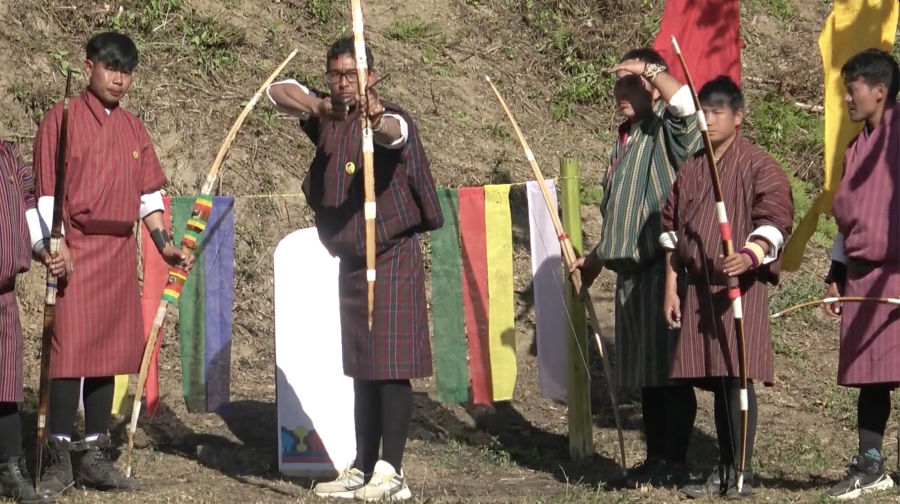
At the festival ground, villagers offer Marchang to the local deities before starting the traditional archery tournament, one of the main highlights of the festival. Archers from nearby villages also join, strengthening community ties.
During Londha, even vulgar languages are allowed as people believe they chase away bad luck. However, everyone must sill follow strict rules like being on time, bringing their own plates and cups and lining up properly for meals.
Likewise, Dhodhams or disciplinarians keep order and even punish archers who miss targets or break rules during one of the rounds, ensuring the festival runs with respect and fairness.
“Participants must have tolerance and patience. Everyone understands this tradition as it has been passed from one generation to another. Defaulters accept their punishments no matter how strict,” said Pemba, Disciplinarian, Tachey, Laja Gewog, Dagana.
Despite the cultural significance of the festival, fewer people are taking part each year. Many people who now live elsewhere no longer return for the festival.
There is also a growing worry that no young Zhems are coming forward to replace the elderly singers who lead prayers ad songs.
“Civil servants, armed force personnel and teachers from our villages now live elsewhere. They rarely return for Londha. Only a few elderly people and middle-aged participants are taking part in the event. If we discontinue our participation, the festival will definitely disappear one day,” said Zeko Tashi, Thasa, Laja Gewog, Dagana.
“Interest in Londha has declined compared to the past. Youth participation is very low unlike in the past. This is my first year as Zhaypoen, and I couldn’t memorise all the lyrics. I commit to preparing better next year,” said Phub Gyeltshen, Zhaypoen, Tachey, Laja Gewog, Dagana.
On the final day, archers and Zhems walk into a thick forest above the event ground to make an offering or Soekha to the local deity, Gangtse. Villagers believe that the deity has always safeguarded the community and its people.
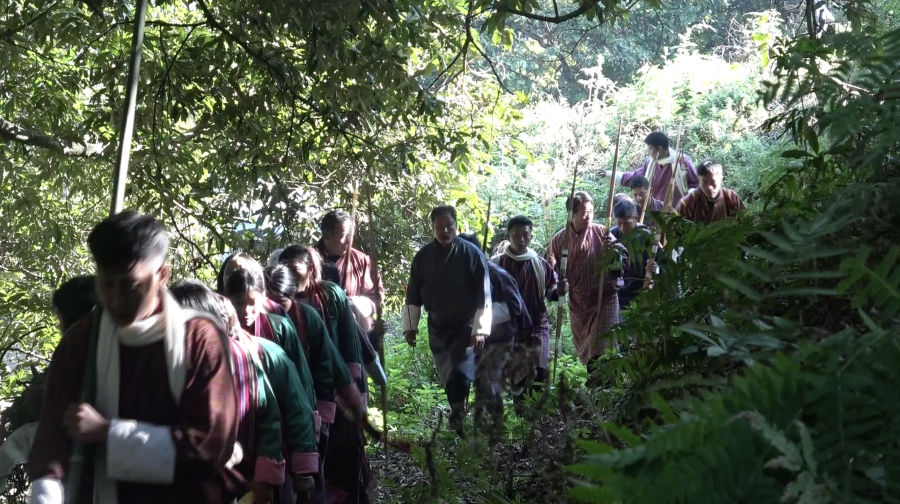
“Tasha-Sili is our neighbouring village. Once they lost all cattle, but none of ours died. Monkeys never attack our crops, although our village is situated in the middle of the forest. We feel we have a blessing from above,” said Khandu, Resident, Thasa, Laja Gewog, Dagana.
On the final night of Londha, everyone returns to Tachey Chhubi Chhim for a final prayer before going home.
They offer gratitude to the local deities for a successful three-day festival and pray for continued peace, protection and good fortune in the years ahead.
Pema Tshewang, Dagana
Edited by Sonam Pem