
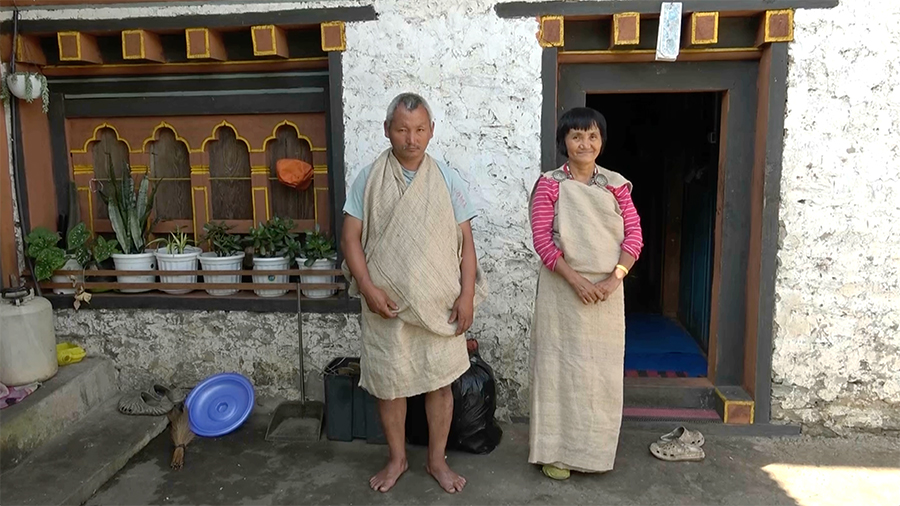
 Mon Kha, the indigenous language of the Monpa community in Trongsa, is still spoken in Jangbi Chiwog. However, migration, inter-community marriages and the passing of elderly speakers are posing challenges to its survival. Residents are now calling for the revival of the Monpa Festival, which they say helped preserve their language and culture.
Residents of Jangbi, Wangling and Phumzor say the language is more than a means of communication. It connects them to their ancestral roots and cultural identity.
“When we speak our dialect, people find it unique and difficult to understand. But we take pride in it because it is part of our identity as Monpa,” says Tshering Dolkar, a resident of Wangling.
Norbu, Lam of Jangbi Community Lhakhang, says the original Mon Kha spoken by their ancestors, the Pows, is no longer understood by many, particularly younger people. Of the nine Monpa settlements, Jangbi is the only place where the dialect is still widely spoken.
Residents say the Monpa Festival, first organised in 2019, played an important role in preserving their language and traditions. However, the annual celebration was discontinued following the COVID-19 pandemic.
They are now calling for the festival to resume, saying it would encourage younger generations to learn the dialect and help preserve their cultural heritage.
“Among all our Monpa traditions, our dialect is one of the oldest. So, it would be very beneficial if the Monpa Festival could be organised again in our village,” says Sonam, Jangbi Tshogpa.
The Gewog Administration says discussions are underway to revive the festival, although its organisation will depend on the availability of funds.
“We have discussed this with the culture officer and the Dzongda. They have also expressed support for organising the festival again,” says Rinzin Wangchuk, Langthil Gup.
More than 60 households, with around 300 people across the three villages of Jangbi Chiwog, continue to speak Mon Kha.
For the community, keeping the language alive means preserving an important part of their identity for future generations.
Thinley Dorji
Edited by Passang