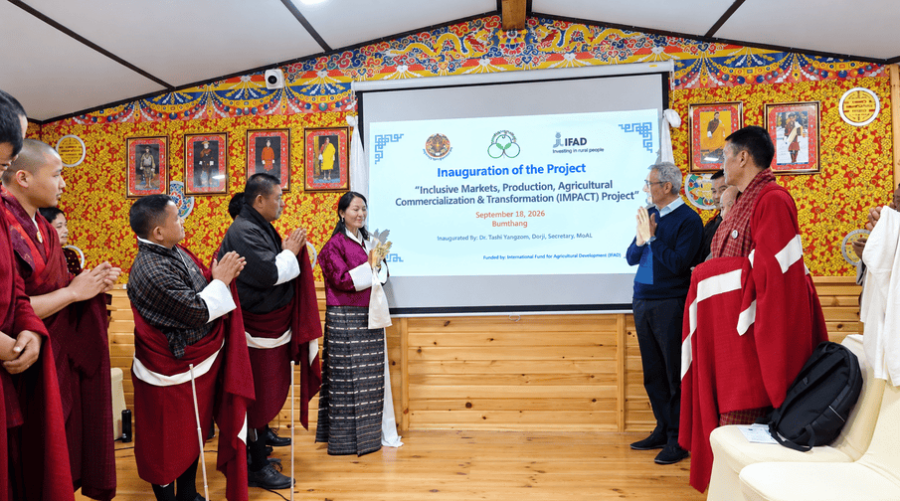
 Growing a crop or producing livestock products are often only half a farmer’s challenge. Finding a buyer, getting a loan, and coping with the changing weather patterns decide whether farming pays. A new project, Inclusive Markets, Production, Agriculture Commercialisation and Transformation (IMPACT), aims to address this gap for Bhutanese farmers. The initiative was launched in Bumthang yesterday.
The project will benefit the farmers of Bumthang and six eastern districts of Lhuentse, Monggar, Pema Gatshel, Samdrup Jongkhar, Trashigang, and Trashi Yangtse. The eastern districts were selected based on high levels of agricultural dependency, poverty, climate vulnerability, market isolation, and alignment with the 13th Five-Year Plan.
Meanwhile, Bumthang serves as the project’s strategic nexus to International Fund for Agricultural Development’s (IFAD) programmatic implementation in Bhutan.
According to the project design, some 15,500 smallholder households are expected to benefit directly. At least half of them will be women, while 16 per cent will be young people between 18 and 35 years.
Project IMPACT builds on the Climate Agriculture and Resilient Livelihoods Enhancement Programme, which helped farmers in eastern Bhutan increase vegetable and milk production. The focus now shifts from producing more to earning more. The initiative will organise farmers into stronger groups, link them with buyers and help them prepare viable business and loan proposals.
It also plans to develop and rehabilitate irrigation systems, improve milk collection and processing facilities, and establish vegetable aggregation centres, among others.
“We have to seize this opportunity to ensure that, we are actually working to the bigger picture for the agriculture transformation in the country. I think this project enable us to do so. So, my sincere request, everyone sitting in this room is, not to look in this project is in isolation but, always look at its interconnecting with everything else doing in the country,” said Tashi Yangzome Dorji (PhD), Agriculture and Livestock Secretary.
The project’s results framework targets an increase in income for at least 12,000 smallholder farmers. It also aims to reduce average post-harvest losses in perishable produce from 20 to 15 per cent and create employment opportunities.
The Project is estimated to cost around USD 27 M. Of this, around USD 1 M will be funded through IFAD. The government, financial institutions and beneficiaries will also contribute towards the project.
The Agriculture and Livestock Ministry will lead the implementation.
Following the launch, a four-day start-up workshop for the project also began, with officials from the seven beneficiary districts taking part.
Thinley Dorji, Bumthang
Edited by Passang