
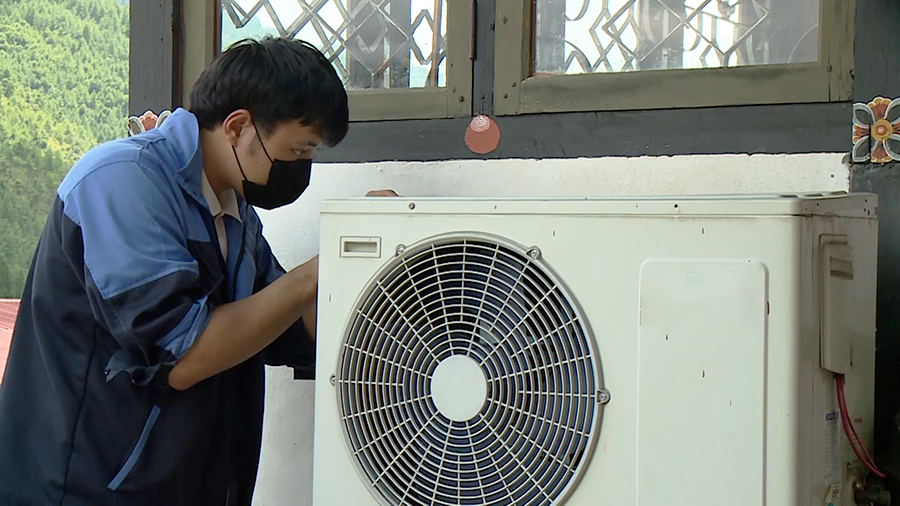
 Bhutan is working to phase out HCFCs, or hydrochlorofluorocarbons, completely by 2035. These refrigerants, once widely used in air conditioners and refrigerators, deplete the ozone layer. While Bhutan now has trained and certified rack-servicing technicians, some businesses continue to hire cheaper foreign technicians. This has raised concerns over certification, servicing practices and the safe handling of refrigerants.
Bhutan embarked on the HCFC phase-out journey in 2013, with a focus on training and building the capacity of local refrigeration and air-conditioning technicians.
Since then, more than 500 technicians have received training through technical training Institutes, while some have pursued further training abroad at their own expense.
However, technicians say some businesses continue to hire foreign workers because they charge less.
“We do not know whether they are certified technicians or not. They may also not know whether a particular refrigerator is permitted for import into Bhutan. This can be very risky because they could bring in equipment containing gases such as R22, which Bhutan is working to phase out,” said Jigme Samdrup, Rack-servicing Technician.
For technicians, it is not just about who does the job but how well it is done.
“They don’t have equipment like flare tools, and after some time, when the customer asks them, they may say it is good and show that the cooling is working. But after a few hours or days, the gas may leak again. This will affect the environment,” said Tara Birtiwari, Senior Technician, Dolma Enterprise.
The National Ozone Unit says the issue is particularly concerning in border towns, where some foreign technicians may not follow proper refrigerant-handling practices.
“This is true especially for our bordering towns. Foreign technicians are not really following good servicing practices. While they are servicing and maintaining this equipment, they are not allowed to vent the refrigerants: emit them outside. But then we have noticed that these foreign technicians are venting this out without following proper servicing practices. This is harmful for the environment, as well as for your safety,” said Kinley Dorji, Project Officer, Department of Environment and Climate Change, MoENR.
On World Ozone Day, technicians in the capital provided free servicing to various agencies, highlighting the importance of proper maintenance.
“Before, we used a soap solution and other methods to detect leaks. Now, we are using new equipment, such as a leak detector, which allows us to identify leaks in refrigerators better. It also takes less time,” said Nim Tshering Rai, Technician, New Life Electronic and Reporting Shop.
For Bhutan, phasing out HCFCs means more than replacing harmful refrigerants. It also depends on who installs and services cooling equipment, how refrigerants are handled, and whether proper practices are followed.
And for technicians and regulators, ensuring safe and responsible servicing will be key to protecting both the ozone layer and people.
Devika Pradhan & Namgay Wangdi
Edited by Sonam Pem