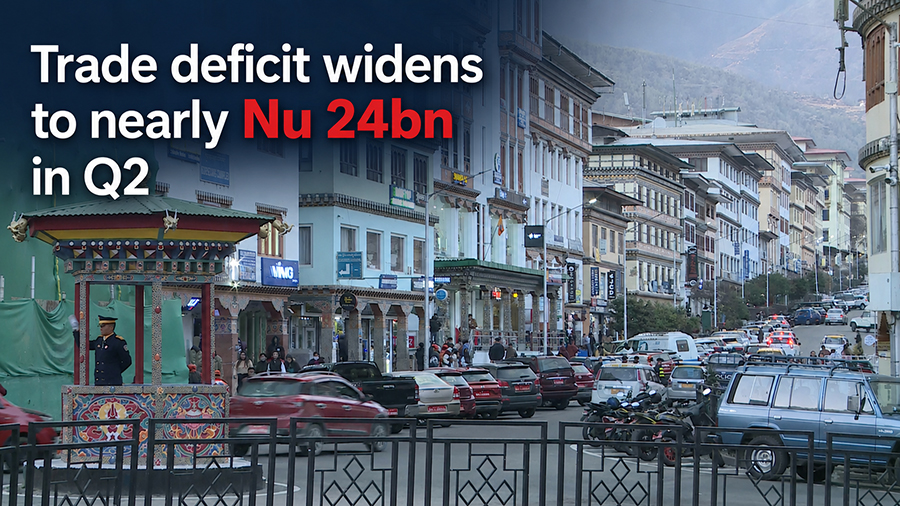
 Bhutan is importing considerably more goods than it exports, and the gap has widened in recent years. In the second quarter of this year alone, the country imported goods worth nearly Nu 43bn, leaving a trade deficit of almost Nu 24bn. Fuel, food, smartphones, vehicles and networking equipment account for a significant share of the import bill.
The fuel in a car, the phone in your hand, the rice in your kitchen and the machinery used by businesses. Many of the goods Bhutanese use every day come from outside the country. And the value of these imports is rising.
In the second quarter of this year, Bhutan imported goods worth Nu 42.7bn, up from Nu 37bn in the first quarter.
That pushed the trade deficit to Nu 23.9bn, an increase of more than Nu 1.65bn from the previous quarter.
Fuel remains the largest expense. Diesel (HSD) imports cost Nu 4.3bn in the second quarter, up from 3.6bn in the first.
Technology is another major part of the import bill. Smartphone imports crossed Nu 1bn in the second quarter, compared to about Nu 824 M in the first quarter.
Telecommunications and networking equipment were also among the top ten goods imported.
Food is another major import. Rice imports alone cost about Nu 648 M in the second quarter.
India continues to remain the major trade partner, accounting for Nu 32.4bn in imports and nearly Nu 10.5bn in exports during the second quarter.
China and Singapore followed as the next largest sources of imports.
However, the country is also exporting more. Total exports rose by 28 per cent in the second quarter to Nu 18.8bn, from 14.7bn in the first quarter.
Ferrosilicon remained one of the country’s major export earners, generating about Nu 5.1bn during the quarter.
The country’s trade deficit has been widening.
According to Ministry of Finance data, Bhutan’s trade deficit stood at close to Nu 62bn in 2022. By last year, it had widened to around Nu 120bn.
An economist says the growing trade deficit does not necessarily affect household income or spending directly.
However, if the gap persists, it could put pressure on foreign exchange reserves, weaken the ngultrum and make imports more expensive, adding to inflationary pressure.
It could also increase the country’s reliance on borrowing.
Economist Sanjeev Mehta said, “Often, countries regulate imports through tariffs and non-tariff barriers, but these measures can cause more harm than good. They can contribute to shortages, fuel black markets, and drive up inflation. However, non-essential imports need to be regulated, as they consume scarce foreign exchange. The long-term solution, however, is export promotion. We need to promote exports so that we have sufficient foreign exchange to pay for our imports. This is the only sustainable way forward.”
The country’s foreign reserves stood at USD 1.19bn as of July this year.
Kelzang Chhophyel
Edited by Sangay Chezom