
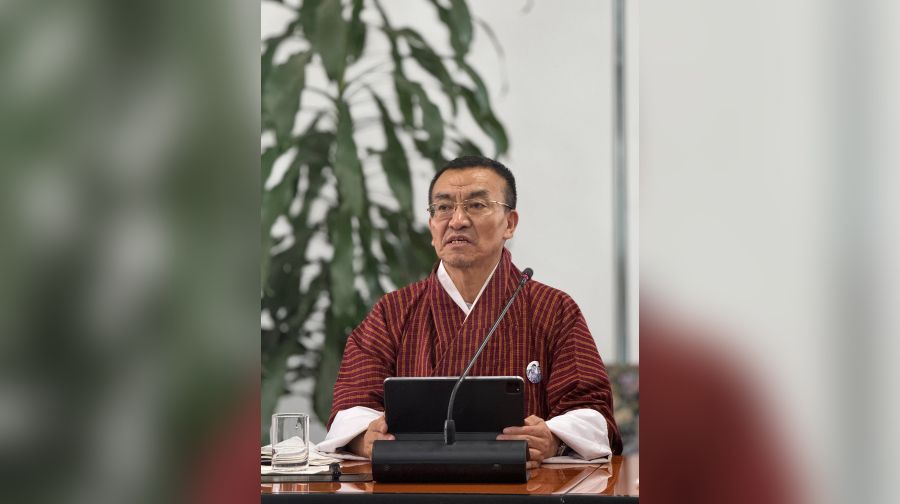
 The country’s foreign reserve stood at USD 1.19bn as of July this year. During the Meet the Press session, the finance minister said although this is a slight decrease compared with the previous month, the reserve remains well above the critical threshold of USD 464 M. The finance minister added that higher import costs, particularly fuel prices, continue to put pressure on the country’s external finances.
Bhutan’s total foreign reserves dropped by around USD 31 M between June and July.
The decline comes amid continued pressure on the country’s foreign exchange position, with higher import costs being one of the key factors.
Fuel is a major contributor to import costs, accounting for nearly 20 per cent of Bhutan’s total imports.
Finance Minister Lekey Dorji said, “When we import fuel and pay for it, the price is much higher. As we all know, the price of fuel one time went up to almost Nu 200 per litre. The government then stepped in and supported the price by trying to keep it below 100.”
The minister added that the government spent more than Nu 1.8bn in fuel subsidy to date amid rising fuel prices driven by the global energy crisis due to the war in the Middle East.
He said the depreciation of the ngultrum also increased the cost of imports, putting further pressure on the country’s reserves.
At the same time, an upward revision of informal imports along the border towns has also added to the pressure.
In the last fiscal year, informal trade was estimated at Nu 1.33bn in imports and Nu 3.04bn in exports.
Despite these pressures, the finance minister said, the country continues to maintain a sufficient buffer to meet its essential import needs and safeguard external stability.
With USD 1.19bn in foreign reserves, Bhutan currently holds more than twice the critical threshold reserve requirement.
Tashi Dekar
Edited by Phub Gyem