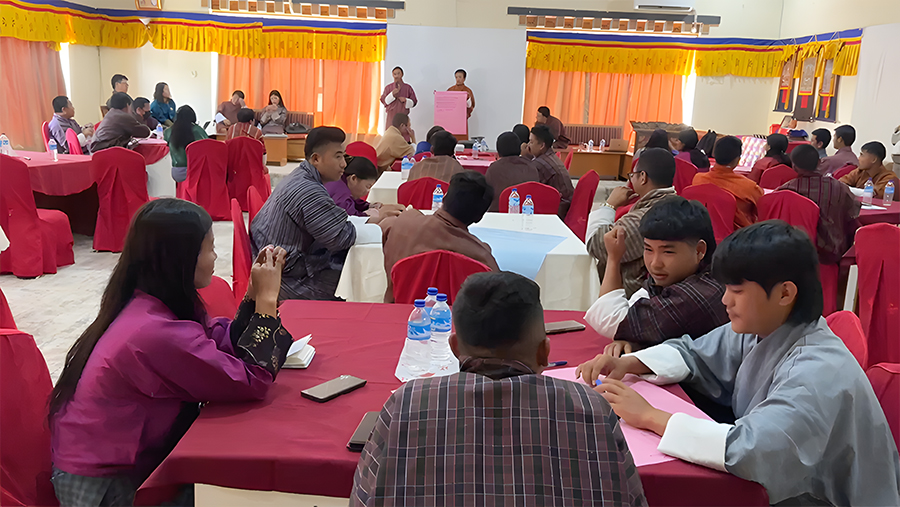
 Erratic weather is making farming increasingly difficult in eastern Bhutan, with farmers facing unpredictable rainfall, drying water sources, and more pest and disease outbreaks. To help communities respond to these growing climate risks, the Department of Agriculture is training community resource persons in climate-smart agriculture.
Around 38 community resource persons from 21 gewogs are attending the three-day training in Monggar. The programme aims to build a network of community-level resource persons who can help farmers adapt and produce food more sustainably.
The resource persons will work alongside agriculture extension officers and help farmers access technical information and government services.
Tshetrim La, Deputy Chief Agriculture Officer, MoAL, said the eastern region is the most affected by climate change-related impacts.
“The eastern region is the most affected by climate change-related impacts. This has been reported in media houses, and we have a division looking after such disasters. Every year, we receive reports of floods damaging fields, storms destroying crops, and the emergence of new pests and diseases. To address these challenges, we are training the community resource persons with the expectation that they will play an effective role.”
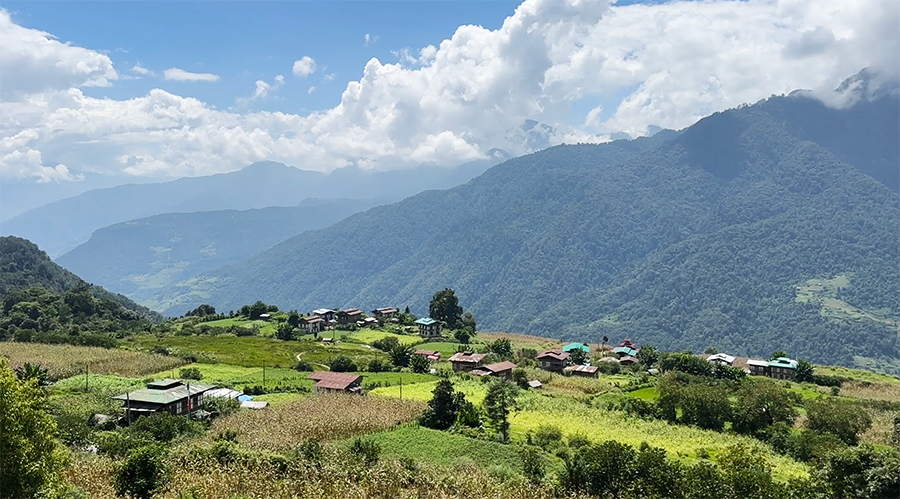 The training covers climate resilience, sustainable food production, nutrition, market access, value addition and crop diversification. It is also intended to address the shortage of agriculture extension officers in some gewogs.
Tshetrim La said some gewogs currently have a shortage of extension officers, with a single officer often responsible for covering two gewogs in some regions.
“Currently, gewogs face a shortage of extension officers, with a single officer often responsible for covering two gewogs in some regions. These participants will complement the extension officers in the gewogs. They will serve as influential figures within the communities, helping residents in accessing vital information such as seed centres and other relevant offices.”
For farmers, the training comes as climate-related impacts are already being felt on the ground.
Kezang Jamtsho, a participant from Minjey Gewog in Lhuentse, said a recent storm damaged farms in his village.
“Just recently, a powerful storm wreaked havoc on our farms back in our village. We did not know what was causing it. During such events, we do not know how to react. The training is teaching us how to manage our farms to prevent such disasters. We are grateful.”
Dechen Choden, a participant from Narang Gewog in Monggar, said her village has experienced erratic rain, strong winds and floods.
“Our village experienced erratic rain, strong winds destroying our maize, and floods. Until now, we were not aware and thought they were natural events. From this training, we understood that these are climate-change induced patterns.”
Another participant from Narang Gewog, Tshering Dukar, said the training also helped participants understand when to harvest their crops and the effects of climate change.
“We have learned when to harvest our crops. Moreover, through this training, I was able to learn that climate change is causing erratic downpours, droughts, and windstorms.”
The initiative is part of Bhutan’s effort to achieve food self-sufficiency by 2029.
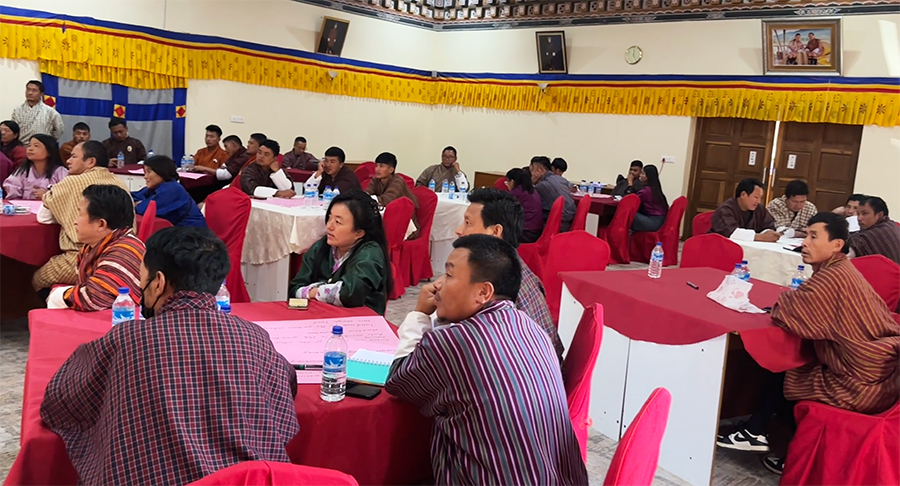 The Food and Agriculture Organisation of the United Nations is implementing the programme with funding support from the Global Environment Facility’s (GEF-8) Food System Programme.
Namgay Wangchuk, Monggar
Edited by Passang