
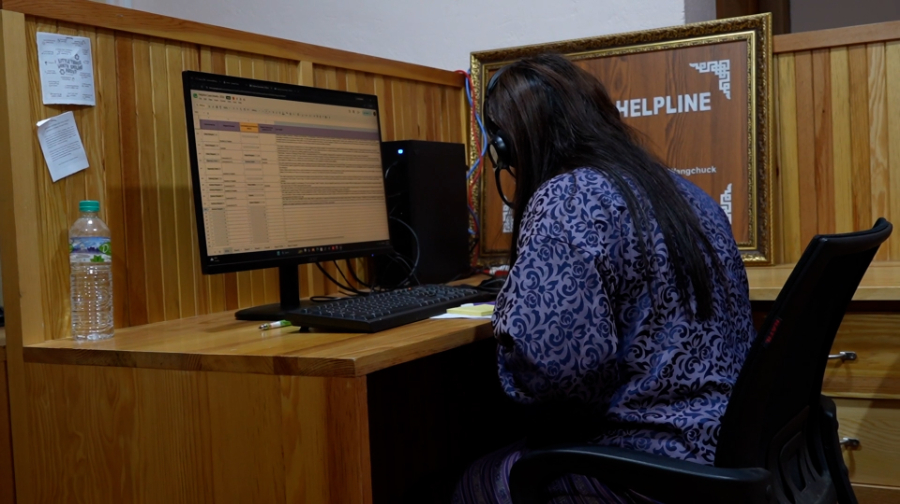
 A single phone call can make the difference between life and death for someone in crisis. Since its establishment in 2022, The PEMA has responded to more than 2,000 calls on its toll-free helpline 1098. The majority seek support with mental health challenges, as well as violence, family conflicts, and other emergencies. Available around the clock, the helpline has become a vital lifeline for vulnerable individuals across the country.
It’s 8 PM on a Thursday night. Apart from the chirping of crickets, the neighbourhood is quiet until the phone rings.
For a mental health outreach worker at The PEMA, even at the dead of the night, the calls are nothing unusual. In fact, it’s their busiest hours. Nights, holidays and weekends are when they receive the highest number of calls from individuals in crisis.
On average, they receive around 60 calls in 24 hours, mostly from Thimphu and districts with more population.
The PEMA Secretariat team responds to over 99 per cent of severe cases within 5 hours, exceeding the 24-hour standard.
And the helpline is not only limited to calls.
“We learned that there are also people who do not want to talk but want to text. So, we customised the helpline by providing another email address where people can just text until they get the confidence to literally talk on the phone. We also have WhatsApp numbers where once they call the number, if they are not in a position to continue talking to us, they can also chat on WhatsApp,” said Kezang Dukpa, the chief counsellor for The PEMA Secretariat.
The number of calls has increased significantly, from about 50 in 2022 to more than 1700 by the end of last year.
Mental health challenges accounted for 26.7 per cent of the total calls. This is followed by gender-based violence at 11.6 per cent and marital issues at 10 per cent.
Nearly 68 per cent of callers were women, while about 6 per cent were children.
In some cases, adults also contacted the helpline on behalf of children.
The chief counsellor said, “If there is violence, threats and emergencies, we immediately activate the Royal Bhutan Police, and they have been very supportive. If there are medical emergencies, we then activate the ambulance services, and the health centres have been very supportive in this case. If there are protection issues, the helpline will immediately activate our protection offices. If the cases are there in the communities, we also activate the community service providers, the local government, and everybody involved here has been very supportive and useful.”
Depending on each client’s needs and with their consent, they are provided appropriate support services. Some are referred to psychiatrists or clinical counsellors for further care.
And efforts are underway to expand mental health services.
“We have recruited and trained clinical counsellors, 31 of them, and then they are in 15 dzongkhags as of now, serving in hospitals, serving in helplines, serving in rehab and Gyalsung centres. So similarly, we also have, for now we have nine national psychiatrists, of which we have started recruiting them in these regional health hospitals, and we do have plans to recruit them at the cluster of hospitals in the future as well,” said Dil Kumar Subba, a Sr. Program Officer, The PEMA Secretariat.
The support does not end there.
The PEMA Secretariat also facilitates legal aid and helps reintegrate their clients back in the community.
With over 200 families affected by suicide over the last two and a half years, and most cases linked to mental health, early intervention such as The PEMA helpline and access to mental health care services remain essential in saving lives.
Sonam Yuden & Singye Dema
Edited by Phub Gyem