 Some products are special because no one else can make them quite the same way. Their quality comes from the place they are made, the people who make them, and the traditions passed down through generations. Bhutan is now recognising and protecting that uniqueness through its first four Geographical Indication or GI products, launched today. Geographical Indication is a special label that certifies authenticity and helps producers earn better value for their products.
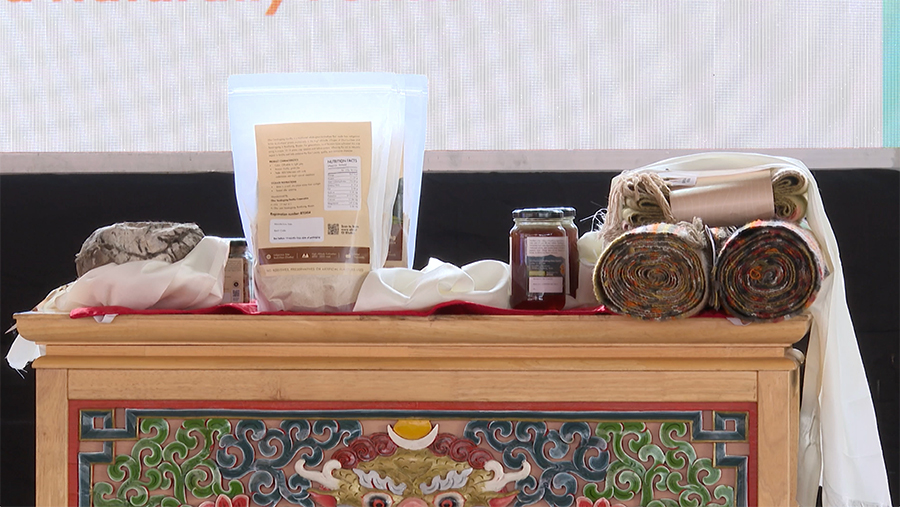 The four Geographical Indication products are Bumthang Yathra, Bumthang Honey, Dhur-Tandingang Gonthok, a traditional buckwheat flour, and Merak-Sakteng Zoetey, a fermented yak cheese.
A Geographic Indication is a form of intellectual property that gives legal protection to products closely linked to a particular place.
For producers, the recognition is more than just a certificate. It is an opportunity to improve their products and earn a better income.
“Women in rural areas have been weaving for many years, but there has not been a proper market price for their products, resulting in low earnings. With our product now registered as a Geographical Indication, I think it can help improve the livelihoods of women in rural areas. It may also encourage some young people who want to remain in their villages,” said Changa Lhamo, Chairperson, Bumthang Yathra Corporation.
“Before our product was registered as a Geographical Indication, we only needed BAFRA certification, which was relatively simple, and there was less emphasis on maintaining quality. Now, we have to follow quality standards throughout the entire process, from raising the bees to harvesting the honey, and complete more certification requirements. Although it involves more work, I think it will benefit us because the product can earn better recognition and a better price,” said Rinzin Dorji, Chairperson, Bumthang Bee Corporation.
According to the Department of Media, Creative Industry and Intellectual Property, the Geographical Indication mark assures consumers that a product is genuine and comes from its place of origin.
Officials say this gives consumers greater confidence and allows producers to sell products based on their authenticity and quality.
“If we have a geographical indication mark, a genuine mark controlled by the National IP Office on the product, then it is easy. Instantly, the presence of that mark answers every question the consumers have. So, when information is right in front of the consumers, consumers obviously have to pay for more. It’s not a regular commodity. It becomes premium. It becomes a luxury. It becomes a status symbol for those who own GI products. So, communities are going to earn more income by selling fewer products if they have a GI mark,” said Lekey Dorji, Officiating Chief, Department of Media, Creative Industry and Intellectual Property.
Officials say the four products qualified because of their strong connection to the culture, tradition and production practices of their respective communities.
To receive and maintain the GI mark, products must meet detailed quality standards outlined in their books of specifications. The Bhutan Food and Drug Authority will verify food and agricultural products, while the Bhutan Standards Bureau will assess textile and handicraft products.
Officials say they will now identify more Bhutanese products that qualify for GI recognition while promoting the four newly registered products in both domestic and international markets.
 Namgay Wangdi
Edited by Sonam Pem