
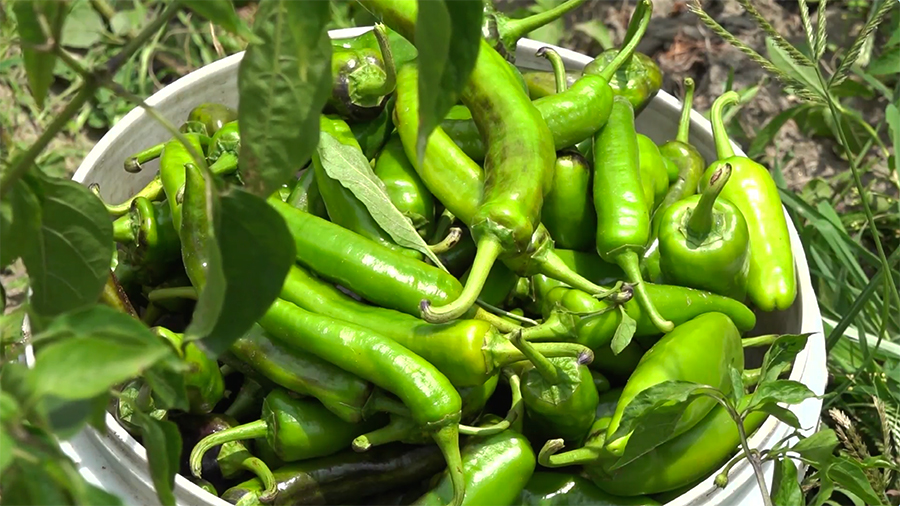
 Farmers of Dochhukha-Dzomlingthang-Ritsa Chiwog in Punakha’s Guma Gewog are enjoying their best chilli season in years, with timely rain delivering better yields and quality. What’s equally encouraging has been the prices, which, the farmers say, are better than the last season.
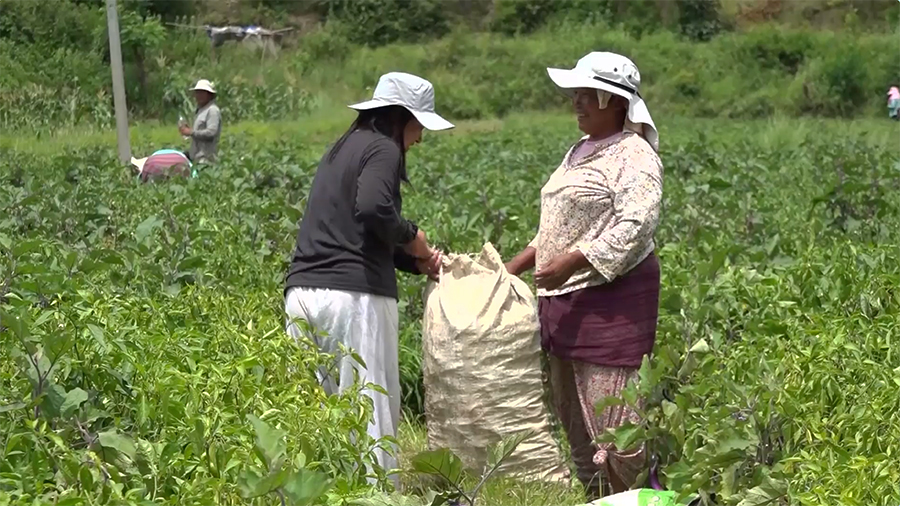 As dawn breaks, 51-year-old Tshering Gem is already in her field picking green chillies. Gem and her family members harvest the crop either in the cool morning hours or as the evening sun begins to fade. It not only spares them from the day’s heat but also helps keep the freshly picked chillies crisp and appealing for the market.
In the previous seasons, recurring challenges such as irrigation water shortage, pest infestations, and untimely rainfall affected chilli production and reduced harvests.
Tshering Gem said, “We did not receive adequate rainfall last year. We had to pump water to our fields from the river. But this time, there was enough rainfall and even the quality is better.”
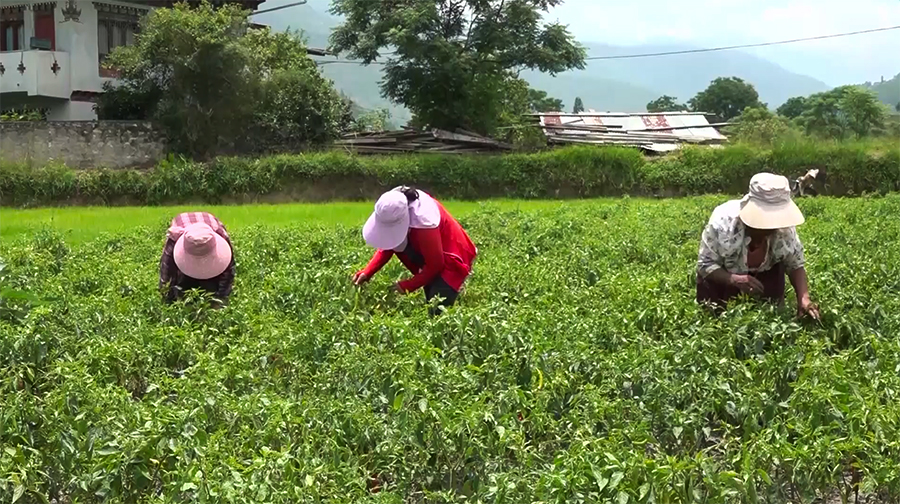 On average, every farmer in the chiwog grows chillies on at least 30 decimals of land.
“If the rain continues, we expect to harvest at least three more times. But if that’s not the case, the flowers may wilt and die, reducing production. Since the harvest is promising this time, we are considering pumping water from Mochhu for irrigation. We already sold 14 sacks within a week, which is almost double last season’s total harvest,” said Nado, a farmer from Dochhukha-Dzomlingthang-Ritsa Chiwog in Guma.
Another farmer from the chiwog, Kinzang Wangchuk said, “The yield is a lot better this year. We harvested around 200 sacks of chilies last season, but this time, we have exceeded that already. We earned more than 200 thousand ngultrum and expect another 150 thousand ngultrum before the season ends.”
Dochhukha-Dzomlingthang-Ritsa Tshogpa Dawa Gyeltshen said, “We already harvested our chillies thrice. Alongside improved production, we are fetching a better price as well. It has remained consistent. So, it is definitely a better chilli season for us.”
With about a month still left for the chilli season to end, farmers remain optimistic. Besides meeting daily expenditure, the income from the crop helps them cover the expense for paddy transplantation, which is next in their farming calendar.
Meanwhile, behind the good news also lies a challenge that rural communities in Bhutan are increasingly facing and one that no amount of rain can fix. According to the farmers, getting workers during harvest time is becoming harder and costlier every year. And whether the chilli fields of the chiwog, that are full today, will find enough hands to tend them next season is a question every farmer is quietly asking.
Changa Dorji, Punakha