
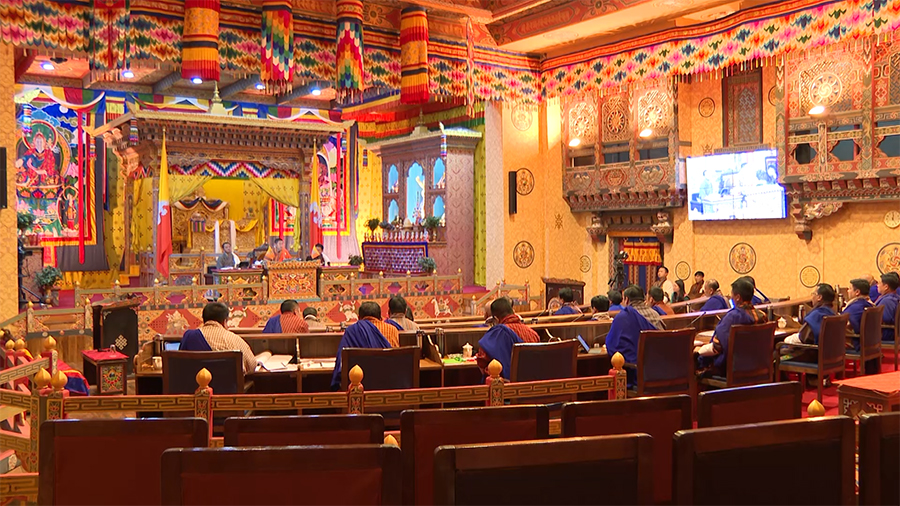
 As the National Council deliberated on the Goods and Services Tax (Amendment) Bill 2026 today, members raised two questions. They questioned how the amendment came about and whether it was the government, the public, or the Parliament itself that pushed for the changes. Members also sought clarification on how goods already imported and taxed under the current law would be affected if the amendment is passed.
According to the committee, the amendment seeks to exempt essential goods that are widely used by the public, making them affordable and ensuring equitable economic benefits.
Under the proposal, a total of 32 items would be exempted from GST. Of these, nine items are already exempted under the existing law, while 23 new items have been proposed for exemption.
“All essential items have now been included in the draft Bill. If any essential items have still been omitted, the ‘Others’ category would suffice, as stated by the Finance Minister during the introduction of the Bill to the House,” said Kencho Tshering, Chairperson, Good Governance Committee, NC.
While supporting the objective of the amendment, several members questioned how the proposal originated. Members also raised concerns regarding the taxation of goods already imported and currently in stock.
“Was the proposal to amend the Act initiated by the government, or did it originate from the public, Parliament, or Members of Parliament?” questioned Sonam Tenzin, MP, Trashi Yangtse, NC.
“Is there not a need for a new seventh sub-clause to provide clear direction or rules for businesses that have already imported goods on which GST has been paid? Alternatively, it should be specified whether the government will refund the tax they have already paid,” said Pema Tashi, MP, Sarpang, NC.
Responding to the concerns, the Chairperson of the Good Governance Committee said that detailed classifications of certain commodities had not been included in the GST Act.
He added that the proposal for the amendment was submitted through Members of Parliament following concerns raised by the public.
Meanwhile, on the question of already-taxed stock, a member of the committee said that the Finance Minister, during the introduction of the bill in the House on Monday, assured that necessary adjustments would be made for goods already imported before the amendment comes into effect.
The concerns and recommendations raised by members have been forwarded to the Good Governance Committee for further review in the internal meeting.
The committee is expected to present its findings and recommendations to the House on Friday.
Bhutan officially rolled out the Goods and Services Tax (GST) in January this year, replacing the former sales tax.
Kelzang Chhophyel
Edited by Sonam Pem