
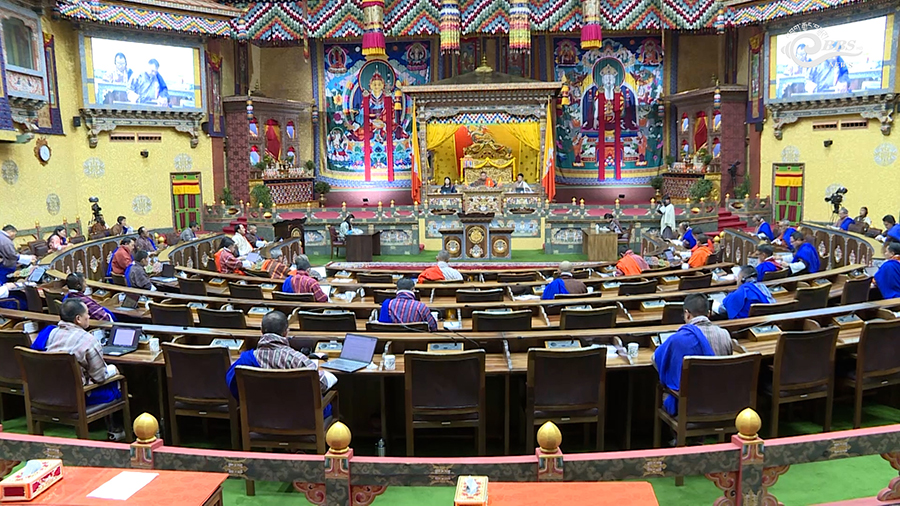
 The National Assembly once again discussed the Royal Civil Service Commission’s MaX Performance Management System. The Good Governance Committee recommended reviewing the bell curve, or forced ranking model, and shifting towards a more evidence-based and merit-based performance management system. However, as in previous years, the recommendations will be referred to the RCSC.
Under the current MaX system, civil servants are assessed based on their Individual Work Plans, achievement of targets, and overall contribution to organisational goals.
Agencies then review the ratings through a moderation process that follows a forced distribution model. Under this system, agencies must place 3 to 5 per cent of employees in the “Partially Meets Expectations” category, regardless of overall performance.
“For example, in a school with 100 teachers, even if their performance and contribution are similar, only a few are placed in the ‘Outstanding’ category and a few in ‘Partially Meeting Expectation’. This, stakeholders say, creates challenges within the system and can eventually reduce motivation and morale to work harder,” said Lhendup Wangdi, the chairperson of the Good Governance Committee.
The Committee previously raised concerns about the bell curve model during earlier parliamentary sessions, and the recommendations were submitted to the RCSC.
In the previous sessions, the RCSC had defended the system, saying it aims to build a high-performance culture and needs more time to mature. The MaX System was introduced in 2016.
Members of Parliament acknowledged that the RCSC has introduced improvements to the MaX system. However, they said the reforms mainly address administrative processes and do not fully resolve concerns surrounding the bell curve and forced ranking model.
The committee’s Deputy Chairperson, Kinzang Wangchuk said, “RCSC have discussed this with countries like Australia, Japan, and Singapore. However, the system did not work effectively in those countries either. Singapore, in particular, used the same system, but it was unsuccessful. As a result, they introduced changes where leaders are required to conduct daily assessments. Whether it is the civil servants, the RCSC, or Parliament, it is now time for us to carefully plan, discuss, and decide how to move forward regarding this system.”
The Good Governance Committee also recommended giving agencies more flexibility to assess employees based on evidence and individual merit, while holding them accountable for their decisions.
The Committee proposed creating an independent system for employees to file complaints and appeal decisions, including establishing an administrative tribunal to make the process fairer and more transparent.
The Committee further recommended sector-specific changes to the system. It said performance assessments should reflect the different nature of professions such as health, education, engineering, and technical services.
The Committee says its recommendations aim to create a fairer, more transparent, and performance-based civil service evaluation system by reducing reliance on rigid ranking
Namgay Wangdi