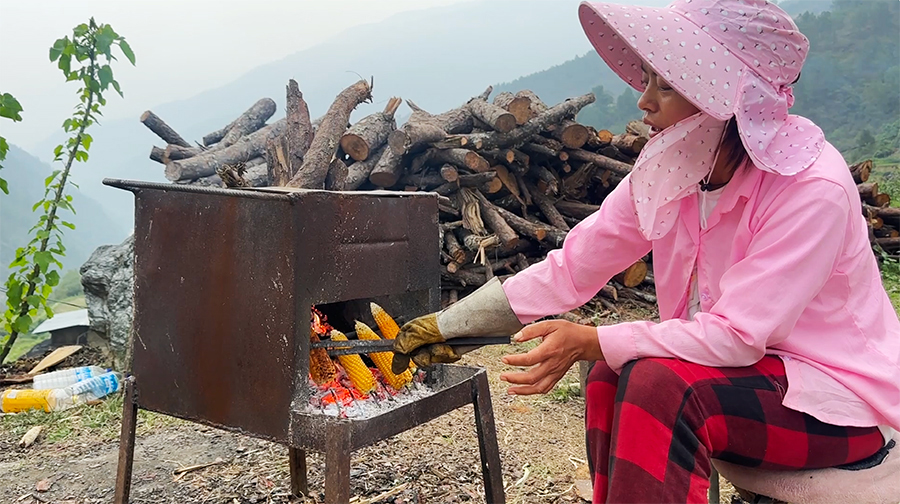
 It is the season of fresh maize in Monggar, and farmers are making the most of it. With growing demand and steady customer flow along the east-west highway, some say business has never been better. Vendors are already earning hundred thousand ngultrum.
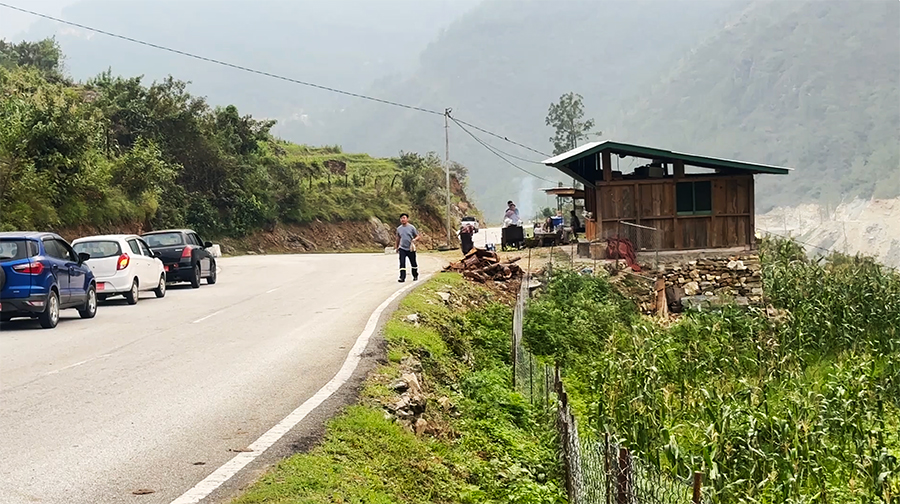 At Khalingzi, a well-known stopover about 10 kilometres from Kurizampa towards Monggar town, three vendors remain busy roasting and selling fresh maize.
With the first harvest of the season, the fresh corns are not only sweeter but selling faster than ever.
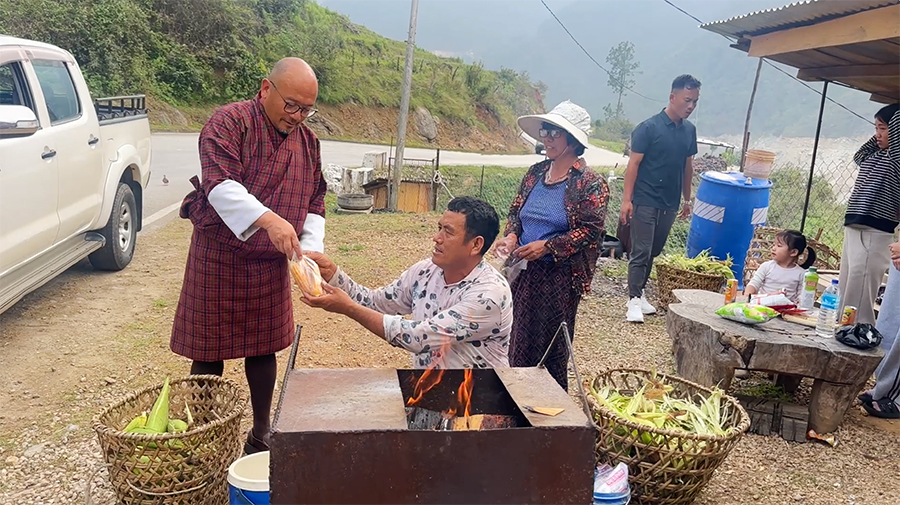 Commuters along the highway, along with visitors from Monggar, Lingmethang, and Gyalpozhing, frequently stop by, grabbing a corn while taking a brief break from their journey.
50-year-old Tshering from Chhali Gewog is among those benefiting from the surge.
His one-acre maize field has already been exhausted, much earlier than expected. In just 17 days, he sold roasted maize worth nearly Nu 500,000. This marks his fourth year in the roadside maize business.
“The roadblock at Kurizampa closes at eight in the morning and opens only around 11 AM. During that time, there is no traffic, so no customers. Once it opens, vehicles rush to catch the next road opening at Gangola. That is challenging; however, business remains steady. On good days, I am able to sell roasted maize worth Nu 20,000 with a minimum of Nu 12,000 a day.
Meanwhile, 32-year-old Kelzang Palden tends carefully to her maize over an improvised metal oven. She rotates each maizediligently to ensure even roasting.
Kelzang sees more customers on weekends and earns an average of more than Nu 7,000 a day.
“This year, due to the roadblock schedule at Gangola, we have to reach here before 6 AM, and we can only leave after 6 PM. Moreover, because of the roadblocks, vehicles don’t stop like they used to, as drivers try to reach the next opening point in time. I have been selling roasted maize for two weeks now. Last year’s sales were slightly better, I made over Nu 100,000 but there isn’t much difference this year.”
As the season progresses, the maize will soon mature and lose their appeal for roasting. When that happens, vendors will shift to selling beaten maize in packets. The charm of roasted maize begins with the spring harvest and continues through the year, as maize is cultivated twice annually in the region.
For most people of Monggar, maize is a staple food and a source of income.
Namgay Wangchuk, Monggar