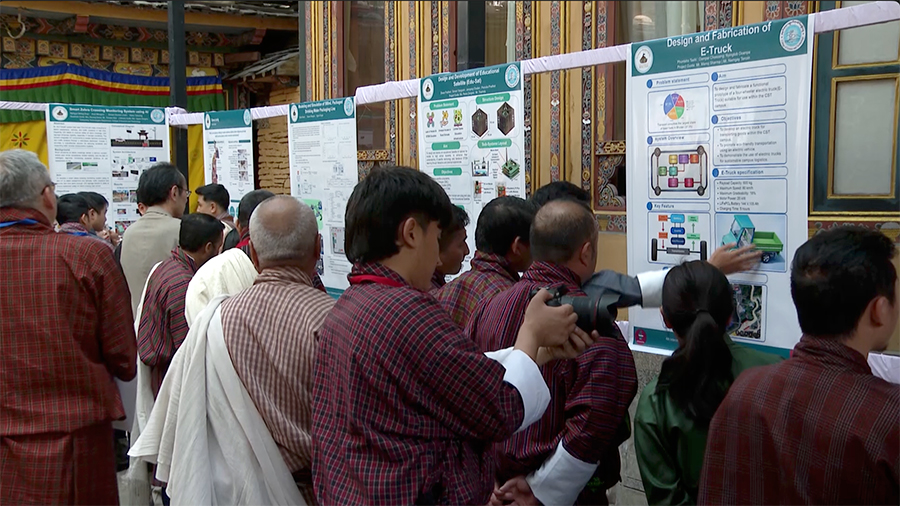
 From AI-powered systems aimed at improving safety along zebra crossings to satellite development and beyond, innovators showcased emerging ideas and technological solutions at the 4th International Conference on Science, Engineering and Technology, which began today. Around 15 prototypes from four different colleges are on display as part of the programme, highlighting innovations aimed at addressing real-world challenges.
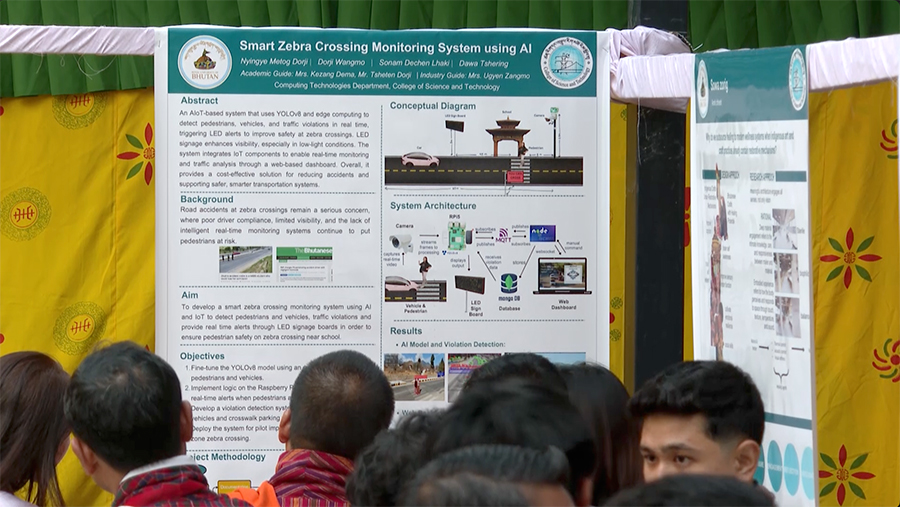 Pedestrians and commuters can expect improved safety on zebra crossings. A Smart Zebra Crossing Monitoring System, powered by Artificial Intelligence, will ensure this. The system can detect pedestrians and vehicles in real time and alert drivers through LED signage.
A group of final year students from the College of Science and Technology developed the system.
“Our main concern in Bhutan is the frequency of road accidents, particularly near zebra crossings. This system has been developed to help address that issue. In addition to detecting pedestrians and vehicles through a trained AI model, it can also identify traffic violations using the camera and AI-based system,” said Nyingye Metog Dorji, a student from the College of Science and Technology.
Another group from the same college designed and developed an educational satellite, or Edu-Sat. The prototype aims to support hands-on STEM education by providing students with practical exposure to satellite systems.
Another student of College of Science and Technology, Prenuka Pradhan said, “After completing this project, we plan to develop an operational manual and conduct outreach in schools to demonstrate how the system works in a real-life setting, providing students with hands-on experience in satellite technology. For future work, we also aim to collaborate with GovTech agencies and other space agencies to further refine and improve the design and structure.”
Students also showcased a design of an E-Truck, which is currently under development as part of their final year project. It aims to address the transport sector’s heavy reliance on fossil fuels and promote environmentally friendly transportation within the CST campus.
“The system primarily uses power electronics to control and drive the electric motor, allowing the vehicle to operate efficiently. To further improve mileage and range, we are exploring the integration of solar energy. Although solar panels are not yet part of the current design, we plan to install them on the vehicle’s roof in the future,” said Phuntsho Tashi, a student of the College of Science and Technology.
Meanwhile, students from the Gyalpozhing College of Information Technology designed a smart carpooling platform called DrukPool to tackle urban challenges such as traffic congestion and carbon emissions. The web-based application, which is nearing completion, uses advanced route matching and real-time GPS tracking to optimise shared rides and reduce single-occupancy vehicle use.
Developers say all these projects are up to 90 per cent complete and are expected to be finished by the end of June this year.
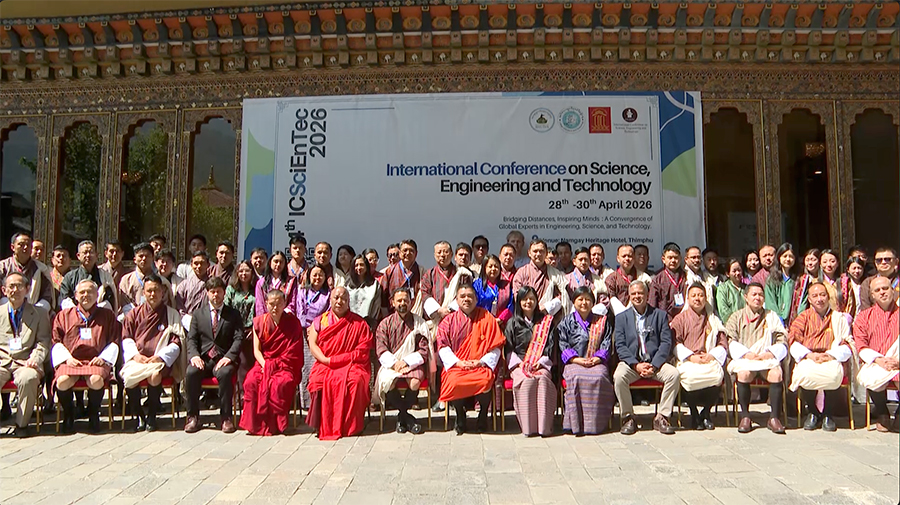 The three-day conference includes technical sessions, discussions, and networking, bringing together participants from various institutions to promote collaboration and innovation.
Organisers say the exhibition offers a platform for young innovators to showcase solutions that support national development.
Karma Wangdi & Namgay Wangdi