
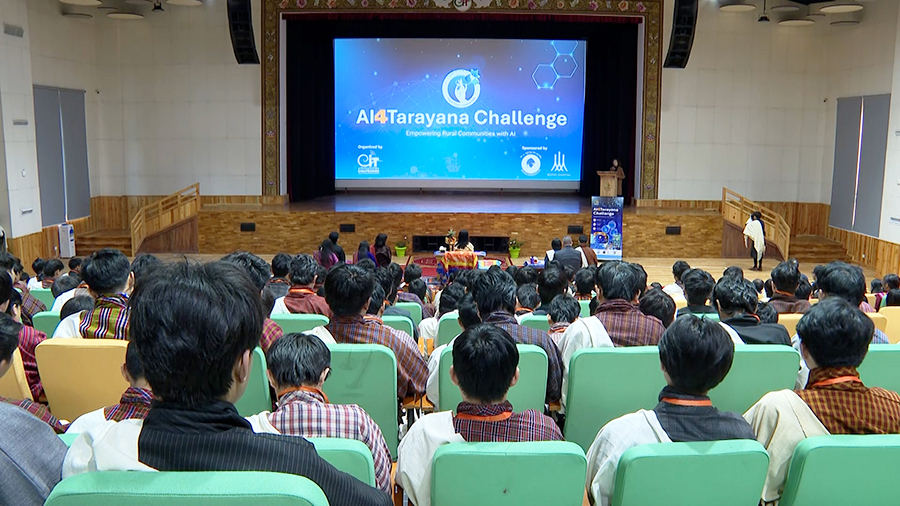
 In a world increasingly driven by artificial intelligence(AI), a group of young students is stepping up to ensure that even the most remote communities benefit from the technology. From a multilingual AI model to an AI system to assist with house-and-land risk assessment in rural communities, the students of Gyalpozhing College of Information and Technology pitched innovative ideas during the AI4 Tarayana challenge, a hackathon competition. Her Majesty Queen Mother Dorji Wangmo Wangchuck graced the closing ceremony yesterday.
The competition saw 24 teams present various AI-driven solutions for rural communities, of which three teams were selected for the final round.
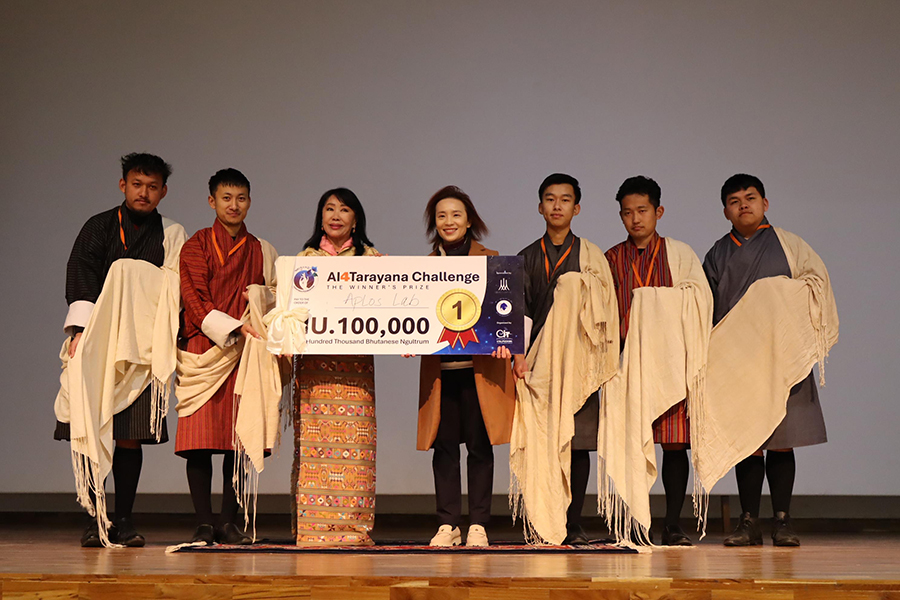 Aplos Lab, a team of fourth-year students, won the competition, taking home a Nu 100,000 cash prize.
The team pitched an AI model capable of understanding and speaking multiple local dialects of Bhutan.
“We wanted to preserve and promote dialects by building Bhutan’s multi-language AI models that can speak and understand all these local dialects like Tshangla, Kurtoep, Bumthap and many more. I feel very happy. First of all, the competition itself was very competitive. There were lots of interesting ideas, very innovative ideas. We didn’t think we would be winning it,’’ said Ugyen Dendup, Aplos Lab, Co-founder.
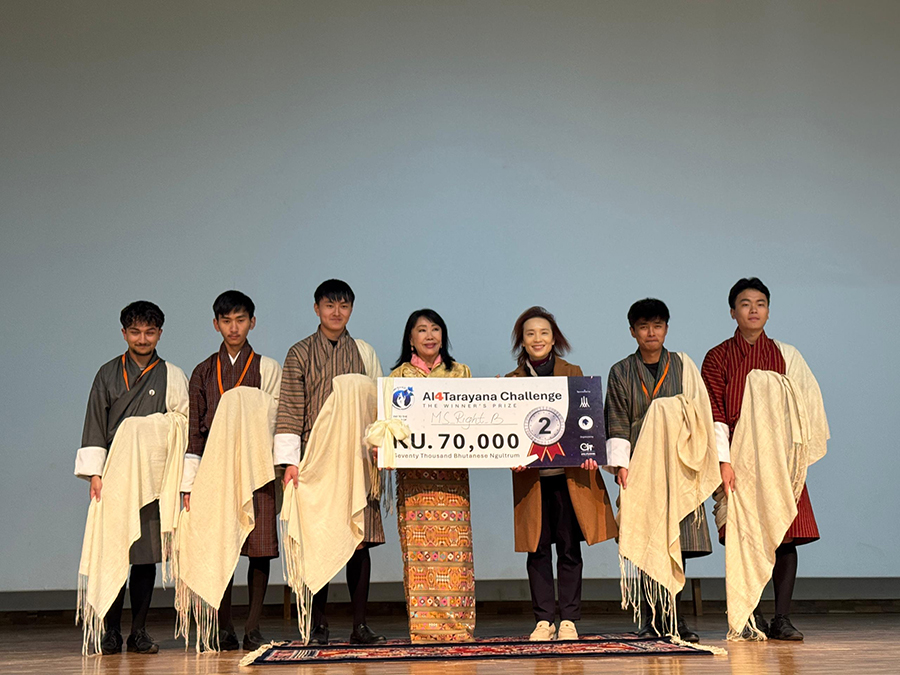 MS Right, a team that pitched an AI solution to address the lack of effective tools for land and housing risk assessment, secured the second position.
“This AI hackathon challenge was basically a zero-to-one idea bootstrapping since it’s a beautiful oxymoron if you think about it carefully. Like the rural and AI, they actually are quite opposites. AI requires heavy data centres, heavy servers, and high-end devices, but rural areas rarely have that. So it was quite a challenge for us. So we took that challenge, and we were able to come up with that after thinking of zero-to-one ideas,’’ said Jamphel Yigzin Samdrup, MS Right, Project Lead.
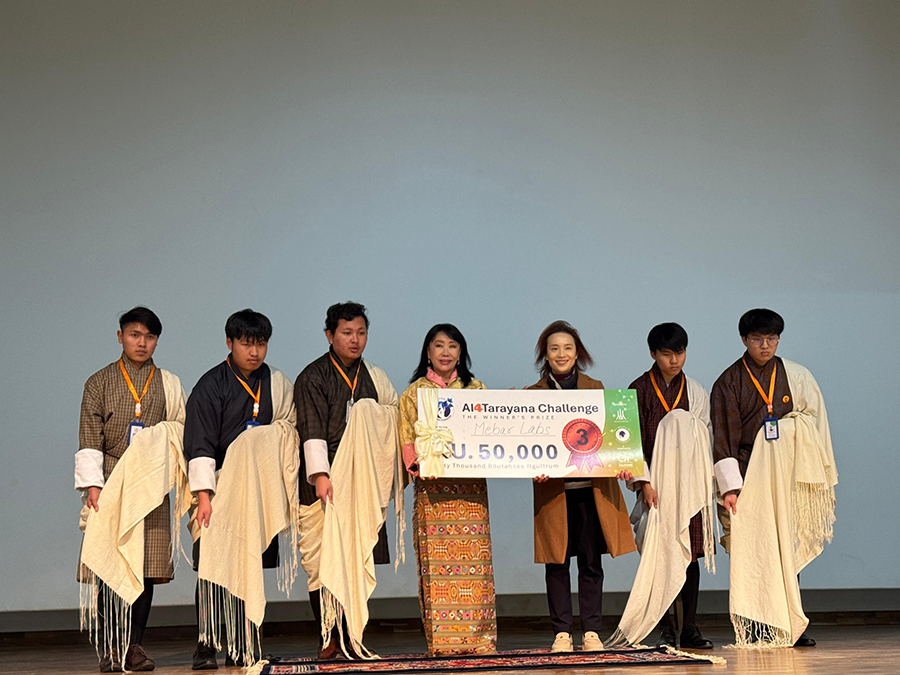 Mebar Lab secured the third position with Lhakgay: Reading App. Developed by first- and second-year students, the app aims to address the significant gap in reading abilities between urban and rural communities in Bhutan.
‘‘Mebar Lab, we only formed a week ago, and then we decided that we will join in multiple hackathons and also come up with our own startup by the end of the year. We never thought that we could actually make it to the top three. When they mentioned that we are in the top three, we were actually thrilled. I almost fainted. And we are looking forward to joining more hackathons and also making our own startup,’’ said Tashi Tshering, Mebar Lab, Project Lead.
The AI4 Tarayana Challenge was sponsored by Bhutan Insurance Limited and Bond Capital Singapore and is one of three initiatives under the Tech Tarayana Collaboration between GCIT and the Tarayana Foundation, launched last year.
With growing interest and innovation among young people, initiatives like the AI4 Tarayana Challenge are paving the way for inclusive, locally driven technological solutions in the country.
Sonam Yuden
Edited by Tshering Zam